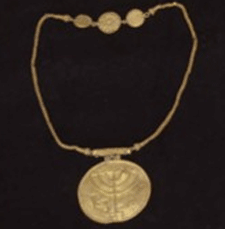
The medallion, 10 centimeters long and remarkably well kept, is engraved with a seven-branched menorah, a shofar and a Torah scroll. Dr. Mazar said the medallion was likely used as an adornment for a Torah scroll. The medallion was found buried in a small depression in the floor along with a smaller gold medallion, two pendants, a gold coin and silver clasp. Also found with the coins were a pair of large gold earrings, a gold-plated silver hexagonal prism and a silver ingot.
Given the date of the coins and medallion, Mazar estimated they were abandoned during the Persian conquest of Jerusalem in 614 CE.
"I consider this so important, as it relates to King David and shows the biblical story," she added. "[The findings are] a breathtaking, once-in-a-lifetime opportunity."
According to Lior Sandberg, a numismatics specialist at the Institute of Archeology, the Ophel Treasure is only the third collection of gold coins to be found in archeological excavations in Jerusalem.
In a statement released by his office, Israeli Prime Minister Benjamin Netanyahu called the treasure "a magnificent discovery." He also said, "It attests to the ancient Jewish presence and the to sanctity of this place ... This is historic testimony, of the highest order, to the Jewish people's link to Jerusalem, to its land and to its heritage."