The Mandate system was instituted by the League of Nations in
the early 20th century to administer non-self-governing territories. The
mandatory power, appointed by an international body, was to consider the
mandated territory a temporary trust and to see to the well-being and
advancement of its population.
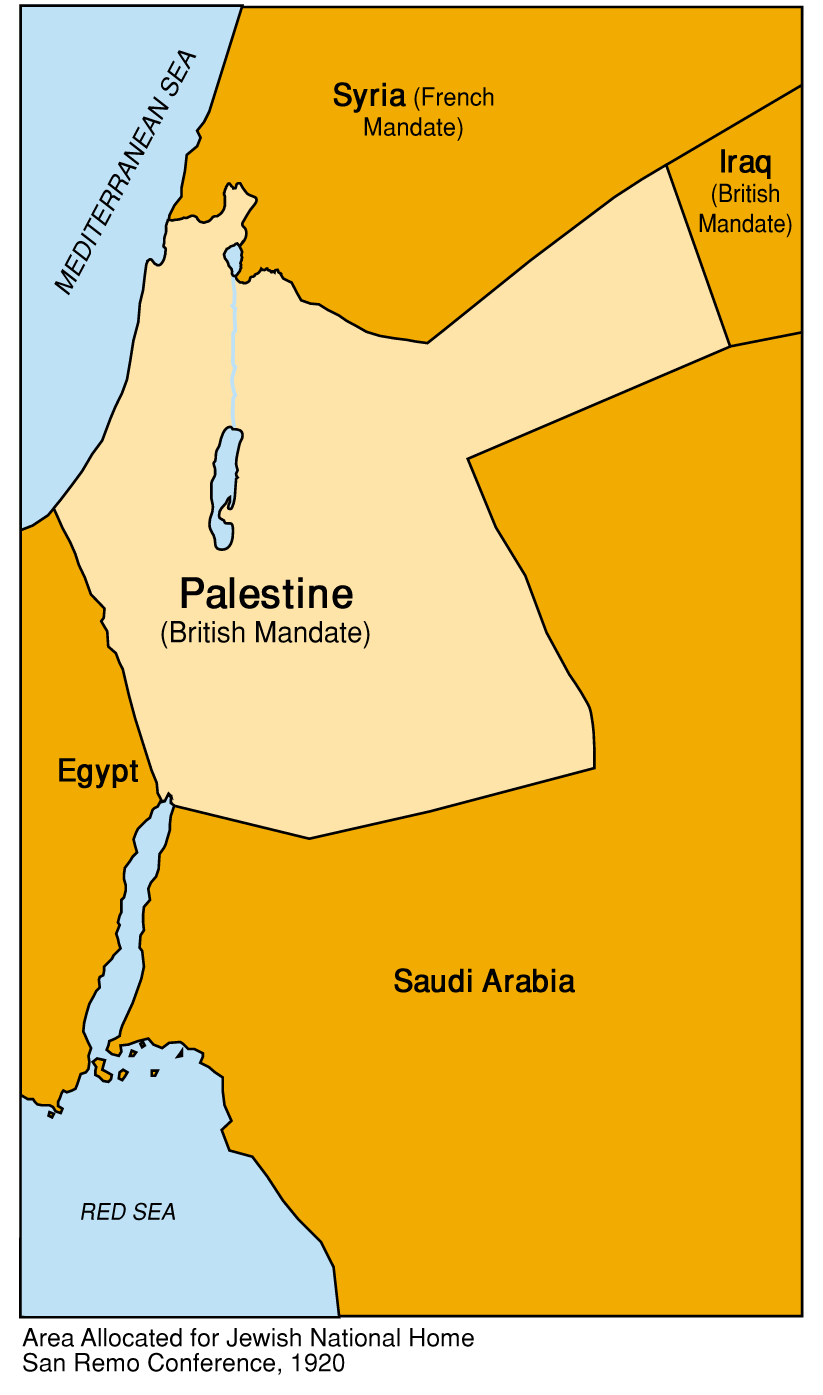
In July 1922, the League of Nations entrusted Great Britain
with the Mandate for Palestine.
Recognizing "the historical connection of the Jewish people with
Palestine," Great Britain was called upon to facilitate the establishment
of a Jewish national home in Palestine-Eretz Israel (Land of Israel). Shortly
afterwards, in September 1922, the League of Nations and Great Britain decided
that the provisions for setting up a Jewish national home would not apply to the
area east of the Jordan River, which constituted three-fourths of the territory
included in the Mandate and which eventually became the Hashemite
Kingdom of Jordan.
The British Mandate authorities granted the Jewish and Arab
communities the right to run their internal affairs; thus the yishuv established the Elected Assembly and the National Council. The economy expanded,
a Hebrew education network was organized and cultural life flourished.
The Mandatory government did not succeed in maintaining the
letter and spirit of the Mandate. Under Arab pressure, it withdrew from its
commitment, especially with respect to immigration and land acquisition. The
White Papers of 1930 and 1939 restricted immigration and acquisition of land by Jews. Later, immigration was limited by the 1930 and 1939 White Papers, and land acquisition by Jews was
severely restricted by the 1940 Land Transfer Regulations.
After the UN General Assembly adopted the resolution to partition
Palestine on November 29, 1947, Britain announced the termination of its
Mandate over Palestine, to take effect on May 15, 1948. On May 14, 1948, the State
of Israel was proclaimed.