Mordecai Manuel Noah
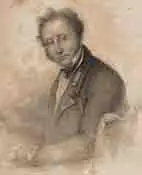
(1785 - 1851)
Mordecai
Manuel Noah was the most influential Jew in the
United States in the early 19th Century. He was an editor, journalist,
playwright, politician, lawyer, court of appeals judge, New York Port
surveyor, a major in the New York military and, foremost, an ardent utopian Zionist.
Noah was born July 19, 1785, in Philadelphia of
Portuguese Jewish ancestry. His father, Manuel M. Noah, served with General
Marion in the Revolutionary War and contributed a considerable sum of money
to the cause.
When Noah was 10, his mother died and he went to live
with his maternal grandfather. He stayed with that family until he became
old enough to go to Charleston, South Carolina, where he studied law and he
became involved in politics.
He was an ardent patriot and, at the age of 26, he wrote
forceful editorials in a Charleston newspaper advocating war (of 1812) with
England. As a result of his editorials, he was appointed the U.S. Consul to
Tunis. In 1815, he returned and settled in New York to engage in journalism
and politics. He published the National Advocate and edited several other
newspapers.
Noah broke off his relationship with the powerful
political machine of the Tammany Society and opposed them by publishing the
New York Enquirer from 1826 to 1829. He was a prolific playwright, which
reflected his patriotic fervor. He wrote Fortress of Sorrento (1808), She Would Be A Soldier (1819), and Siege of Tripoli (1820), which was produced many times under different titles.
Noah supported education and medical care. He was a
founder of New York University and he projected the idea of a Jewish
hospital - Mt. Sinai - which was to come into being after his death. In
1825, Noah helped purchase a tract of land on Grand Island in the Niagara
River near Buffalo, where he envisioned a Jewish colony to be called
Ararat. This project elicited interest and discussion, but it turned into a
failure. After this disappointment, he realized that Palestine was the only
answer for a homeland for Jews. He lectured and wrote on the need for such
a homeland, expressing ideas that preceded those of Leo
Pinsker and Theodor Herzl.
Noah was very active and supportive of the congregations of Mikveh Israel
in Philadelphia and Shearith Israel in New York. He was the best-known Jew
in America when he died of a stroke in 1851.
Sources: This is one of the 150 illustrated true stories of
American heroism included in Jewish
Heroes & Heroines of America : 150 True Stories of American Jewish
Heroism, � 1996, written by Seymour "Sy" Brody of
Delray Beach, Florida, illustrated by Art Seiden of Woodmere, New York, and
published by Lifetime Books, Inc., Hollywood, FL.
|