Boris Pasternak
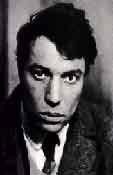
(1890-1960)
Russian poet, whose novel, Doctor Zhivago, brought him the Nobel
Prize for Literature in 1958. Pasternak had to
decline the honour because of protests in
his home country. The novel was banned in
the Soviet Union and Pasternak was expelled
from the Union of Soviet Writers. After Doctor
Zhivago had
reached the West, it was soon translated
into 18 languages. Pasternak was rehabilitated
posthumously in 1987, which made possible
the publication of his major work.
"Yura enjoyed
being with his uncle. He reminded him
of his mother. Like hers, his mind
moved with freedom and welcomed the
unfamiliar. He had the same aristocratic
sense of equality with all living creatures
and the same gift of taking in everything
at a glance and of expressing his
thoughts as they first came to him
and before they had lost their meaning
and vitality." (from Doctor
Zhivago)
Boris Pasternak was born into a prominent
Jewish family in Moscow,
where his father, Leonid Osipovich Pasternak,
was a professor at the Moscow School of Painting.
His mother, Rosa Kaufman, was an acclaimed
concert pianist. Their home was open to such
guests as Sergei Rachmaninoff, Aleksandr
Scriabin, Rainer Maria Rilke, and Tolstoy. Inspired by Scriabin,
Palsternak entered the Moscow Conservatory,
but gave up suddenly his musical ambitions
in 1910. He then studied philosophy under
Prof. Herman Cohen at the Marburg University
in Germany, and returned to Moscow in the
winter of 1913-14.
As a poet Pasternak made
his debut with the collection BLIZNETS V
TUCHAKN (1914). During World War I, Pasternak
worked as a private tutor and at a chemical
factory in the Ural Mountains. Due to a leg
injury he did not serve in the army. The
journey to the Ural gave him material for Doctor
Zhivago. Although Pasternak was horrified
by the brutality of the new government, he
supported the Revolution. His parents and
sisters migrated to Germany in 1921, when
travel abroad was legalized. Leonid Pasternak
died in Oxford in 1945.
After the Revolution of
1917, Pasternak worked as a librarian. With
the books Over the
Barriers (1917) and My Sister - Life (1922)
he gained fame as a prominent new poet. Pasternak's
father proudly mentioned this in a letter
he wrote in German to Rilke: "If only you
knew how my children cherish your every line
- especially my elder son, Boris, who is
a young poet already acclaimed in Russia.
He is your most ardent admirer, one who thoroughly
appreciates you, who, I may even say, calls
himself your pupil; he was one of the first
to spread your fame in our country, where
you were as yet unknown." In the early 1920s
Pasternak wrote autobiographical and political
poetry, and some short stories, which were
collected in The Childhood of Luvers (1922).
His memoir 'Safe Conduct' (1930) was continued
in 'I Remember' (1959). Pasternak married
in 1922 Evgeniia Vladimirovna Lourie. They
had one son, but the marriage dissolved
in 1931. In 1934 he married Zinaida Nikolaevna
Neigauz.
From the mid-1920s, Pasternak
moved away from personal themes and focused
his attention to the meaning the Revolution.
He began to study historical and moral problems
in such works as VOZHUSHNYE PUTI, a prose
piece, and in the poem The Year Nineteen
Five.
When the Writer's Union increasingly imposed
on the doctrine of socialist realism, he
gradually ceased to produce original work.
Socialist themes did not attract Pasternak
who was interested in ethical-philosophical
issues. His concept of realism was not the
same as the official doctrine. "We cease
to recognize reality," Pasternak wrote in
'Safe Conduct'. "It manifests itself in some
new category. And this category appears to
be its own inherent condition and not our
own. Apart from this condition everything
in the world has a name. Only it is new and
is not yet named. We try to name it - and
the result is art."
In the 1930s and 1940s,
Pasternak's works didn't gain authorities
favour and they were not printed. The Russian
Association of Proletarian Writers, RAPP,
campaigned against the older literary types
and criticized Osip Mandel'shtam, Pasternak,
and Vladimir Mayakovsky. Pasternak was accused
of subjectivism and aestheticism, but Stalin's
respect of Pasternak, who did not die in
the Gulag Archipelago, remains one
of the mysteries of the Soviet dictator's
behavior, who even took time to correct L.M.
Leonov's Russian Forest with a red
pencil. According to a famous story, he had
once a telephone conversation with Stalin,
who asked whether he was present when a lampoon
about himself, Stalin, was recited by Mandel'shtam.
Unable to publish his own poetry, Pasternak
became a translator, selecting works from
such authors as William
Shakespeare (Hamlet), J.W. von Goethe (Faust),
Heinrich Kleist (Prinz Friedrich von Homburg),
Paul Verlaine and Rainer Maria Rilke - in
the late 1920s he translated Rilke's 'Requiem
für eine Freundin.' In his translation
of Hamlet, Pasternak intepreted the
play as a tragedy of duty and self denial.
With Rilke he had a brief correspondence,
which was cut short by the poet's death.
In 1935 he travelled to Paris to participate
in the Anti-Fascist Congress. André Malraux,
the organizer of the congress, had made the
journey possible with his persistence.
During World
War II, Pasternak
wrote patriotic verses, and published a collection
of poems, NA RANNIKH POYEZDAKH in 1943. From
the elliptical expression of his earlier
work he moved toward disciplined simplicity.
At the same time he had lost a number of
his old readers, intellectuals, who had been
sent to prison camps, the gulag archipelago.
Like Anna
Akhmatova, he received letters from soldiers
quoting from both published and unpublished
poems. Another collection appeared in 1945,
followed by a selection of earlier poetry
in 1947. In 1954, the Soviet literary journal Znamya published
his lyrics under the title 'Poems from a
Novel', where the novel referred to Doktor
Zhivago. His last book of poetry was When
the Weather Clears (1960), written through
the 1950s. As in his earlier verse, he used
religious motifs and drew parallels with
art and death. "With secret trembling, to
the end, / I will thy long and moving service
/ In tears of happiness attend".
Doktor Zhivago was
rejected by the Soviet journal Novye Mir -
it was published first in Russian and in
Italian translation by the publisher Feltrinelli
in Milan in 1957, English translation appeared
in 1958. Pasternak probably completed the
manuscript in 1954, the work had started
in 1945, after the death of his father. During
the writing process, only some poetical excerpts
were published in Moscow.
The title of the novel refers
to the Russian word "zizn", which means "life".
In the Soviet Union the book was banned
for three decades - Novye Mir considered
its spirit that of "nonacceptance of the
socialist revolution" - and did not appear
until 1988 in Novye Mir. Doctor
Zhivago has been recognized by many
as the greatest Russian novel of the 20th
century. It is partly autobiography and
partly epic novel, a many-layered story
starting from the year 1903, when Iurii
Zhivago's mother died. His father, a rich
industrialist, commits suicide through
the malign influence of his lawyer, Komarovskii.
The boy is brought up in the Gromenko family.
Durig this time Zhivago finds his call
to poetry and decides to become a doctor.
Simultaneously Lara Guishar is seduced
in her teens by Komarovskii, and she marries
Pasha Antipov. Zhivago qualifies as a doctor,
marries, and has a child. He meets Lara
during World War I, they fall in love.
Throughout the story Zhivago and Lara are
repeatedly separated. He moves with his
family to Urals after the 1917 Revolution
to escape the famine, and the Communists.
There he meets Lara. Zhivago chooses a
life with her, but is captured by local
Boslhevik partisans. Zhivago spends a long
time in their forest camps. Eventually
he escapes and makes his way back to Lara.
Meanwhile his family has returned to Moscow.
Komorovskii discovers Lara and Zhivago.
They are promised a safe conduct to the
east. Lara follows with Komorowskii expecting
that Zhivago will follow shortly. He meets
Lara's husband Pasha, who commits suicide
disillusioned with the Revolution. Zhivago,
a broken man, returns to Moscow in 1922,
on foot, and attempts to start a new life.
He dies in the street years later of a
weak heart, in 1929. Lara reappears before
his burial. Zhivago's friends collect his
poetry. The story ends with a short episode,
occurring "five or ten years" after
WW II, in which Zhivago's old friends contemplate
the fate of their country. - Zhivago was
partly modelled on Pasternak and Lara on
his companion, Olga Ivanskaya, who was
arrested when Pasternak was awarded the
Nobel Prize.
Pasternak's disagreement with Soviet Communism
was not political but rather based on his
aesthetic views - he couldn't fully accept
official literary doctrines developed from
a theory of class struggle but followed his
own principles. Already in 1923 he wrote
in a poem: "I was not born to look three
times / Into the eyes of men. / Even more
senseless than song / Is the dull word ''foe." He
thought little of Hemingway, found Sartre's La
Nausée unreadable, and did not
consider Mayakovsky a major poet. In a personal
letter to the premier Nikita Khrushchev he
expressed the hope that he would be allowed
to remain in his home country after continuing
attacks against his work. "Leaving the motherland
will equal death for me. I am tied to Russia
by birth, by life and work." It is possible
that Premier Khrushchev used his influence
to calm down attack on Pasternak.
Pasternak remained at Peredelkino, a writers's
colony about twenty miles outside of Moscow.
His last projects included a play about Aleksander
II and the emancipation of the serfs. He
also planned to write another novel. Pasternak
died from lung cancer on May 30, 1960. In
one poem he had written: "And keep on grinding
/ Everything that happened to me / For almost
forty years, / Into a churchyard compost".
Pasternak's son accepted his father's Nobel
Prize medal at a ceremony in Stockholm in
1989. "Pasternak loved Russia," said Isaiah
Berlin in The Proper Study of Mankind (1998). "He
was prepared to forgive his country all its
shortcomings, all, save the barbarism of
Stalin's reign; but even that, in 1945, he
regarded as the darkness before the dawn
which he was straining his eyes to detect
- the hope expressed in the last chapters
of Doctor Zhivago."
Doctor Zhivago was made into a film
by David Lean in 1965, together with the
screenwriter Robert Bolt. Omar Sharif played
the title role as Yuri, and Julie Christie
was Lara. The film focused on the love story
and used Yuri's stepbrother Yevgraf as a
narrator. A number of scenes and characters,
important for Pasternak's philosophical vision
of the fate of his generation, were omitted. "...
the biggest disappointment of 1965... There
is nothing holding the effects together,
not an idea, or a feeling, or a mood, or
even much of a plot, and a relatively capable
cast struggles helplessly with Robert Bolt's
disconnected, uninspired dialogue as the
film bumbles along to boredom." (Andrew Sarris in Village
Voice, December 30, 1965)
Sources: Pegasos, Photo courtesy of Hoover Institution Archives
|