Abraham Isaac Kook
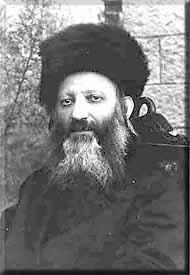
(1865 - 1935)
Rav Kook was born in Griva, Latvia in 1865. His father was
a student of the Volozhin Yeshiva, the center of 'mitnagdut,' whereas
his maternal grandfather was a memeber of the Hassidic movement. He entered the Volozhin Yeshiva in 1884, where he became close
to the Rosh HaYeshiva, Rav
Naftali Zvi Yehuda Berlin (the Netziv). Already in his youth, he
was well-known as a prodigy. At the age of 23, he entered his first
rabbinical position. Between 1901 and 1904, he published three articles
which anticipate the fully-developed philosophy which he developed in
the Land of Israel.
In 1904, he came to the Land of Israel to assume the
rabbinical post in Jaffa,
which also included responsibility for the new secular Zionist agricultural
settlements nearby. His influence on people in different walks of life
was already noticeable, as he attempted to introduce Torah and Halakha into the life of the city and the settlements.
The outbreak of the First World War caught him in Europe,
and he was forced to remain in London and Switzerland for the remainder
of the war. While there, he was involved in the activities which led
to the Balfour Declaration.
Upon returning, he was appointed the Rav of Jerusalem,
and soon after, as first Chief Rabbi of Israel (though the state had
not yet been been born). Rav Kook was a man of Halakha in the strictest
sense, while at the same time possessing an unusual openness to new
ideas. This drew many religious and nonreligious people to him, but
also led to widespread misunderstanding of his ideas. He wrote prolifically
on both Halakha and Jewish Thought, and his books and personality continued
to influence many even after his death in Jerusalem in 1935. His authority
and influence continue to this day.
Sources: Rav
Kook. |