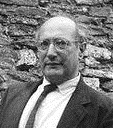
Mark Rothko was a Jewish painter.
He was born Marcus Yakolevich Rothkowitz in Daugavpils (Dvinsk), Russia (now Latvia) and emigrated
to the United States in 1916.
His work concentrated on basic emotions, often filling
the canvas with very few intense colours, with little immediately-apparent
detail. In this respect, he can also be considered to presage the color
field painters (see: Helen Frankenthaler). Although respected by other
artists, Rothko remained in relative obscurity until 1960, supporting
himself by teaching art.
In 1958, Rothko was commissioned by Philip Johnson
to paint a series of murals for the Four Seasons restaurant in the Seagram
Building in New York, a project he worked on for most of a year. Ultimately,
Rothko was not happy having his paintings as the backdrop to gourmet
dining, so he gave a set of nine of the maroon and black paintings to
the Tate Gallery where they are on permanent display in an installation
designed by Rothko.
In 1967, Rothko again collaborated with architect Philip
Johnson on a church in Houston, Texas, contributing fourteen related
works in an installation setting. The church has become known as “The
Rothko Chapel.” Numerous other works are scattered in museums
throughout the world.
After a long struggle with depression, Rothko committed
suicide by cutting his wrists in his New York studio on February 25,
1970. Following his death, the settlement of the Rothko estate became
the subject of a famous court case.