Adolf von Baeyer
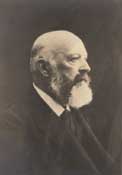
(1835 - 1917)
Johann Friedrich Wilhelm Adolf von Baeyer, known as
Adolph von Baeyer, was the first Jew to ever receive the Nobel
Prize. Baeyer was a German chemist, acknowledged in 1905 for synthesizing
dye indigo. He was also awarded the Davie Medal by the Royal Society
of London in 1881, for his work with indigo.
Baeyer was born on October 31, 1835, in Berlin,
Germany. Initially, at the Berlin University, Baeyer studied mathematics
and physics. Nevertheless, he soon discovered his passion for chemistry
and transferred to Heidelberg to study with Robert Bunsen in 1856. Bunsen
was a famous chemist, who is best known for perfecting the burner. In
Heidelberg, Baeyer studied in the laboratory of August Kekule, a famous
organic chemist. In 1858, Baeyer received his doctorate in chemistry
from Berlin University. In 1871, he became a Professor at Strasbourg
and, in 1875, Baeyer became the Chemistry Professor at the University
of Munich.
In addition to synthesizing dye indigo, some of Baeyer’s
other achievements include the discovery of the phthanein dyes, investigation
of polyacetylenes, oxonium salts, and uric acid derivatives. Bayer synthesized
barbituic acid in 1864. This acid is used in surgery as a sedative or
hypnotic. Baeyer is also renowned for his work in theoretical chemistry,
developing the ‘strain’ (Spannung) theory of triple bonds
and the strain theory in small carbon rings. Baeyer was also the founder
of Baeyer Chemical Co.
Adolf von Baeyer died on August 20, 1917, in Starnberg.
Sources: Wikipedia;
"Adolf
von Baeyer";
"Adolf von Baeyer Biography".
Photo courtesy of General
Anaesthesia |