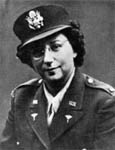
Assigned to the 45th Field Hospital to aid casualties
from the allied invasion of Frances, Lt. Slanger penned the following
letter on October 21, 1944. It was printed in Stars and Stripes:
It is 0200, and I have been lying awake for an hour listening to
the steady even breathing of the other three nurses in the tent, thinking
about some of the things we had discussed during the day.
The fire was burning low, and just a few live coals are on the bottom.
With the slow feeding of wood and finally coal, a roaring fire is
started. I couldn't help thinking how similar to a human being a fire
is. If it is not allowed to run down too low, and if there is a spark
of life left in it, it can be nursed back. So can a human being. It
is slow. It is gradual. It is done all the time in these field hospitals
and other hospitals in the ETO.
We had read several articles in different magazines and papers sent
in by grateful GIs praising the work of the nurses around the combat
zones. Praising us - for what?
We wade ankle-deep in mud - you have to lie in it. We are restricted
to our immediate area, a cow pasture or a hay field, but then who
is not restricted?
We have a stove and coal. We even have a laundry line in the tent.
The wind is howling, the tent waving precariously, the rain beating
down, the guns firing, and me with a flashlight writing. It all adds
up to a feeling of unrealness. Sure we rough it, but in comparison
to the way you men are taking it, we can't complain nor do we feel
that bouquets are due us. But you - the men behind the guns, the men
driving our tanks, flying our planes, sailing our ships, building
bridges - it is to you we doff our helmets. To every GI wearing the
American uniform, for you we have the greatest admiration and respect.
Yes, this time we are handing out the bouquets - but after taking
care of some of your buddies, comforting them when they are brought
in, bloody, dirty with the earth, mud and grime, and most of them
so tired. Somebody's brothers, somebody's fathers, somebody's sons,
seeing them gradually brought back to life, to consciousness, and
their lips separate into a grin when they first welcome you. Usually
they say, "Hiya babe, Holy Mackerel, an American woman"
- or more indiscreetly "How about a kiss?"
These soldiers stay with us but a short time, from ten days to possibly
two weeks. We have learned a great deal about our American boy and
the stuff he is made of. The wounded do not cry. Their buddies come
first. The patience and determination they show, the courage and fortitude
they have is sometimes awesome to behold. It is we who are proud of
you, a great distinction to see you open your eyes and with that swell
American grin, say "Hiya, Babe."
One hour after writing this letter, Lt. Slanger was
killed by a German sniper.
Slanger is buried in a military cemetery in France. Her grave is
flanked by the fighting men that she admired and respected. Over her
grave is the Star of David telling the world that here lies a Jewish heroine who died fighting for her country. In Boston, Jewish women veterans of World War II formed an all women
chapter of the Jewish War Veterans of the USA and named it the "Lieutenant
Frances Slanger Memorial Post."
In December of 2000, Bob Welch published Lt. Slanger's
letter in The Register Guard. After reading Welch's article, Sallylou
Bonzer wrote a letter detailing her memories of her close friend and
comrade Frances Slanger.