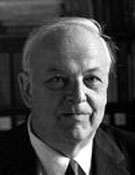
Burton Richter was born in New York City on March 22,
1931. He attended MIT, where he received his bachelor's degree in 1952
and his Ph.D. in 1956.
In 1957, Richter obtained a research position at Stanford’s
High-Energy Physics Laboratory. He became a full professor in 1967.
Richter’s work has focused on experimental particle physics with
high energy electrons and electron-positron colliding beams. As a leading
physics professor at Stanford University, Richter built a particle accelerator
(Stanford Positron-Electron Asymmetric Ring) with the help of David
Ritson and the support of the U.S. Atomic Energy Commission. With it
he discovered a new subatomic particle called a psi-particle (now called
a J-particle). The same discovery was made independently by Samuel Ting.
The two scientists were jointly awarded the 1976 Nobel
Prize in Physics for their work.
From 1982 to 1984, became the Technical Director of
the Stanford Linear Accelerator Center, and then Director until 1999.
The following press release from the Royal Swedish
Academy of Sciences describes Richter’s work:
The prize is awarded for discoveries in the exploration
of the smallest components of matter, smaller than atoms and their
nuclei. According to Einstein's well-known law of energy and mass,
E=mc2, large amounts of kinetic energy are required to create a heavy
particle. In addition the energy must be concentrated. The two prize
experiments were made independently of one another at two of the world's
largest particle accelerators. Ting and his associates have constructed
their equipment in connection with the proton machine at the Brookhaven
National Laboratory. The accelerator is a device with a diameter of
some 200 metres and the measurement equipment of the Ting team is
close on 15 metres in length. Richter and his co-workers have their
equipment connected to the 3 km long, linear electron accelerator
at the Stanford Linear Accelerator Center. The Richter equipment is
of such a size that it cannot be kept indoors. When exploring small
object large microscopes are necessary and cannot be avoided. For
the smallest bits of matter the largest installations are required.
The Richter equipment is a sort of carousel (storage
ring) where a stream of electrons and a stream of positrons go round
in opposite directions at very high speeds, which may be adjusted
exactly. In head-on collisions, all the energy of an electron and
a colliding positron may in principle give rise to a motionless very
heavy particle, which is expected to turn into several other particles
by decay in a very short space of time. It had not been forecast that
anything like that could possibly happen other than at lower energies
where the known, lighter elementary particles exist. The research
programme therefore concentrated on following up in a specially built
magnetic detector a very interesting and significant line initiated
at Frascati, Italy, and continued at Cambridge, USA. The discovery
of the new particle was sudden and dramatic, although preceded by
years of planning and preparations. The speed at the head-on collisions
may be adjusted to more than a thousand different values. The new
particle appears at only one of these. About November 10, 1974, the
Richter team set the correct speed and found that an enormous number
of collisions gave the new particle, christened psi. What was most
remarkable was that the psi particle was transformed unexpectedly
sluggishly, or in other words, it lived about a thousand times as
long as it reasonably should.
Ting's experiment took place quite differently.
High-speed protons - the direction of the firing is here more important
than the speed setting - are allowed to collide with a motionless
target area of beryllium. The Ting team was hoping to find new heavy
particles, which are transformed into two others an electron and a
positron. Ting and his associates had for many years achieved a world
championship in this field, closely studying how lighter, better known
parent particles give rise to electron and positron daughter pairs.
From measurements of the fast-flying daughters, the properties of
the parent particle may be calculated. The difficulty was sorting
out a very small number of daughter pairs from a horde of millions
of other particles streaming forth, in this context undesirable but
unavoidable. It was like hearing a cricket close to a jumbo jet taking
off. The equipment was therefore large, provide, with many refinements
and embedded in tons of radiation protection. In time it became clear
that a new, heavy parent particle was formed every now and then in
the collisions. It was christened the J particle.
On November 11, 1974, Richter and Ting met at the
Stanford Linear Accelerator Center and found that the two research
teams had discovered the same particle. The announcement appeared
at once and the scientific publications within a week. A short time
after the discovery was confirmed, first at Frascati, Italy, and then
at the Deutsches Electronen Synchrotron in Hamburg, West Germany.
During the last 16 years many new elementary particles
have been discovered, which show kinship with one another in groups
or families. The new particle is something separate and new and it
has formed the beginning of a new family of its own. A new field of
research has been opened. Is there anything further in these particles,
thought to be the smallest building blocks of matter? For centuries
physicists and chemists have devoted much of their efforts to a search
for the smallest components of matter. The limit of the smallest has
slowly been moved from atoms via atomic nuclei to what are known as
elementary particles. For some years now the physicists have had to
move this limit downwards, and the signs are that the elementary particles,
too, consist of yet smaller units, quarks. It was assumed that three
quarks, in some respects having different properties, would be enough.
But to understand the structure of the new psi particle a fourth quark
is very likely necessary, in the opinion of many researchers.