Rivka Guber
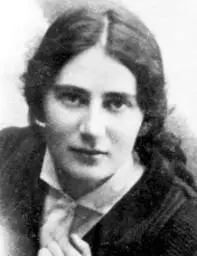
(1902 - 1981)
Rivka Guber (née Bumaghina) was born in 1902
in Novo-Vitebsk in the Ukraine.
She married Mordechai Guber and then immigrated with her family to Palestine
in 1925. The couple settled in Rehovot, where Rivka taught Hebrew. They
were among the founders of Kefar
Bilu (1933), and later left to join another moshav, Kefar Warburg,
where they raised their two gifted sons, Ephraim (b. 1927) and Zvi (b.
1931).
Guber was known for her readiness to volunteer her
teaching and organizational skills to any cause that would serve the
budding Jewish nation. During World
War II, as a forty-year-old mother of three (her daughter Haya [b.
1938] was a young girl at the time), Guber volunteered for the ATS (Auxiliary
Territorial Service) of the British Army, where she served from 1940–1942
along with other Jewish women soldiers.
Guber imparted to her sons her own values of volunteerism,
loyalty and dedication to the Jewish people. Both of her sons enlisted
in the Israel Defense
Forces during Israel’s
War of Independence, and were killed in battle by the six invading
Arab armies. In her memoir Im ha-Banim (with my sons), Guber offered
a portrait of her sons and shared other aspects of her life and family.
Following Israel’s independence in 1948, a massive
wave of immigration doubled the population of Israel in a short time
period, from 1948 to 1951). Rivka and Mordecai Guber helped the throngs
of new immigrants living in the transit camp at Katina; Rivka organized
the education system in the Kastina transit camp (ma'abarah),
which later became Kiryat Malakhi. After several years of intensive
humanitarian activity helping the Jewish State to absorb its new immigrants,
or olim in Hebrew, in the area, they volunteered in 1955 to
move to Hevel Lachish, an area of south-central Israel then being developed
by a planning group led by Arieh (Lova) Eliav. The Gubers donated their
property at Kefar
Warburg to the state’s Defense Fund and went to live at Nogah,
one of the first moshavim established in the Lachish region, where they
again helped Israel absorb and integrate
its immigrant population into the fabric of the new nation. Rivka set
up and taught classes for the children of the moshav and new immigrnats, while Mordecai guided them through their first steps
in their new country.
In her 1961 book El Masu’ot Lachish (Signal Fires of Lachish), Guber described the challenges and difficulties
confronting the couple in their work with the immigrants of Lachish
and the many achievements of the settlement enterprise there. David
Ben-Gurion, then Prime
Minister and Minister of
Defense, thought highly of Rivka Guber as the role model and a symbol
of volunteerism and devotion to the state that she was, and he referred
to her as “The Mother of Sons.” Guber was awarded the Israel
Prize in 1967 for her life’s work in immigrant absorption.
Rivka Guber was also active in the women’s organizations
of the labor
movement, served as a member of the Mo’ezet
ha-Po’alot or Council
of Women Workers - which branched off from the Histadrut - and volunteered for numerous social and humanitarian causes. She was
deeply involved in public life in Israel and played a role in the political
arena as well.
In her last years she devoted herself to writing
and in 1979, when Prime Minister Menahem
Begin traveled to Washington,
D.C. to sign the peace treaty with Egypt, he included Rivka Guber
in the Israeli delegation in appreciation of her work. Rivka Guber
continues to be remembered among Israel’s heroes and heroines
as an exemplary educator, humanitarian, and Zionist leader in pre-state Palestine and post-independence State of Israel.
Sources: Encyclopaedia
Judaica. © 2008 The Gale Group. All Rights Reserved; "Important
Women in Israeli History" blogpost; Jewish
Women's Archive; University
of Michigan |