Amnon Rubinstein
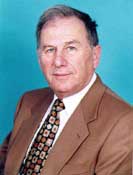
(1931 - )
Amnon Rubinstein, a journalist and lawyer, was born in Tel-Aviv in 1931. He studied economics, international relations and law at the Hebrew University in Jerusalem,
became a member of the Israel Bar in 1963 and received a Ph.D. in law
from the London School of Economics in 1966.
Following
his return to
Israel
,
Prof. Rubinstein served as a professor
of law at Tel-Aviv
University (1961-75) and Dean of
the Law Faculty (1968-73).
He also joined the Ha’aretz daily
newspaper as a regular writer
on social, economic and legal matters.
After the Yom
Kippur War, he felt
that he could not rest only on his
academic and journalistic laurels,
and decided to enter the world of Israeli
politics to help change the
system of government. In
1974, Rubinstein founded Shinui (The Center Party), which advocated free
enterprise, electoral reform and the formulation
of a written constitution.
In the 1977 elections
to the 9th Knesset,
Shinui was part of the Democratic Movement
for Change, but became an independent Knesset party
in 1978, chaired by Rubinstein ever since.
In 1992, Shinui joined with Mapam (United
Workers' Party) and CRM (Civil
Rights Movement) to form Meretz,
which won 12 seats in the Knesset.
During
his 25 years of serving in the Knesset,
Prof. Rubinstein held a v
arie
ty of positions, including
memberships in the Knesset committees
on security and foreign relations, finance,
economics and law. In addition, he served
as the chairman of the Knesset’s
ethics, economics, legal and comptroller’s
committees. He initiated and legislated
the only two basic
laws that guarantee
human rights in
Israel
.
During his term as education minister,
he put into practice the principles of
equality and fair government which he
had championed in his lectures and legal
writings. Recently, as the chairperson
of the subcommittee on minorities of
the Education Ministry’s National
Task Force for the Advancement of Education
in Israel (the Dovrat Commission), he
wrote a chapter on opening a new page
in relations with Israel’s Arab
minority. He proposed that building the
public education system in the Arab sector
upon the values of equality and cooperation
will help close gaps between it and the
Jewish population.
In
recent years, he published a number of articles
and books opposing the post-Zionist trend and emphasizing the humanistic and liberal
foundations of Zionism. In the face of conflicting
claims regarding universal values, on one hand,
and national religious values, on the other hand,
Prof. Rubinstein offered a modern, democratic
alternative that would allow
Israel
to
preserve its cultural and national distinctiveness
while providing full equality to the Arab
minority and maintaining its status as a democratic state.
The book Israel and the Family of
Nations, which Prof. Rubinstein wrote
with Dr. Alex Jacobson, methodically analyzes
the conceptual and legal foundations for
Israel
to
be both a Jewish and a democratic state. The
book’s historic, legal and philosophical
arguments reinforce
Israel
’s
standing in the international legal and political
community.
Prof.
Rubinstein is renowned for his international
activities and is well-known abroad. He has served
as a board member and vice president of Liberal
International and as a member of the Israeli
delegation to the Council of Europe, and has
represented
Israel
on
its legal committee, the Venice Commission. His
books have been published in numerous languages,
including English, German, French and Russian,
and his legal and other articles have appeared
in the New
York Times, the Washington
Post and le
adi
ng
legal journals in Europe and
America
.
He has received honorary degrees from a number
of universities and colleges in
Israel
and
abroad.
When
Prof. Rubinstein retired from the Knesset,
his farewell speech was met with applause from
representatives of all the parties, a rare event
that demonstrates the high regard for his accomplishments.
He then went on to serve as the dean of the Radzyner
School of Law of the Interdisciplinary
Center and
the IDC Herzliya provost. He
is now president.of
the university.
In
2006, Rubinstein was awarded the Israel
Prize. The panel
of judges described
Prof. Rubinstein as the “father
of constitutional law in
Israel
,” noting
that his book Constitutional
Law of the State of Israel is
the primary text on the topic. “In
both his profound academic writings and
his diverse public activities, he advances
the values of democracy, equality and
human rights,” the judges wrote. “In
the legal and public arena in
Israel
,
there are few who can equal Prof. Amnon
Rubinstein’s contribution to the
State of Israel, as a public figure,
a member of the legislative and executive
branches of government, and as a brilliant
researcher and legal expert.”
Sources: Israeli
Ministry of Foreign Affairs; IDC
Herzliya press release. Photo
used with permission of the Knesset |