Herbert Louis Samuel
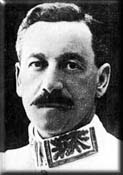
(1870 - 1963)
When the first high commissioner for Palestine arrived in
Jerusalem, he was met with a seventeen-gun salute and endless
words of welcome. Sir Herbert Samuel made the journey in June
1920, and served as high commissioner for a period of five years.
His appointment was viewed by many Jews as affirmation that the
British promise for a Jewish National Home in Palestine would be
honored. The telegram sent to the Zionist Organisation Central
Office in London reflects the atmosphere of excitement that
surrounded Samuel's arrival.
Samuel himself was moved by the outpouring of emotion
which greeted him in the Land of Israel. He had been raised in an
Orthodox Jewish home, and although he subsequently ceased
practicing, he remained intensely interested in Jewish communal
problems.
Samuel's career in different British posts was unique in its scope; he
was the first unconverted Jew to serve in a Cabinet office.
Samuel first presented the idea of a British protectorate in
1915. In a memorandum to Prime Minister Asquith, he proposed
that a British protectorate be established which would allow for
increased Jewish settlement. In time, the future Jewish majority
would enjoy a considerable degree of autonomy. Herbert believed
that the creation of a Jewish center would flourish spiritually and
intellectually, resulting in the character improvement of Jews all
over the world. At that time, however, Prime Minister Asquith was
not interested in pursuing such an option, and no action was taken.
Yet significant groundwork had been accomplished, and it was on
the basis of Samuel's work that the Balfour Declaration was later
written.
It was therefore no surprise that Samuel was appointed first
high commissioner of Palestine. His appointment made him the first
Jew to govern in the Land of Israel in 2,000 years. Anxious to serve
his country well, Samuel made it clear that his policy was to unite
all dissenting groups under the British flag. Attempting to appease
the Arabs in Palestine, Samuel made several significant concessions.
It was he who appointed Hajj Amin al-Husseini,
a noted Arab
nationalist extremist, to be Mufti of Jerusalem. In addition, he
slowed the pace of Jewish immigration to Palestine, much to the
distress of the Zionists. In attempting to prove his impartiality, the
Zionists claimed that he had gone too far, and had damaged the
Zionist cause. Many Zionists were ultimately disappointed by
Samuel, who they felt did not live up to the high expectations they
had of him.
Sources: The Jewish Agency for Israel and The World Zionist Organization |