Abraham Solomon
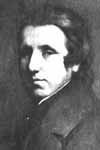
(1823 - 1905)
Abraham Solomon, the son of a hat manufacturer,
was born in Bishopsgate, London, in August 1823. His father, Michael
Solomon, was the first Jewish person to be admitted to the freedom of
the city of London.
At the age of thirteen Solomon became a student at
the Sass School of Art in Bloomsbury. Three years later he was
admitted to the Royal Academy. Early paintings produced by Solomon
included My Grandmother (1840), Vicar of Wakefield (1842), The Breakfast Table (1846), Too Truthful (1850).
In 1854 Solomon turned his attention to the
subject of railway travel. First Class - the Meeting created a
great deal of controversy as it showed a man in a first-class railway
carriage flirting with a young woman, while her father was asleep. In
the revised version produced the following year, the man is talking
to the father rather than the daughter. Soon afterwards Solomon
painted another picture on the subject of railway travel, Second-Class
- the Parting (1855).
Abraham Solomon was now a very popular artist and
his paintings A Contrast (1855), The Bride (1856), Doubtful
Fortune (1856) and Waiting for the Verdict (1857) were
acclaimed by both the art critics and the general public. Engravings
of these paintings sold in large numbers. Abraham Solomon continued
to be a popular artist until his death from heart disease in 1862.
Abraham Solomon's brother and sister were also
artists. Rebecca Solomon exhibited at the Royal Academy between 1851
and 1875. She died in 1886 after been knocked down by a Hanson cab in
the Euston Road. Simeon Solomon had considerable success as an artist
until he was arrested and convicted of buggery in 1873. Excluded from
society, Solomon became an alcoholic spent the last twenty-one years
of his life in St. Giles Workhouse before his death from
"bronchitis and alcoholism" in 1905.
Sources: Spartacus
Educational |