
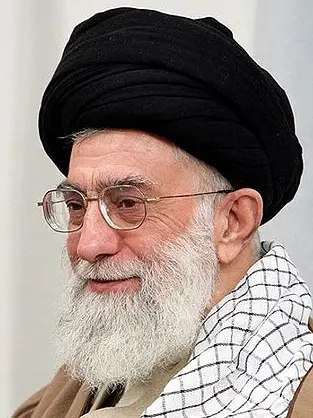
The assassination of Iran’s Supreme Leader Ayatollah Ali Khamenei was the product of a decades-long intelligence campaign that transformed Tehran into what one Israeli official described as a city they knew “like we know Jerusalem.”
In 2001, Prime Minister Ariel Sharon directed Mossad chief Meir Dagan to make Iran the agency’s top priority. All the other work was fine, he told them, but Iran mattered most. Former Mossad official Sima Shine remembered the instruction: “What I need is Iran. That’s your target.” From that moment, efforts intensified. Mossad recruited sources on the ground, Unit 8200 harvested signals intelligence, and military intelligence analysts fed mountains of data into daily targeting briefs.
By February 2026, Israel had deeply penetrated Tehran’s infrastructure. Almost all of the capital’s traffic cameras, including one near Khamenei’s compound on Pasteur Street, had been hacked, their encrypted feeds sent to servers in Israel. Analysts used footage from these cameras to map bodyguard and driver routines—details like parking spots, home addresses, shift schedules, driving routes, and the officials assigned to each guard.
Israel used social network analysis—a method that maps relationships to reveal influential figures—to process billions of data points, identify hidden decision-making nodes, and generate new targets. Retired Brigadier General Itai Shapira, a 25-year intelligence directorate veteran, explained: “If the decision maker decides that someone has to be assassinated, in Israel the culture is: ‘We will provide the targeting intelligence.’”
When U.S. and Israeli intelligence learned Khamenei would meet senior officials at his compound Saturday morning, the opportunity was considered too valuable to ignore. Analysts warned that once war began, Iranian leaders would go underground and become far harder to locate. Unlike Hezbollah leader Hassan Nasrallah, killed in 2024 after years in bunkers, Khamenei did not live in hiding, though he had two bunkers for wartime. "It was unusual for him not to be in his bunker," one person said. "If he had been, Israel wouldn’t have been able to reach him with the bombs they have."
Israeli intelligence confirmed his presence through multiple streams. Hacked traffic cameras showed senior officials’ motorcades heading toward the compound. Penetrated mobile phone networks indicated the meeting was proceeding on schedule. Israeli doctrine required two independent senior officers to verify with a high degree of certainty that the target was present. The Americans contributed something even more concrete — a human source inside Iran, according to people familiar with the operation.
To clear the path, the U.S. military launched cyberattacks that Joint Chiefs Chairman Gen. Dan Caine described as “disrupting, degrading and blinding Iran’s ability to see, communicate and respond.” Israel also disabled components of roughly a dozen mobile phone towers near Pasteur Street, causing phones to appear busy when called, cutting Khamenei’s protection detail off from potential warnings.
According to a Wall Street Journal reconstruction, Khamenei — who typically retreated to his bunkers at night when the regime believed Israeli attacks were likely — was above ground at his residence that morning. At approximately 7:30 a.m. Iran Standard Time, Israeli F-15 jets took off to strike the country’s most carefully studied target. At about 9:40 a.m., dozens of Israeli munitions began hitting the compound. This included Blue Sparrow missiles that exit the Earth’s atmosphere before crashing down. Their high trajectory surprised people inside. By 9:45 a.m., smoke was visible across Tehran.
At 3:38 p.m. Friday, Trump, on Air Force One to Texas, ordered Operation Epic Fury. Israeli jets, already airborne, fired 30 precision munitions at the compound. The daylight strike was deliberate; the Israeli military claimed tactical surprise again despite Iranian readiness.
After the killing was confirmed, the broader assault began. The U.S. Navy launched Tomahawk cruise missiles (long-range guided missiles) and HIMARS rockets (mobile rocket launchers) across southern Iran. In the first 24 hours, they sank Iranian Navy ships and hit more than 1,000 targets. Israel deployed about 200 fighter jets—nearly its entire air force. They struck 500 targets, including radar arrays, air-defense batteries, command centers, and missile systems.
By 5:47 p.m., satellite imagery captured smoldering damage across at least six buildings in the compound. The strikes also killed Khamenei adviser Ali Shamkhani, Defense Minister Aziz Nasirzadeh, Deputy Intelligence Minister Sayed Yahya Hamidi, head of espionage Jalal Pour Hossein, and IRGC commander Mohammad Pakpour. By nightfall, thousands of Iranians took to the streets of Tehran, Karaj, and Isfahan. Some were celebrating. Some were mourning. A temporary three-person governing council was formed, comprising President Masoud Pezeshkian, judiciary chief Gholam-Hossein Mohseni-Eje’i, and a Guardian Council appointee.
One catalyst for targeting Khamenei was the October 7, 2023, Hamas attack, which Israel claims Iran backed. This atrocity changed Israeli policy: although Israel had infiltrated various enemy leaders' inner circles before, assassinating foreign heads of state was always off-limits, even in wartime. After October 7, that restraint ended.
Sources: Mehul Srivastava, James Shotter, Neri Zilber, and Steff Chávez, “Inside the plan to kill Ali Khamenei,” Financial Times, (March 2, 2026).
Anat Peled, Milàn Czerny, Dov Lieber, and Anika Arora Seth, “Inside the Operation That Killed Khamenei,” Wall Street Journal, (March 3, 2026).