The Eli Cohen Museum is a heritage and educational museum located in Herzliya, Israel, dedicated to the life, espionage career, and legacy of Israeli intelligence agent Eliyahu (Eli) Cohen, one of the most celebrated figures in Israel’s intelligence history. Opened in 2022, the museum provides a comprehensive and immersive account of Cohen’s life, from his early years to his undercover operations in Syria and his execution in 1965.
Established through a collaboration between the Herzliya Municipality, the Eli Cohen Museum Association, and donors—including support from Israeli government institutions—the museum was realized after years of effort led by Nadia Cohen, Eli Cohen’s widow, who sought to create a permanent space to preserve his story and legacy.
Housed in a preserved municipal building in central Herzliya, the museum is designed as a multi-sensory, chronological experience. Its exhibitions follow three interconnected narrative tracks: Cohen’s personal and family life, his professional development as a Mossad agent, and the broader historical context of Israel’s early statehood and security challenges. Visitors follow a structured path of approximately 7 stations during a guided tour lasting about 90 minutes.
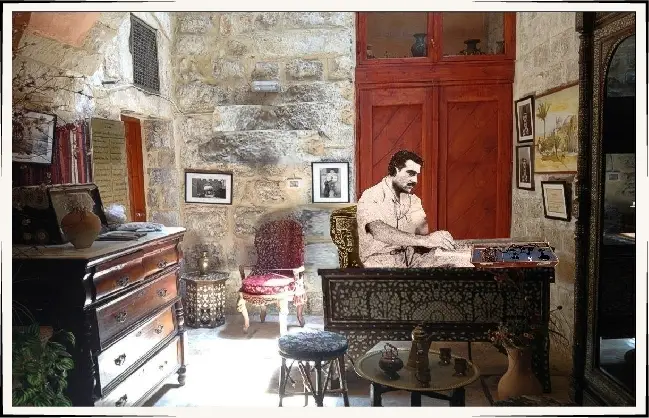
The museum’s curatorial approach emphasizes immersion and emotional engagement. Advanced multimedia techniques—including panoramic films, archival footage, hologram-like visual effects, and interactive displays—are used to recreate key moments in Cohen’s life. Narration by Israeli actor Yehoram Gaon accompanies visual presentations, while authentic period décor and reconstructed environments, such as a Damascus-style salon, help situate visitors within Cohen’s undercover world.
A central feature of the museum is its collection of original artifacts and documents, many of which were provided by Cohen’s family and Israeli intelligence sources. These include personal items such as his suitcase from Egypt, letters and postcards sent to his wife, religious objects, and operational materials connected to his espionage activities. The exhibits also trace his transformation into the Syrian businessman “Kamel Amin Thabet,” the identity under which he infiltrated Syria’s political and military elite in the early 1960s.
The narrative does not present a purely heroic portrayal. The museum addresses complex aspects of Cohen’s life and mission, including the personal toll on his family, his involvement in controversial intelligence operations, and the circumstances leading to his capture. His arrest by Syrian authorities in 1965, subsequent trial, and public execution are presented as part of a broader reflection on sacrifice, intelligence work, and national security.
In addition to its historical focus, the museum serves an educational mission aimed at diverse audiences, including students, soldiers, and international visitors. It introduces visitors to the principles of intelligence gathering and the ethical and personal dimensions of clandestine service. Guided tours are offered in Hebrew and, since 2026, in English, reflecting growing international interest in Cohen’s story.
The Eli Cohen Museum stands as a unique institution in Israel, combining historical documentation with experiential storytelling. By situating Cohen’s life within the broader narrative of Israel’s formative years, it offers insight into the role of intelligence in state-building. It commemorates the legacy of an individual whose actions had a lasting strategic impact.
Museum information
Address: 2 HaNadiv St., Herzliya
Phone/WhatsApp: +972-50-2003556
Parking: Paid parking is available in nearby lots (11 HaRishonim St. and 6 Sokolov St.) or street parking (blue and white).
Public Transportation: Lines: 29, 501, 19, 31, 2, 525, 531, 48, 3, 551, 31. You can also take the train to Herzliya Station and from there use lines 2, 3, 501, or 31. It is recommended to use public transportation apps for route planning.
Sources: “About the Museum,” The Eli Cohen Museum. [Hebrew]
Silvia Golan, “Eli Cohen Heritage Museum new guided tours in English,” diplomacy.co.il, (February 4, 2026).
Linda Dayan, “Can a Tiny Museum Near Tel Aviv Reveal More About Mossad Agent Eli Cohen Than a Netflix Show?,” Haaretz, (February 9, 2026).
Chani Kaplan, “A small Herzliya museum brings Israel's most famous spy to life,” Jerusalem Post, (March 4, 2026).
Photo: The Eli Cohen Museum.