
 |
On December 5, 1949, Prime Minister David Ben-Gurion declared that Jerusalem was an organic and inseparable part of the State of Israel. Four days later, the UN General Assembly passed Resolution 303 reaffirming its earlier call for the internationalization of Jerusalem under UN control. In 1947, Israel had accepted internationalization of Jerusalem as part of the partition plan, but after the Arabs rejected the plan and tried to prevent its implementation by force, Israel no longer felt bound by it.
After the resolution passed, Ben-Gurion announced the transfer of the Knesset and the government ministries to Jerusalem. The Knesset and the Prime Minister's Office were transferred to Jerusalem immediately, but other government offices followed gradually. A complex of one story bungalows in the Givat Ram area of Jerusalem was built to house the Foreign Ministry with a plan to move from Tel Aviv in the summer of 1953.
In May 1953, U.S. Secretary of State John Foster Dulles visited Israel as part of a tour of the Middle East. Israeli Foreign Minister Moshe Sharett informed Dulles of the plan to move the ministry to Jerusalem, and the secretary did not protest. Dulles only requested that the move not take place while he was in the region. He also asked Sharett to repeat previous commitments to protect the Christian Holy Places under its control, which he did later in the Knesset.
In the guidelines he sent Israel's diplomatic representatives to explain the coming move, Sharett asked them to emphasize the practical reasons involved. He described at length the difficulties suffered by the ministry staff, and especially the minister himself, in commuting between Jerusalem and Tel Aviv, and the harmful effects of their remoteness from the center of decision making.
The United States denounced the move and, together with other Western countries, announced that diplomats would not conduct any official business in Jerusalem. In response Sharett told Dulles that Jerusalem’s status had not changed. “New Jerusalem has in any case and to all practical purposes been our capital since 1949, and would have continued to be our capital, with the Foreign Ministry or without it.”
Today, all foreign embassies are located in Tel Aviv, though President Donald Trump announced plans to move the U.S. embassy during his speech recognizing Jerusalem as Israel’s capital on December 6, 2017. Official visits by heads of state are neverthelesss received at the Foreign Ministry.
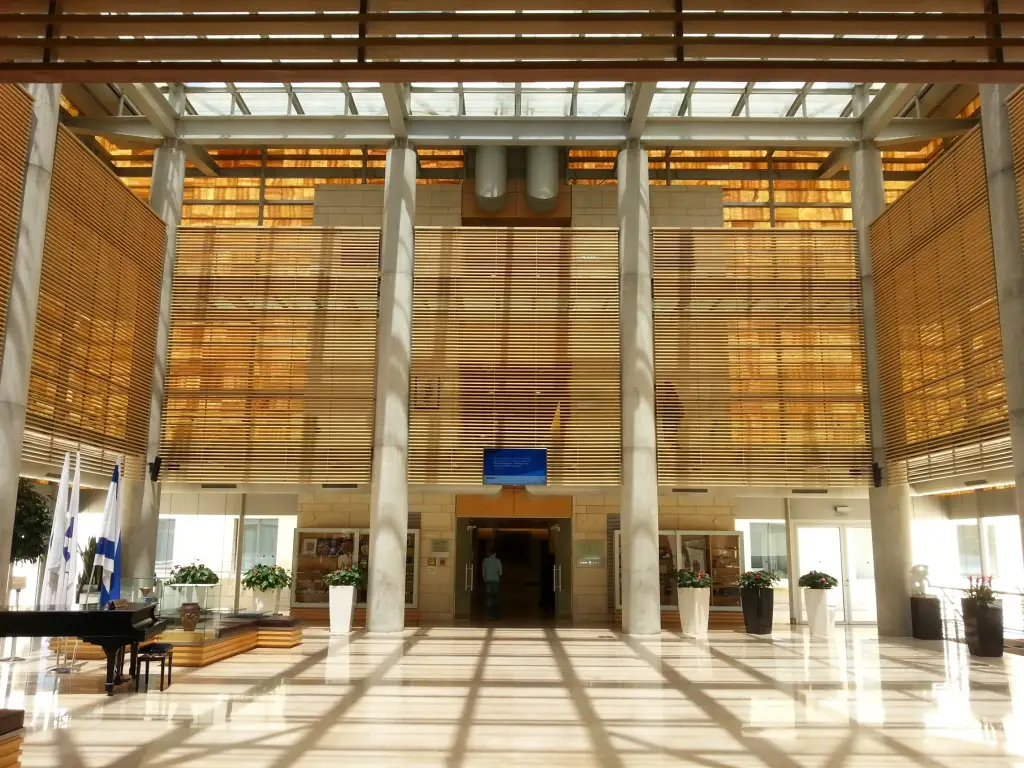
The ministry remained in the hut complex for 50 years, until moving to new headquarters in Givat Ram in 2003.
 |
Source: Israel State Archives