
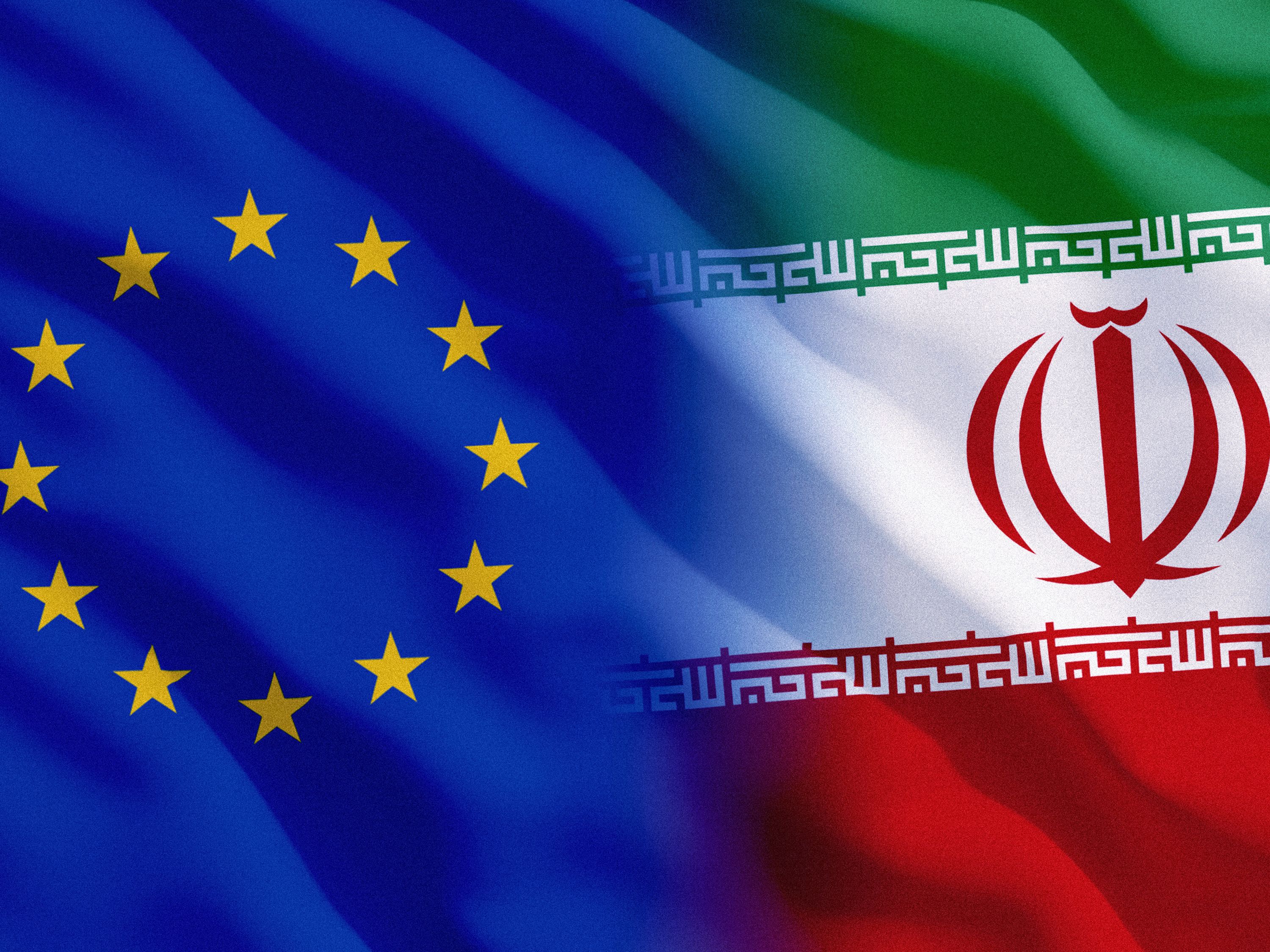
The European Union maintains one of the most extensive and multifaceted sanctions regimes in the world against the Islamic Republic of Iran. These measures, formally referred to as “restrictive measures,” are adopted under the EU’s Common Foreign and Security Policy (CFSP) and implemented through binding Council decisions and regulations. EU sanctions on Iran operate through several distinct but overlapping thematic frameworks, reflecting concerns over nuclear proliferation, human rights violations, terrorism, and Iran’s military activities abroad, particularly its involvement in Russia’s war against Ukraine.
Nuclear Proliferation and the JCPOA Framework
Human Rights Sanctions
Sanctions Related to Iran’s Military Support for Russia
Counter-Terrorism Sanctions and the IRGC Designation
Cross-Listings Under Other EU Sanctions Frameworks
Implementation and Enforcement
Nuclear Proliferation and the JCPOA Framework
The core and historically most comprehensive EU sanctions regime against Iran relates to nuclear non-proliferation. This framework was originally established in 2010 and 2012 through Council Decision 2010/413/CFSP and Council Regulation (EU) No. 267/2012, which together formed the legal backbone of the EU’s response to Iran’s nuclear program. These measures targeted Iran’s nuclear and ballistic missile activities, procurement networks, and revenue streams connected to proliferation-sensitive sectors.
Under this regime, the EU imposed wide-ranging asset freezes and travel bans on Iranian individuals and entities, as well as strict export controls on dual-use goods, nuclear-related materials, and sensitive technologies. The measures also included major financial restrictions, limitations on banking relations with Iranian institutions, and far-reaching constraints on Iran’s energy, shipping, transport, and insurance sectors.
Following the 2015 Joint Comprehensive Plan of Action (JCPOA), many of these sanctions were suspended or lifted. However, following the collapse of the nuclear agreement and subsequent diplomatic developments, the EU announced on 29 September 2025 that it had reimposed its nuclear-related restrictive measures through the JCPOA “snapback” mechanism. This effectively restored the full scope of EU nuclear sanctions against Iran, including trade, financial, and sectoral restrictions linked to proliferation concerns.
Human Rights Sanctions
In parallel to the nuclear framework, the EU operates a dedicated Iran-specific human rights sanctions regime, first established in 2011. This regime responds to what the EU describes as systematic and serious human rights violations committed by Iranian authorities, including repression of protests, arbitrary detentions, torture, executions, restrictions on freedom of expression, and the use of surveillance technologies against civilians.
The legal foundation of this regime is Council Regulation (EU) No. 359/2011, which has been renewed annually and expanded through successive implementing acts. Under this framework, the EU imposes asset freezes and travel bans on Iranian officials, judges, security officers, prison authorities, and entities involved in internal repression. The regime also includes restrictions on the export of equipment and technologies that could be used for censorship, digital surveillance, or crowd control.
In January 2026, the EU adopted a new round of human rights sanctions against Iran, extending the regime until at least April 2026 and adding additional listings connected to crackdowns on protests and political dissent.
Sanctions Related to Iran’s Military Support for Russia
A newer sanctions track emerged following Iran’s direct involvement in supplying military equipment, particularly drones, to Russia for use in the war against Ukraine. Initially, Iranian individuals and entities were listed under the EU’s Russia/Ukraine territorial integrity regime. However, in July 2023, the EU established a distinct and dedicated Iran sanctions framework specifically addressing Iran’s military support to Russia.
This regime targets Iranian defense companies, military officials, and procurement networks involved in the production and transfer of unmanned aerial vehicles (UAVs), missile systems, and related technologies. The measures include asset freezes, travel bans, and export restrictions on components and technologies linked to drone and missile production. This framework represents the first time the EU created an Iran-specific sanctions regime explicitly tied to activities outside the Middle East.
Counter-Terrorism Sanctions and the IRGC Designation
A major escalation in EU policy occurred in January 2026, when the European Union formally designated the Islamic Revolutionary Guard Corps (IRGC) as a terrorist organization. This step placed the IRGC under the EU’s counter-terrorism sanctions regime, which is based on Common Position 2001/931/CFSP and its implementing regulations.
The designation subjects the IRGC to comprehensive asset freezes and financial prohibitions across the EU, effectively criminalizing financial and economic dealings with the organization. The decision followed years of debate within EU institutions. It was justified based on the IRGC’s involvement in terrorism, repression inside Iran, regional destabilization, and military cooperation with Russia.
This marked the first time that a formal branch of a foreign state’s armed forces was designated as a terrorist organization by the European Union.
In March 2026, the European Union imposed new sanctions on 16 Iranian individuals and three entities over their role in the violent suppression of protests in January of that year. Those targeted include Iran’s Deputy Interior Minister for Security and several commanders of the Islamic Revolutionary Guard Corps involved in the crackdown, as well as judicial officials accused of forced confessions, unfair trials, and harsh sentences against activists. The sanctions also hit two IRGC regional units, an Iranian technology firm linked to a surveillance app used by law enforcement, and the head of Tehran’s cyber police. Those listed face asset freezes and EU travel bans, and EU individuals and companies are prohibited from providing them with funds. The move expands the EU’s existing sanctions regime against Iran.
Cross-Listings Under Other EU Sanctions Frameworks
Beyond the four main Iran-specific regimes, Iranian individuals and entities may also be sanctioned under other EU thematic sanctions frameworks, depending on their conduct. These include the EU cyber sanctions regime, which targets actors responsible for cyberattacks against EU member states and international partners, and potentially other thematic regimes such as those related to chemical weapons or global human rights violations.
While these frameworks are not Iran-specific, they allow the EU to list Iranian actors engaged in activities such as cyber warfare, transnational repression, or weapons proliferation under separate legal authorities. In practice, this means that some Iranian individuals appear under multiple EU sanctions regimes at the same time.
Implementation and Enforcement
All EU sanctions are legally binding on EU member states and apply to all EU persons and companies. Asset freezes prohibit making funds or economic resources available to listed individuals or entities, while travel bans prevent sanctioned persons from entering or transiting EU territory. Sectoral measures restrict trade, investment, financial services, and technology transfers.
The EU maintains a consolidated sanctions database and regularly updates its official sanctions map, which serves as the authoritative source for current listings and legal acts. These tools are used by governments, financial institutions, compliance officers, and international organizations to monitor and enforce EU restrictive measures.
Taken together, EU sanctions on Iran constitute a complex and layered system that combines non-proliferation policy, human rights enforcement, counter-terrorism law, and geopolitical containment. Unlike U.S. sanctions, which are often extraterritorial, EU sanctions are primarily territorial but remain among the most comprehensive multilateral measures imposed on any single state.
“EU sanctions against Iran,” ECCEU.
“Restrictive measures against Iran,” EUR-Lex.
“Restrictive measures in relation to serious human rights violations in Iran,” EU Sanctions Map.
“Iran sanctions snapback: Council reimposes restrictive measures,” ECCEU, (September 29, 2025).
“Iran: Council adopts new sanctions over serious human rights violations and Iran’s continued support to Russia’s war of aggression against Ukraine,” ECCEU, (January 29, 2026).
“EU confirms it has reinstated sanctions against Iran,” Reuters, (January 29, 2026).
“Iran: Council sanctions an additional 16 persons and three entities over serious human rights violations,” ECCEU, (March 16, 2026).