
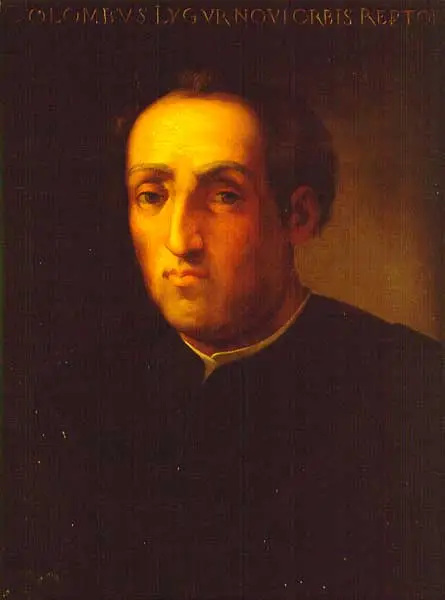
Abraham ben Samuel ben Abraham Zacuto was a Sephardic Jewish astronomer, mathematician, physician, astrologer, and historian whose astronomical tables became an important tool of early oceanic navigation. Born in Salamanca in the Kingdom of Castile, Zacuto descended from a family that left France after the 1306 expulsion. He received a traditional Jewish education, reportedly studying under Isaac Aboab, while developing expertise in astronomy and mathematics. His life reflected both the intellectual vitality of late medieval Spanish Jewry and the upheaval of the expulsions from Spain and Portugal.
Between 1473 and 1478, Zacuto composed Ha-Hibbur ha-Gadol (The Great Composition) in Hebrew. The work paired instructions with tables calculated for the meridian of Salamanca and a base year of 1473, enabling users to determine the positions of the sun, moon, and planets. Astronomical calculation also had religious uses, including determining the new moon and regulating the Jewish calendar. Zacuto recorded observations of celestial events and worked in scholarly circles linked to Bishop Gonzalo de Vivero and later Juan de Zúñiga. Earlier accounts often stated that he taught at the University of Salamanca, but modern scholarship has found no firm evidence that he was formally a student or professor there.
Following the expulsion of the Jews from Spain in 1492, Zacuto moved to Lisbon. A document dated June 9, 1493, identifies him as a royal astronomer, and he served during the reigns of João II and Manuel I. Joseph Vizinho adapted his tables, and Latin and Castilian versions appeared in Leiria in 1496 under the title Almanach Perpetuum. One of the earliest printed sets of astronomical tables in Portugal, it was repeatedly reprinted. Its solar data helped navigators calculate latitude when the Pole Star became unreliable near the equator. The tables informed the voyages of Vasco da Gama and Pedro Álvares Cabral and circulated among other navigators, including Christopher Columbus. Later historians have questioned claims that Zacuto personally designed maritime instruments or trained explorers; his documented influence rested principally on his astronomical tables.
After Manuel ordered the Jews to leave Portugal in 1496 and the crown imposed forced conversions in 1497, Zacuto and his son Samuel departed. Accounts say he was taken prisoner twice during a difficult journey before reaching Tunis. There, in 1504, he completed Sefer ha-Yuhasin (Book of Genealogies), a chronicle of Jewish history from Creation through 1500. The work traced the transmission of the Oral Law and surveyed biblical, Second Temple, and rabbinic history. Although later scholars identified errors and weaknesses in its use of sources, it became an influential work of Jewish historiography. It was printed in Constantinople in 1566, Kraków in 1581, Amsterdam in 1717, and in a fuller edition in London in 1857.
Zacuto later moved to Ottoman lands, including Jerusalem, where he compiled additional astronomical tables in 1513. The circumstances of his death remain uncertain; sources place it around 1515, possibly in Jerusalem or Damascus. His career linked Hebrew scientific scholarship with early printing and the growth of oceanic navigation, while Sefer ha-Yuhasin preserved his standing as a major chronicler of Jewish history.
Sources: Cirilo Flórez Miguel, “Zacut: Abraham ben Samuel Zacut,” Biographical Encyclopedia of Astronomers, (2007).
Mariano Gómez Aranda, “Abraham Zacuto (1452-1515),” madri+d, (December 16, 2008).
Bernard R. Goldstein, “Astronomy as a ‘Neutral Zone’: Interreligious Cooperation in Medieval Spain,” Medieval Encounters, (2009).
Bernard R. Goldstein, “Abraham Zacut’s Signature: A Mystery Solved,” Aleph, (2011).
Jens Bartelson, “Cosmologies of Conquest: The Renaissance Foundations of Modern International Thought,” Review of International Studies, (December 18, 2023).
“Nos 530 anos do Almanach Perpetuum, de Abraham Zacuto,” Biblioteca Pública de Évora, (March 4, 2026). [Spanish]
Shlomo Pereira, “On Columbus Day, remember Abraham Zacuto, the Jewish astronomer history forgot,” JTA, (October 12, 2026).
Photo: Public domain via Wikimedia Commons.