A brutal new mode of warfare
spread fear across Western Europe in the spring
of 1940: blitzkrieg. The theory of lightning
war-armored thrusts with aerial support-had
been developed in the 1930s by British strategists
led by Capt. Basil Liddel Hart. But, although
they had invented the tank, the British never
fully exploited the use of armor as a striking
weapon.
Across the English Channel,
the concept was readily adopted in Adolf
Hitler's Germany, where Field Marshal
Heinz Guderian developed and perfected panzer
warfare. Unleashed on Poland in September 1939, blitzkrieg crushed the
gallant Polish Army in 28 days and, as one
author put it, "the death rattle of a
people could be heard around the world."
Now, in the bright spring
of 1940, blitzkrieg was loosed again. Early
that May, fast-moving German armor and infantry
columns rumbled into Belgium and Holland and, bypassing the vaunted Maginot Line, mushroomed
into France.
The River Meuse was crossed at Sedan on May
14, and the Nazi spearheads fanned out across
France. Outgunned, outmaneuvered, bewildered,
and dispirited, the French Army reeled southward
before the German juggernaut.
Panic and confusion reigned across France,
and the muddy roads were jammed with refugees
fleeing southwestward toward the Pyrenees.
Hundreds of thousands of French joined the
long columns of Belgians, Dutch, Poles, and
Jews, a straggling mass of humanity with only
one aim: to keep moving, away from the Germans.
French writers have called the multitude that
crammed the roads of France for hundreds of
miles "le peuple du desastre" ("the
people of the disaster"). By some accounts,
they numbered in the millions. They used everything
that could move-cars, trucks, farm wagons,
and pushcarts laden with belongings. Men,
women, and children wept and shouted. When
their means of transportation eventually broke
down, or simply ran out of gasoline, they
were abandoned. There was no fuel to be found.
Terrified and dazed from weariness, hunger,
and thirst, the refugees continued on foot.
Few had much money, and few knew where they
were going. They trudged along, pinning vague
hopes on the southwestern port of Bordeaux.
Beyond lay the Pyrenees, and neutral Spain
and Portugal.
But meanwhile, their feeble powers of locomotion
posed no challenge for the German airplanes.
Stuka dive-bomber and Messerschmitt fighter
pilots enjoyed a field day in that late spring
of 1940 as they pounced out of the sun upon
the slow-moving, defenseless columns. Roaring
at treetop level with machine guns clattering,
the planes rained hellfire on men, women,
and children. Screams pierced the air as all
scrambled for cover in ditches or under trees
and vehicles. Spread-eagled bodies lined the
roads by the hundreds after each strafing.
Still, the bedraggled columns wound slowly
on toward Bordeaux, and the historic port
city braced for the deluge of humanity. As
early as May 14, four days after the German
invasion of the Low Countries, the Bordeaux
daily newspaper, La Petite Gironde, wrote
of the imminent "mass arrivals"
of refugees.
By the hundreds and the thou- sands they straggled
in. The streets were choked with cars and
the refugees slept in vehicles, on park benches,
or on sidewalks. Thousands of Jews congregated
around the city's synagogue.
Tempers were frayed and fear was everywhere-fear
of being bombed, fear for the loved ones who
had become separated, fear of being ordered
into the French detention camps and trapped
when the Germans arrived. Many, who knew only
too well what to expect at the hands of the
advancing scourge, scrambled for passports
or visas to enable them to leave France.
Most of the hopeful received
short shrift. Latent anti-Jewish sentiment,
rekindled by Nazi propaganda, mounted in Bordeaux,
making it a hotbed of despair for the most
helpless. Sea passage, at suddenly skyrocketing
prices, was promptly booked up by the wealthy.
Escape by land was possible only through neutral Spain and Portugal.
From Lisbon, passage to countries beyond Europe
was obtainable. A Portuguese transit visa
was necessary to exit France, though, for
at the time Spain permitted no refugee to
enter her territory who could not present
one.
Generalissimo Francisco
Franco, mindful of the blood debt he owed Hitler for assistance to his fascist cause during
his country's civil war, was determined to
keep Spanish soil rigorously closed off to
the pitiful multitude fleeing the oppression
of Nazism. The policy did double duty: It
showed support for the Fuhrer, and kept unwanted
settlers out of his still unsettled Spain,
where widespread hunger and consequent ill-health
plagued the population. Bread was scarce and
already severely rationed.
And thus, in Bordeaux thousands of desperate
refugees stormed the well-appointed Portuguese
Consulate at 14 Quai Louis XVIII; each hoping
to gain the all important Portuguese transit
visa before the German Army arrived. They
did not know the person in charge of the consulate,
only that someone in the building now held
their earthly fates in his hands.
Hope for a signature and consular stamp that
would allow them to pass through Spain and
enter the little country with a long coastline
and seaports kept thousands rooted to the
pavement day and night, in an ever-widening
circle around a building that had become unapproachable.
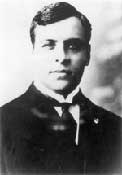
Consul-General Aristides de Sousa Mendes was
in charge of the Portuguese Consulate in Bordeaux,
in 1940. His colleagues esteemed him an able
and dedicated career diplomat. When history
catapulted him overnight to the position of
custodian of human lives hanging in the balance,
he proved that he was far more.
For the hope that the refugees pinned on the
consul as Consul of Portugal in Bordeaux was
quite ill-founded. The consul served Portugal's
Premier Antonio de Oliveira Salazar, on whose
mind weighed heavy concerns. But the plight
of those displaced by the blitzkrieg was not
one of these.
The policy of strict neutrality
Salazar had formally adopted from the outbreak
of the war placed him in the unenviable position
of having to juggle two suddenly antagonistic
claims on his country's loyalty. England could invoke the Anglo-Portuguese Alliance
world's longest-standing diplomatic union
dating back to the Treaty of Windsor-to demand
concessions in service of her cause. Closer
to home, Salazar was also bound to Spain's
Generalissimo by the.March 1939 treaty of
Friendship and nonaggression (or Pacto Iberico).
The two Iberian dictators understood well
how the eruption of war had nicked the six-months-old
"Friendship." Franco feared Portugal's
ties with England, and cunningly assessed
the potential interest of his enfeebled Spain
in Hitler's conflict. Salazar evaluated the
degree of the Generalissimo's involvement
with the Reich, and tabulated resulting consequences
to his own country. As he saw it, were Franco
to join the Axis powers, Portugal would be
inexorably annexed into some kind of Germanized
grander Spain.
To curb the pro Axis leanings of the Spanish
dictator, by displays of Iberian solidarity,
was Salazar's primary concern. He used diplomacy,
supplemented with gifts of wheat and corn.
And he promptly adhered to Franco's hands-off
policy regarding refugees from Hitler's aggression.
On Nov. 11,1939, Salazar issued a directive
forbidding his diplomats in Eumpe from granting
transit visas to certain categories of people
with-out express permission from Lisbon. The
categories included "Jews expelled from
the countries of their nationality or those
from whence they issue," and "stateless
persons," plus "all those who cannot
safely return to the countries whence they
come."
Curiously, Salazar distanced himself from
the directive he was putting into effect,
claiming instead that it was meant "to
avoid abuses, or loose practices" which
his Police of Vigilance and Defense of the
State (PVDE) deemed "inconvenient or
dangerous." The PVDE, Salazar's own political
police, had much discretionary power but was
hardly endowed with policy-making authority.
That Salazar kept securely in his grasp.
On May 17, 1940, Salazar
gave the clock another turn: "Under no
circumstances" was any visa to be granted,
unless previously authorized by Lisbon on
a case-by-case basis. In practical terms,
the new orders from Lisbon meant that the
calamities beyond the Pyrenees were to remain
beyond the Pyrenees. Portugal was to steer clear of any show of unfriendliness
toward Germany,
or Spain.
And so, the wretched multitudes around 14
Quai Louis XVIII were looking for their salvation
from Someone whose authority had been virtually
suspended. As a diplomat, Consul-General Sousa
Mendes had nothing to offer them. What happened
next is the little-known story of a man who
rose above all personal considerations and
did the diplomatically unthinkable: He rebelled
against service orders and used his office
to overturn them, on behalf of humanity.
First in Bordeaux, then in Bayonne and in
the streets of Hendaye near the Spanish border,
Aristides de Sousa Mendes indiscriminately
issued transit visas for entry into Portugal
to an astounding 30,000 refugees, beating
the Nazis to their lives. By sheer magnitude
of daring and weight of numbers., Sousa Mendes
effectively opened up a refugee escape route
where none had existed. It would remain through
the war and be used by an estimated million
refugees He paved that route with all he had:
his good name, position, income, health, friends,
and the future of his loved ones.
"I recognize as an
act of God that such a man as this was at
the right place at the right time," Moise
Elias of New York would write 26 years later
to the Yad
Vashem Holocaust Remembrance Authority.
Elias was, with his wife, among the fortunate
who, in 1940, happened upon "The Angel
of Bordeaux," as Sousa Mendes has been
called. By best estimates, 10,000 of the men,
women, and children he saved were Jews, who
would have ended up in German labor or death
camps.
But Sousa Mendes' conscience pitted him against
Salazar. Although a mild version of his tyrannical
contemporaries, Salazar nonetheless tolerated
no disobedience. Both the hero and his humanitarian
feat were officially repudiated. For decades,
no mention of Sousa Mendes was allowed in
the country where he spent the rest of his
days as an outcast. The ostracism extended
to his family, inflicting suffering on his
wife and children.
The man of courage and conscience who stood
alone in 1940 to defy three dictators and
defend humanity was deliberately sunk into
oblivion. He died a martyr, and was denied
a page-or even a footnote-in the history books.
Aristides de Sousa Mendes was born on July
9, 1885, in the village of Cabanas de Viriato
in the scenic northern province of Beira Alta,
Portugal. He was the son of Jose de Sousa
Mendes, a well-to-do high court judge, and
Maria Angelina de Abranches.
Aristides and his identical twin, Cesar, were
raised with strong values centered on the
family's ancestral traditions and profound
Catholicism. The twin boys learned to respect
the law at their father's knee, and pursued
law degrees at Coimbra University, one of
the oldest universities in Europe. They graduated
in 1907, with identical grades. Opting for
careers in the diplomatic corps, they occupied
varied posts over the globe. But tlie special
bond of twinship remained a constant in the
brothers' lives.
Aristides married his beautiful cousin, Angelina,
before entering the Foreign Service in 1910.
"Gigi'" as her husband called her,
was a woman of simple tastes, great heart,
and uncommon valor. She would share the burden
of her husband's one man rally against inhumanity
and be victimized along with him, die an atrocious
death, and be denied even a common obituary.
From the beginning of Mendes' diplomatic career,
Angelina traveled with him on assignments,
pleasant and arduous alike: British Guiana,
Spain, California, and else-where. Along the
way the couple had a total of 14 children.
The glamour and adventure of the family's
lifestyle was tempered with many a serious
bout of malaria, and the challenges of finding
adequate housing and proper schooling.
The year 1929, disastrous for so many, was
a good year for the Sousa Mendes clan. The
diplomat was promoted to consul-general and
assigned to the bustling Belgian port city
of Antwerp. He settled with his family in
nearby Louvain, where the 13th and 14th children
were born. The older sons and daughters attended
the famous university.
Evenings were special times for the family.
The children played their instruments and
the consul displayed his tenor's range while
mother sat by with the youngest on her lap.
Before bedtime, the father led the family
in praying the Rosary. Not even the maids
were excused. Sunday outings. after church,.
were de rigueur, for the jovial Sousa Mendes
was passionately fond of joining in the children's
games.
Antwerp was the most rewarding assignment
of Sousa Mendes' career. He became the dean
of the diplomatic corps there. The couple's
hospitality was well-known, and the city's
mayor was a frequent dinner guest. Other visitors
included Maurice Maeterlinck, and even Albert
Einstein. Vacations were spent at the homestead
in Cabanas de Viriato, which Aristides enlarged
and improved, envisioning golden years with
wife and flocks of grandchildren visiting
and cheering up the aging grandparents.
It was also in Antwerp that, in 1934, terrible
tragedy struck. Gathered around the table
to celebrate the university graduation of
the second son, Manuel, the family gasped
in horror as the graduate sank to the floor
and died The autopsy revealed a ruptured blood
vessel. Months later, the couple lost also
their youngest and 14th child. Their great
faith sustained them, but life had been forever
altered for this uncommonly cohesive family.
The experience of painful loss in Antwerp
may have been an indirect cause of Sousa Mendes'
presence in Bordeaux during the critical months
of 1940. He did not asked to be assigned to
a consular post in Bordeaux, but did ask for
a transfer from Antwerp. That son Jose showed
no signs of recovering from the death of the
brother to whom he was closest may have weighed
in that decision.
Sousa Mendes wrote to Lisbon in 1938, requesting a promotion and a post
in the Far East. His request was handled personally
by Premier Salazar, who responded by naming
him consul-general in Bordeaux. Sousa Mendes
appealed, twice, but Salazar turned a deaf
ear. The family moved to the French port city
in August of that year, to the as-yet-ordinary
14 Quai Louis XVIII address. The building
provided ample living quarters side by side
with office space. Life resumed. The children
found new schools and new friends, they liked
the mild and sunny climate, and Sunday family
outings were now in the French countryside.
Then came the fateful month
of September 1939. Germany invaded Poland on September 1, and Great Britain and France
declared war two days later. Life as the Sousa
Mendes family knew it was over, for Europe's
darkest night was suddenly upon all. One of
the consul's first acts was to take his children
to the safety of the homestead in Portugal,
where they were cared for by relatives and
servants. Two adult sons, Pedro Nuno and Jose,
remained in Bordeaux with the parents .
Within days of the new orders, Sousa Mendes
was taken to task for having granted a visa
to a Viennese refugee, Professor Arnold Wizrntzer.
Called to task by his superiors, Sousa Mendes
answered:
"He informed me that,
were he unable to leave France that very day,
he would be interned in a concentration [read,
detention] camp, leaving his wife and minor
son stranded. I considered it a duly of elementary
humanity to prevent such an extremity:"
The infraction was only the first. By April
1940, he had violated regulations often enough
to earn a stem official reprimand. The Portuguese
border patrol. an arm of the PVDE, kept watch
for his transgressions and reported them to
his superiors.
As the month of May wore
on, besieging the consulate day and night
were army officers from occupied Austria, Poland,
and Czechoslovakia; French, Belgian and Luxembourgois
anti-Nazis; intellectuals and writers who
had denounced fascism; artists and journalists;
priests and nuns and countless Jews, all seeking
to evade the Nazis' murderous grasp. Each
refugee carried his own fear, and each shared
in the collective panic. Some were old, and
some were sick. There were pregnant women,
and many children who had seen their parents
killed on the roads by German gunfire.
Too prudent a father to disregard service
orders heedlessly, Sousa Mendes fired off
hundreds of telegrams to Lisbon, assisted
by his 20-year-old son Pedro Nuno. Each telegram
had to be written in code, detailing 'he individual
visa requests. Pedro Nuno carried the stacks
to the telegraph office, and ensured that
they were expedited.
From Lisbon there was mostly silence.
By the second week of June, with talk of an
impending Franco-German armistice in the air,
tensions increased and law officers had to
be posted in and around the consulate. Aristides
and Angelina had opened their home to as many
of the neediest as the walls could hold. Angelina
cared for them. Of these, one was a 10-year-old
Belgian boy, still clutching tightly to a
little bag of diamonds; his parents had vanished.
Another was a renowned Sorbonne professor,
whose home the Nazis had already plowed through.
Disabled by fear, he stayed in his pajamas
all day long.
And there was a rabbi, Chaim Kruger, with
his wife and five children. The Krugers had
fled from Poland to Belgium, then from Belgium
to Bordeaux. The consul and the rabbi became
friends.
More and more, as the siIence from Lisbon
continued, Aristides and Angelina were living
the disaster with the victims. Twice, the
consul cabled his superiors requesting authority
to deal with the emergency. He was tersely
referred to the directives that were already
in place. He had his orders, and only Lisbon
could approve visas. All told, Sousa Mendes
was to remain marooned amidst thousands of
the "shipwrecked"-his word to describe
the refugees-and he was to accommodate the
Nazis who were virtually at the door.
On June 12, Franco changed Spain's status
from "neutral" to a more menacing
"non-belligerent." Salazar depended
on Teotonio Pereira, his ambassador in Madrid,
to keep a finger on Franco's pulse. The Germanophile
envoy opposed any change in policy regarding
refugees, and warned that sheltering "the
scum of the democratic regimes" would
bode ill for Portugal in the eyes of Spain.
The effect that Lisbon's unremitting silence
had upon Sousa Mendes was recorded in an extant
account by his student nephew, Cesar, the
son of his twin. Cesar Mendes Jr. had left
Paris where he attended the university and
taken refuge in Bordeaux. He wrote:
"All the rooms in the consulate building
were full of people. They slept on chairs,
on the floor, on the rugs. Even the consul's
offices were crowded, with dozens of refugees
who were exhausted. dead tired, because they
had waited days and nights on the street,
on the stairways, and finally in the offices."
"They could not take care of their needs,
they did not eat or drink for fear of losing
their places in the lines, which happened
nevertheless and caused some disturbances.
My uncle fell ill, and had to take to his
bed... He got up, impelled by a "divine
power"-These were his own words-and gave
orders to grant visas to everybody."
The three days of Aristide's confinement,
June 14.15, and 16 bear precious witness to
Angelina's valor. She became the rock, bearing
up under the pressure and sustaining her husband
as he lay prostrate, rent by anguish. One
son, Sebastian, later heard the father speak
of a night spent entirely in prayer, together
with his wife. It was during those three days
that his father's hair turned white, wrote
Sebastian.
What is certain is that on June 17, Aristides
de Sousa Mendes was a man free of all diplomatic
constraints, who worked thereafter exclusively
to rescue refugees by the thousands, and who
could not be intimidated.
The work started immediately. It was an assembly-line
operation. Passports were gathered in stacks.
and in bags. One person stamped them, others
filled in the required wording, and the consul
signed them. To save time, he often abbreviated
his signature to simply "Mendes."
No fees were collected, and no entries made
in the consular registry. Rabbi Kruger, the
consul's two sons, and some refugees assisted
on the assembly line. To the countless numbers
who had no documents, visas stamped on pieces
of paper were handed out
The work continued all through June 17 until
well past midnight, and hardly a dent was
made on the crowds: Marshal Henri Petain's
radio address, that day, which left no doubt
that an armistice between France and Germany
would be signed, on Germany's terms, had brought
new waves to the Quai Louis XVII.
The marathon recommenced
on the 18th. That day, Henry Count Degenfeld
entered the consulate with 19 passports for
the imperial family of Austria. Otto of Habsburg's
name was at the top of Hitler's blacklist.
The count was told to return later that night.
The woes of the Habsburgs weighed no heavier
on Sousa Mendes than those of the people who
had waited days and nights.
After 10 p.m., the count returned and received
visas for the Archduke of Austria and his
entire household. Then, the archduke went
himself to the consulate and obtained a large
quantity of visas, stamped on paper, for Austrian
refugees in hiding.
Otto of Habsburg and his retinue crossed Spain
undisturbed, and entered Portugal on June
20. Not long after, the archduke was informed
by Salazar that Hitler had demanded his extradition.
The demand would be refused, the Portuguese
ruler told him but hinted that his safety
was precarious. The Habsburgs departed for
the United States.
Unaccountably, Sousa Mendes was not picked
up for the presumed quasi-incident. In all
likelihood, Salazar's move was preemptive.
But the Nazi behemoth went its evil way, and
did not interfere with the torrent of humanity
that had begun to flow through Spain and into
Portugal.
Although he did not use force, Salazar did
recall his stray consul, on June 24, by way
of telegram. Sousa Mendes made full use of
his freedom of movement. He remained In France
until July 8, and spent himself in saving
the endangered. He had initiated an exodus,
and as long as his name and his consular stamp
could compel the Spanish border patrol to
let refugees through, he would not stop.
The thousands of visas emitted by Sousa Mendes
were honored at Irulan, on the Spanish border.
because the consular stamp made them an official
request from one country to another. The Pacto
Iberico provided for such niceties between
the two nations. But passage through Spain
was one way only, with no stops; on that point
the Spanish were adamant. As the trains of
refugees pulled in at Vilar Formoso, on the
Spain-Portugal border, the PVDE raged. The
Spanish replied that if they had honored the
visas out of courtesy, the Portuguese certainly
were bound by them. And the refugees were
allowed in.
Sousa Mendes' stand was
a fait accompli to which Salazar and his political
police had to bow. A mechanism had been set
in motion; once the refugees crossed the bridge
at Hendaye-Irun and were granted passage through
Spain, there was no return. Sousa Mendes had
forced open an escape route for many.
"It was indeed my objective to save all
those persons, whose affliction was beyond
describing," he declared later to his
government, in a handwritten statement extending
to several pages. "The imperatives of
my conscience... never ceased to guide me
in the performance of my duties, with perfect
knowledge of my responsibilities," he
affirmed.
In Bordeaux, the consulate continued to be
besieged through June 19. That night, German
planes bombed the city. Panic stricken, the
crowds decamped and ran blindly for Bayonne
and Hendaye, closer to the Spanish border.
Sousa Mendes left his wife and sons in Bordeaux.
and followed the terror driven refugees.
He made his way through the perilously congested
road to Bayonne, where he found the Small
Portuguese consulate encircled by some 5,000
persons with another 20,000 lined up along
the streets. The consular staffers were effectively
caged in, and had devised a passageway for
themselves through the roof. As for visas
to the distraught, the orders from Lisbon
were being faithfully obeyed.
Normal service rules gave Sousa Mendes jurisdiction
over the Bayonne consulate. He promptly assumed
control: visas to everyone. Reassuring his
caged-in subordinate, Consul Machado, that
he assumed all responsibility, Sousa Mendes
recruited all available hands and duplicated
in Bayonne the Bordeaux "visa assembly
line." Over the next 48 hours, thousands
heard their names called out and were handed
the precious, life-giving signature and consular
stamp.
Meanwhile, Consul Machado felt obliged to
wire Lisbon and report the breach of norms.
For good measure, he also telephoned Ambassador
Pereira in Madrid. Pereira had no jurisdiction
over consulates in France. All the same, he
prepared to travel to the frontier and see
for himself. It was a trip that would prove
fatal to many.
On the afternoon of June 22, Sousa Mendes
left Bayonne for Hendaye. France had submitted
to the armistice terms dictated by Germany,
and the panic of those on the run reached
new and explosive levels. They took to the
road in a mad frenzy, pushing for the Spanish
border. Sousa Mendes wanted to be there.
From Lisbon, two cablegrams were expedited
that day, one to Bordeaux the other to Bayonne,
instructing Sousa Mendes to stop. But he did
not receive either one. By now he was in the
Streets of Hendaye, handing out large numbers
of visas. At this stage, many of the "visas"
were odd scraps of paper, variously worded
to the effect that the bearers had the right
to enter Portugal, and would Spain kindly
grant them passage through her territory.
The unorthodox documents kept the great exodus
moving.
The situation was grim. Sousa Mendes spoke
later of those he was not able to prevent
from committing suicide in front of him. And
Otto of Habsburg recalled in his old age that,
as he was admitted into Spain, another prominent
figure was turned back. The rejected refugee
implored on his knees, but to no avail. Rabbi
Kruger wrote that, when he stood at Irun awaiting
admittance, disputes arose between the refugees
and the Spanish guards. The gate remained
closed. This time, Sousa Mendes went inside
to mediate. Even though he had no authority
to fall back on, he returned in two hours
to open the gate himself. One more group scrambled
into Spain to board trains for Portugal.
As the afternoon of June 23 drew to a close,
Portugal's highest envoy to Spain, Ambassador
Pereira, arrived at Irun to survey the anomaly,
and took great offense at what he saw, He
wrote:
"I came across Consul Aristides Mendes
and asked him to explain to me such an extraordinary
behavior.. . From all thatI heard, and from
his greatly unkempt appearance, my impression
was of a disturbed man, not in his right mind....Mr.
Aristides Mendes' behavior suggested such
derangement that, as I proceeded on the spot
to inform the Spanish authorities of my decision
to declare null and void the visas granted
by the Consul of Bordeaux to those who were
still in France, I had no qualms stating that
I was certain that the Consul in question
had lost the use of his facilities."
Aristides de Sousa Mendes did not raise again
the border gate at Irun. But a precedent had
been set. As the I war wore on, many of Europe's
persecuted passed through Spain and Portugal
to freedom. As to those whom Pereira cut short,
their numbers and fates are unknowable. The
AP news agency related, the following day,
that some 10,000 persons were trying to cross
over into Spain, but that authorities no longer
recognized certain Portuguese visas.
The local press also ran the story, the juicy
part. The San Sebastian daily El Diario Vasco
reported on June 25 that "the Consul
of Portugal in Bayonne" had succumbed
to insanity. It is not known whether Sousa
Mendes' accuser, Consul Machado, saw the irony
in the misprint. He left the post shortly
after.
Much of Sousa Mendes' work among the refugees
has been lost to history, but ii is known
that he began to lead groups to an obscure
border post where the guard knew nothing of
Teotonio Pereira, and that he did not leave
the streets of Hendaye until June 26, when
the Germans moved into Bayonne. Returning
to Bordeaux, he found Salazar's cablegram,
dated June 24: He had been relieved of his
post and was ordered to leave France.
Sousa Mendes did not rush.
Wehrmacht units started occupying Bordeaux
on June 27, and Hendaye the following day.
Many thousands were now definitively trapped.
He had more work to do. Portuguese passports
could prevent deportation to concentration
camps, so he began to issue them discreetly.
Many were spared by this action, but it did
not go unreported for long. He was again censured
by Lisbon, and ordered again to leave France.
The return of the solitary
hero to Southwestern France posed a dilemma
for Premier Salazar. He named a disciplinary
council to define charges against the errant
consul and determine penalties. But defining
charges was not easy. Cities and towns were
filled with refugees from many countries,
openly voicing gratitude to the regime that
had facilitated their rescue in the nick of
time. The consul's disobedience had brought
the government much good press. A Life magazine spread on July 29, 1940, dubbed Salazar
"the greatest Portuguese since Henry
the Navigator."
The shrewd premier found
it far more judicious to let the fiction take
root. As had the Habsburgs, so had the government
of Luxembourg, some of the Rothschilds, and
members of the Belgian Cabinet passed through
Portugal with visas from Sousa Mendes without
incident to the regime. Salazar embraced the
credit. And, lest any ill will might have
accrued to Portugal in Spain, he had Ambassador
Pereira work promptly on a protocol addition
to the 1939 Pacto Iberico. Signed in July
1940, the agreement contained Franco's assurances
that Spain would respect Portugal's independence.
To his credit, Salazar did
not again close the country's borders against
war refugees. Nor did he ever forgive Sousa
Mendes for having forced his hand. He refused
to see again his ex- consul of Bordeaux, or
to communicate with him in any way. After
an acceptable amount of paper shuffling, the
disciplinary council determined Sousa Mendes'
case one of "professional incapacity."
He was rendered contemptible and officially
shunned. The voluminous case files were closed,
classified, and locked up.
For Aristides de Sousa Mendes, now a disgraced
non-person, the rest of his days would be
one long Calvary. He tried many times to obtain
a proper hearing, but met a wall of silence.
His twin, Cesar, attempted to intervene on
his behalf, and found himself suspended from
his own post for five years.
Unable to return to employment or be retired,
Sousa Mendes and his family were in effect
consigned to starve. The education of the
younger children had to be cut short, and
the older ones could not find jobs. In Salazar's
Portugal, all ears were deaf to those shunned
by the autocratic ruler. The family began
to take meals, along with refugees at a Lisbon
soup kitchen run by the Hebrew Immigrant Aid
Society (HIAS).
Occasionally, Sousa Mendes was summoned for
a supposed interview with Salazar. He would
be kept waiting in the vestibule all day,
and then dismissed. Former colleagues ignored
his greetings. He was closely watched and
interrogated by the PVDE. Active files were
also kept on his older children.
The financial hardship and protracted humiliation
took a toll. Weeks before the end of the war,
Sousa Mendes suffered a stroke which left
him partially paralyzed. The children stood
by him, as did Angelina, but her own health
did not hold for long.
The brave and noble-hearted wife of Aristides
de Sousa Mendes had assuaged great pain as
streams of suffering humanity invaded her
life and her Bordeaux home in those terrible
post-blitzkrieg weeks of 1940. But Angelina
lacked the strength to see her husband through
his punishment. She suffered a cerebral hemorrhage
in 1948, and never regained consciousness.
With no insurance and little money, medical
care was scarce. She remained in a Lisbon
basement apartment, where the water rose when
itt rained. Angelina died, at 60, only after
languishing for six months in a state of growing
decomposition, remembers her youngest son,
John Paul. The censored newspapers did not
run an obituary.
Sousa Mendes survived his wife by six years.
He hoped that some day his good name would
be restored by his government, but it did
not happen.
With the help of the HIAS, the traumatized
Sousa Mendes children emigrated, one by one,
to seek lives in Belgium, Africa, Canada,
and the United States.
A destitute outcast in his own country, Aristides
de Sousa Mendes died on April 3, 1954, at
the Franciscan Hospital of the Tertiary Order
in Lisbon. One niece, Madalena, stood vigil
at his bedside. There were no obituaries for
him either, with the exception of a newspaper
in the (then) Belgian Congo.
The heavily mortgaged homestead at Cabanas
de Viriato-minus some doors which, to keep
from freezing in winter, the ex-consul had
already burned-was sold at auction to pay
his debts. Then it was looted of its contents.
Still standing, the home is in an advanced
state of decay.
Next to the half-ruined house stands a memorial:
a 40-foot monument to Christ the King, attesting
to the spirit of a man who told his government
"1 would stand with God against man,
rather than with man against God," Sousa
Mendes had the monument erected, at nearly
ruinous personal expense, in 1933, and it
was the first of its kind in the country.
The villagers keep the memorial immaculate,
and point to it with great pride.
Historians have estimated that one million
refugees fled from Nazism through Portugal
during World War II. The precedent was forcibly
created in 1940 by Aristides de Sousa Mendes,
who paid in suffering for his deeds.