Rafael “Raful” Eitan
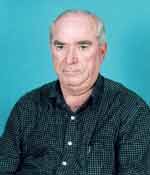
(1929 - 2004)
Rafael Eitan was born in 1929 at Moshav Tel
Adashim in the Jezre'el Valley, where he has continued to live
throughout his military and public careers.
Beginning as a teenage Palmachnik,
he served in the Israel
Defense Forces (IDF) since its establishment in 1948. A graduate
of the National Defense College, he served as a paratrooper officer
in 1956 Sinai Campaign and
the 1967 Six Day War, and
was a divisional commander on the Golan
Heights in the 1973 Yom
Kippur War. He was wounded four times in battle.
Rafael Eitan was IDF Chief of Staff from
1978-83. As Chief-of-Staff, he initiated a program to enable underprivileged
youth to enlist in the IDF and integrate into Israeli society. Eitan's
retirement from the army in 1983 was overshadowed by an investigation
into the massacre of Palestinian
refugees by an Israeli-allied Christian militia during the Lebanon
War. The Kahan Commission found that Eitan should have anticipated the danger and opposed the
decision to send the Christians into the camp.
After leaving the army, he formed the Tzomet
Party and was known for his opposition to transferring land to the
Palestinians in peace deals. He served as agriculture and environment
minister in the 1990s.
Elected to the 11th Knesset in 1984, he was a member of the Knesset State Control and the Foreign
Affairs and Defense Committees. From 1988-90, he continued to serve
on the Foreign Affairs and Defense Committee and was a member of the
Knesset House Committee. From 1990-1991 he served as Minister of Agriculture.
In opposition as leader of the Tzomet
Party since 1992, he has served as chairman of the Anti-Drug Abuse
Committee and is also chairman of the Israel-Russian Federation Parliamentary
Friendship League.
In June 1996, he was appointed Minister of Agriculture
and the Environment, and Deputy Prime Minister.
In 1997, Eitan surprised many Israelis when he announced
that his mother was a descendant of the Russian czar's bodyguards, raising
the possibility he was not Jewish.
Eitan left politics to work in his olive grove and
build rocking horses at a wood shop in his birthplace of Tel Adashim,
a moshav, or communal farm, in northern Israel. He also obtained a fishing
license and oversaw the port expansion project in Ashdod.
A career officer, enthusiastic carpenter, and lifelong farmer, Eitan
published an autobiography, A
Soldier's Story: The Life and Times of an Israeli War Hero.
Eitan drowned to death on November 23, 2004. He is survived by his wife and three children.
In 2005, Eitan was voted the 24th-greatest Israeli of all time in an internet poll conducted by an Israeli newspaper.
Sources: Israeli Ministry
of Foreign Affairs; AP (November 23, 2004); Photo used with permission
of the Knesset |