Vidal Sassoon
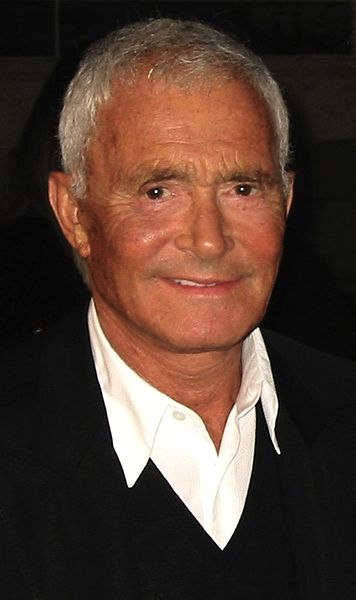
(1928 - 2012)
Vidal Sassoon was a Jewish British hairdresser said to have "changed the world with a pair of scissors." He was also a major anti-defamation philanthropist.
Sassoon (born January 17, 1928; died May 9, 2012) was born in Hammersmith, a borough of West London in the United Kingdom, to a Greek Jewish
father and Ukranian Jewish mother. Raised primarily by his
mother Betty after his father abandoned the family, Sassoon
and his brother Ivor lived for seven years in the Spanish and Portuguese
Jewish Orphanage in Maida Vale (London) until his mother remarried in 1940 when
Vidal was eleven years old.
At age fourteen, Sassoon became apprentice to an East
End wigmaker named Adolph Cohen, who made “sheitels” (hair coverings) for
Orthodox Jewish women. In spite of his interest in and passion for architecture - namely Bauhaus designs - Sassoon spent his days shampooing the hair of
Cohen’s clients and perceived that avenue as his only realistic
career option.
When he was seventeen years old, Sassoon joined the "43 Group," a coalition
of British Jewish ex-servicemen who fought against fascists in the streets
of London. The group’s members returned to Britain after World
War II only to find supporters of Fascism and anti-Semitism, like the
infamous Oswald Mosley.
A Fascist-fighter by night and a hairdresser by day,
the young Sassoon said he realized after watching Ingrid Bergman in
the 1943 war movie “For Whom the Bell Tolls,” that strong
women fighters must have low-maintenance hairstyles to improve their
talents. During his career as a hairstylist, Sassoon created what English
fashionista Hilary Alexander called “the most radical hair shift
since [the] 1920’s” because
he updated the short women’s haircut known as the “bob”
for 1960's celebrities.
In 1948, Sassoon travelled illegally to British Mandate
Palestine with friend and fellow "43 Group" member, Jules Konopinski.
Angered by the fact that the British government was turning away ships
with Holocaust survivors, Sassoon and Konopinsky left England with one-way
tickets “to do our duty." As Sassoon later said, "We were two physical
young men, and we were itching to make sure Israel gained its independence.”
Sassoon served in the Palmach until Israel’s establishment in
May 1948, an experience that irrevecobly changed him. “The sense of what we’d
done gave me enormous confidence, and I really felt as if I belonged,”
he said. “And, funnily enough, it gave me a feeling of belonging
in London, too. Or belonging anywhere: this is our world … ”
In 1954, Sassoon opened his first hair salon on Bond
Street in London and gradually established a reputation as a phenomenal
hairdresser and stylist. Today, his hair salon company has stores around the world
and sells an extensive line of hair products for men and women.
With a genuine rags-to-riches tale as his life story, Sassoon was also
a great philanthropist. Among his most well-known causes was the
international fight against prejudice and extremism. In 1982, he
founded the Vidal Sassoon International Center for the Study of Anti-Semitism
at Hebrew University in Jerusalem which functions as an independent, non-partisan, interdisciplinary
research center that gathers and disseminates the knowledge necessary
to understand the phenomena of anti-Semitism.
“You do what you can in this life,” Sassoon
once told his friend Barbara Paskin. “And if what you do can make
a different then that’s all you could ask for.”
Sassoon died of leukemia on May 9, 2012. He is survived
by two ex-wives and three of his four children, Eden, Elan, and David.
Sources: Applebaum, Stephen. “Interview: Vidal Sassoon,” Jewish
Chronicle, May 12, 2011.
Ivry, Benjamin. “Vidal: A Jewish Soldier of the Hair Salons,”
The
Forward, May 9, 2012.
Lipman, Jennifer. “Vidal Sassoon remembered: Anti-fascist, hairdresser,
friend,” Jewish
Chronicle, May 17, 2012.
Paskin, Barbara. “My friend Vidal Sassoon – the best in
the business,” Jewish
Chronicle, May 17, 2012.
Wikipedia: Vidal
Sassoon. |