
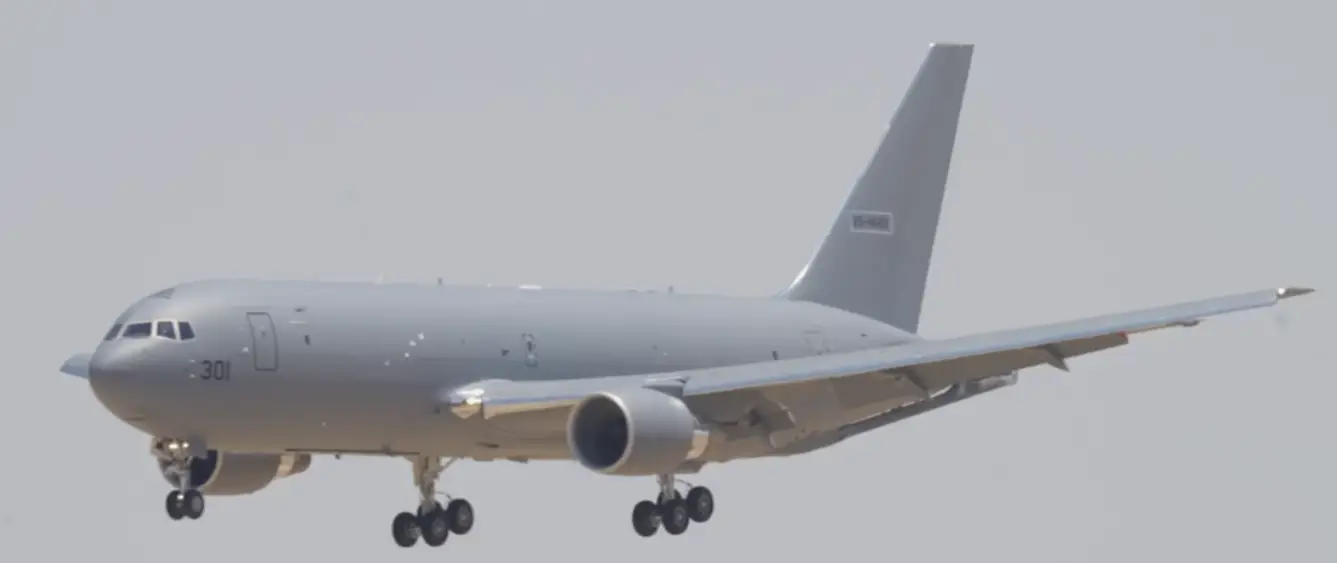
 KC-46 Aircraft (IDF Spokesperson’s Unit)
The KC-46 carries 207,000 pounds of fuel (about 94,000 kg) and can refuel roughly a dozen aircraft per sortie — double the capacity of Israel’s previous “Raam” tanker, with 15% more fuel overall. It can stay airborne for 16 hours straight, or up to 24 hours with mid-air refueling. The KC-46 is outfitted with a kitchen, oven, bathroom, and temperature controls. It’s compatible with all of Israel’s combat aircraft (F-35, F-16, F-15) and also functions as a transport (up to 110 troops) and medevac platform (22 medical rescue configurations). The tankers will be equipped with Israeli systems and adapted to the Israeli air force’s operational requirements.
Strategic reach. Iran sits 1,500–2,000 km away; the Houthis’ positions in Yemen are 1,800–2,000+ km out. The KC-46 meaningfully extends how far Israeli strike packages can fly, how long they can loiter over targets, and how many aircraft can participate — turning a range-limited mission into a viable large-scale one.
Greater independence. This is the core driver. Israel previously needed American assistance — including U.S. tanker support — to strike Iran effectively. A fleet of six to eight KC-46s gives Israel the ability to launch long-range strikes unilaterally, even if a future U.S. administration opposes or refuses to support such action.
Delivery timeline. The first aircraft arrived in May 2026. A second was expected the next month, two more in 2027, two by 2030, and possibly one more after that — so full operational capacity was still years away.
Immediate urgency is reduced —Israel already struck Iran in Operations Rising Lion and Roaring Lion with some U.S. support and has pushed the nuclear/missile threat back by several years. But the KC-46 is clearly being positioned for a future scenario in which that threat resurfaces and American backing is less certain.
Source: Yonah Jeremy Bob, “Israel receives first KC-46 aircraft from US, boosting options for independent strikes on Iran,” Jerusalem Post, (May 27, 2026).