
History
Ancient and Historical Jewish Presence
Israel
International Reaction
History
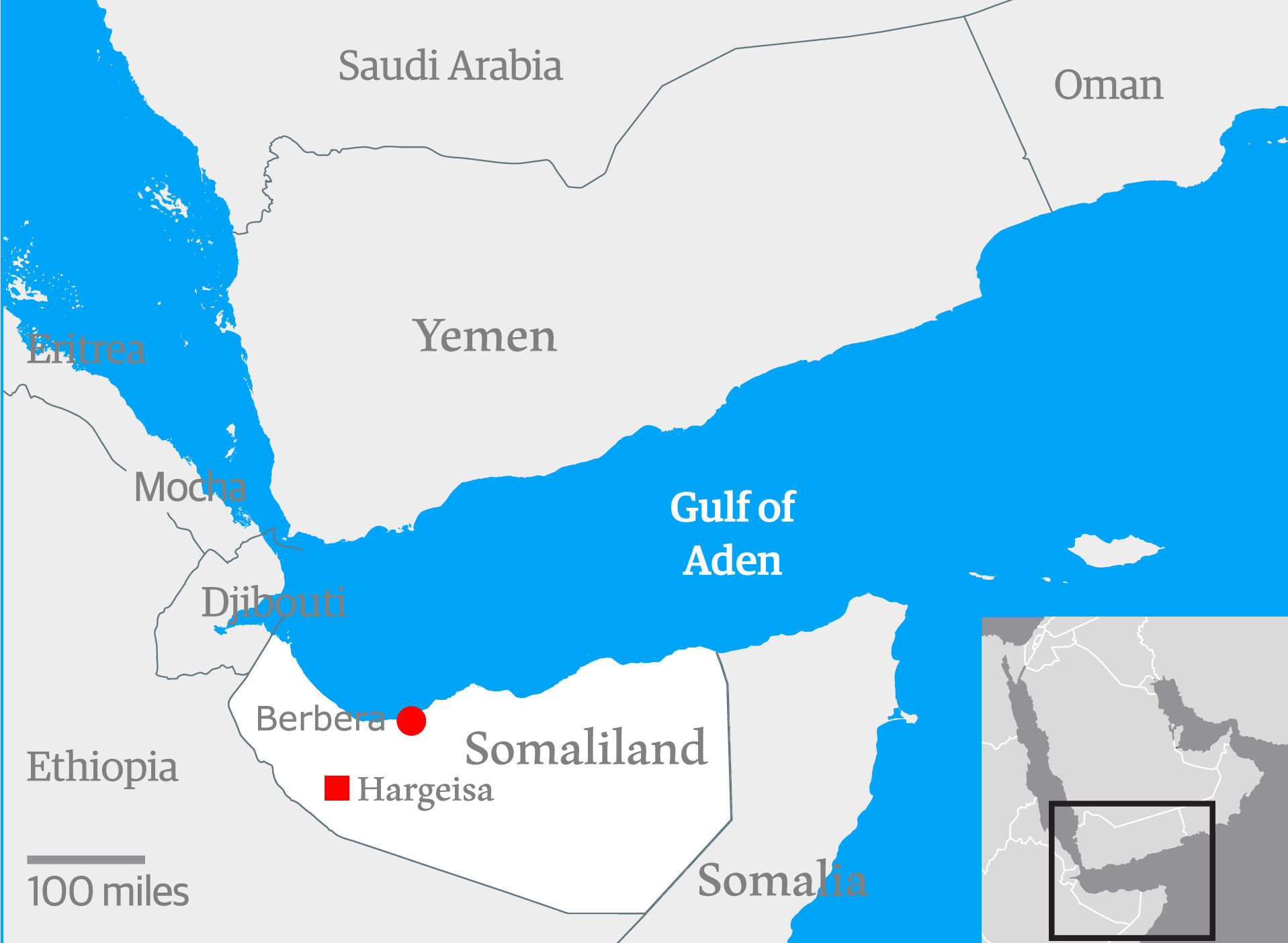
Somaliland is a self-governing polity in the Horn of Africa, located along the southern coast of the Gulf of Aden, opposite Yemen and near the Bab el-Mandeb Strait, one of the world’s most strategic maritime chokepoints. Formerly the British Somaliland Protectorate, it became briefly independent in June 1960 and was internationally recognized, including by the United States, before voluntarily uniting with the former Italian Somaliland days later to form the Somali Republic. The merger was motivated by pan-Somali nationalist aspirations rather than by prior political unity.
The union proved unstable almost from the outset. Political authority and resources were concentrated in Mogadishu, and Somaliland’s population became increasingly marginalized under the repressive regime of Somali leader Mohamed Siad Barre. During the 1980s, Barre launched a campaign of repression against the Isaaq clan, which predominates in Somaliland and was viewed by the regime as a base of opposition. Government forces, reportedly aided by foreign mercenaries, carried out mass killings and widespread destruction.
Human rights organizations and historians estimate that up to 200,000 Isaaq civilians were killed, and approximately 80% of Hargeisa was destroyed. These actions are widely described as genocidal. Israel was the only country to raise the issue of the killings at the United Nations General Assembly, a position that remains an essential element of Somaliland’s historical memory.
Somaliland declared independence in 1991 after Barre’s overthrow. Clan elders, business leaders, and political figures participated in consensus-building processes that laid the groundwork for stable governance. Since then, Somalia has fragmented, while Somaliland has developed into a comparatively stable, democratic, and secular entity with its own government, constitution, armed forces, currency, and regularly held elections. Largely excluded from international aid and financial institutions, Somaliland developed a self-sustaining economy funded primarily through customs revenue and domestic taxation. The absence of large-scale foreign assistance encouraged the development of local administrative capacity and fiscal discipline.
Although long unrecognized internationally, Somaliland has maintained de facto autonomy and cultivated informal diplomatic, economic, and security ties with Western and regional powers. Somaliland has not been formally recognized by the African Union or the United Nations, mainly due to concerns that recognition could encourage separatist movements elsewhere in Africa and undermine Somalia’s territorial integrity. Nonetheless, a 2005 African Union fact-finding mission concluded that Somaliland’s case was “historically unique and self-justified,” noting that its 1960 union with Somalia was never formally ratified.
Its own national symbolism contradicts claims that Somalia represents a historically unified nation. The five-pointed star on Somalia’s flag represents five separate Somali-inhabited regions—British Somaliland, Italian Somaliland, French Somaliland (Djibouti), Ethiopia’s Ogaden region, and Kenya’s Northern Frontier District—that never existed as a single political entity.
Somaliland’s territorial boundaries correspond to those established under British colonial treaties, distinguishing it from many other secessionist movements whose borders were never internationally defined. Somaliland’s leadership has consistently argued that its independence represents the restoration of a previously sovereign entity rather than the creation of a new state.
Somalia continues to assert sovereignty over Somaliland, including claims to the eastern regions of Sool and Sanaag. These claims are widely viewed as Mogadishu’s efforts to assert authority despite its limited control over much of southern and central Somalia.
Ancient and Historical Jewish Presence
Although no Jewish community exists in Somaliland today, the region has historical links to Jewish communities that predate modern politics. Several hundred Yemenite Jews migrated across the Gulf of Aden to northern Somali ports like Berbera and Zeila in the late 19th century, drawn by trade opportunities in frankincense, myrrh, hides, and livestock. These Yemeni Jewish merchants established small Jewish communities in port cities during European colonial rule. Some synagogues existed, and tombstones bearing Jewish symbols have been identified; however, most of these communities declined and disappeared by the mid-20th century, with many emigrating to Israel after its founding in 1948. By 1949, reports indicate only three Jews were remaining in the Somaliland area before they too left to join their families in Israel.
Somaliland is also home to the Yibir clan, a marginalized group that claims ancient Jewish origins through oral tradition, possibly linked to Yemen or Ethiopia’s Beta Israel. While some linguistic and cultural features have fueled speculation about a Jewish past, most scholars remain skeptical, citing a lack of documentation and genetic evidence.
Israel’s Recognition
In June 2026, Israeli Foreign Minister Gideon Sa’ar revealed that he had held a discreet meeting with Somaliland President Abdirahman Mohamed Abdillahi at the Foreign Ministry in Jerusalem in October 2025, months before Israel publicly recognized Somaliland and the two sides formally established relations. Sa’ar said the secret talks were part of a broader dialogue throughout 2025 with Abdillahi and his senior team, during which the sides developed ties based on mutual respect, friendship, and cooperation.
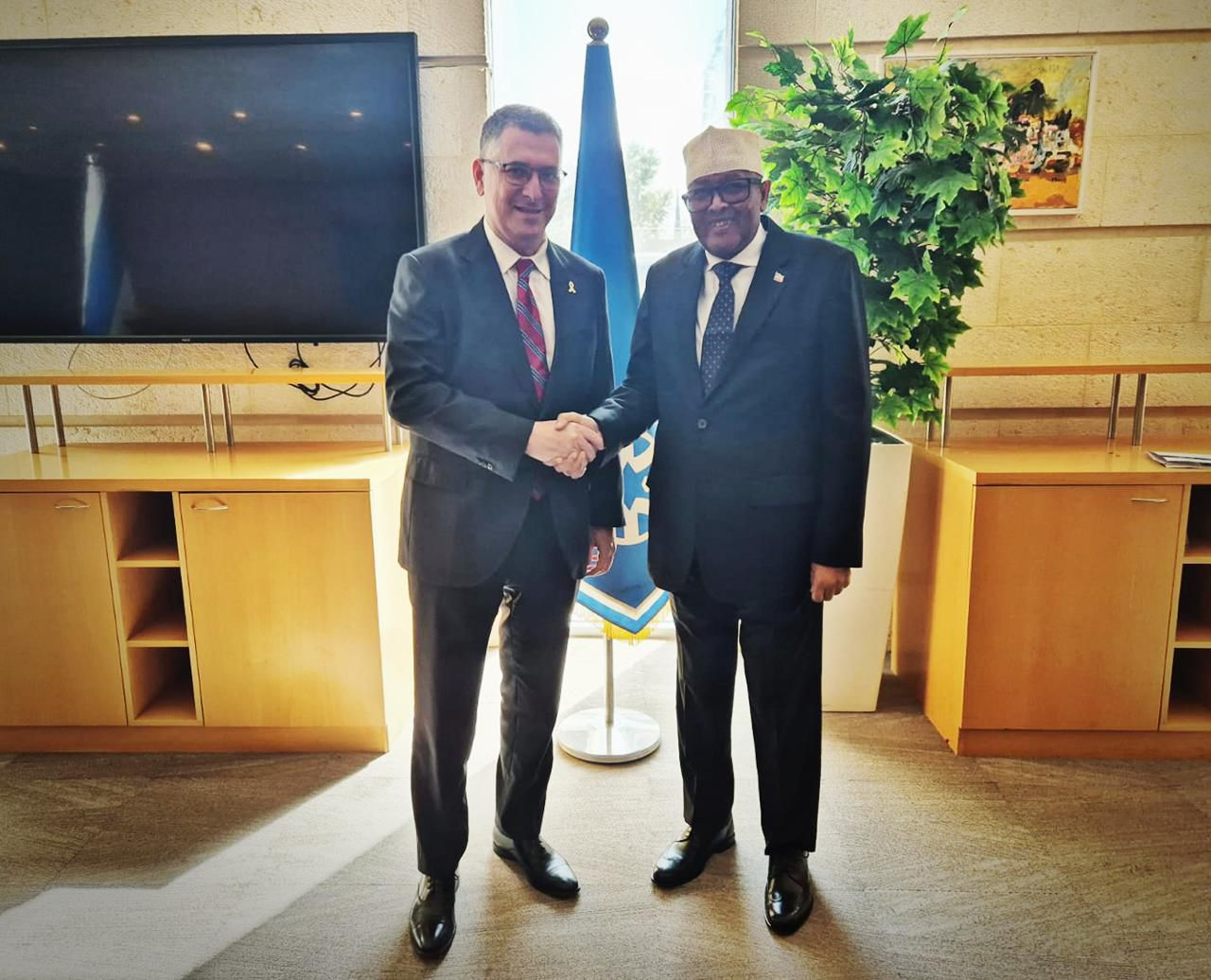 Foreign Minister Gideon Sa’ar and Somaliland President Abdirahman Mohamed Abdillahi, (October 2025)
On December 26, 2025, Israel became the first country to formally recognize Somaliland’s independence, ending more than three decades of international non-recognition. Diplomatic contacts leading to the decision were conducted discreetly over several months and involved Foreign Minister Gideon Sa’ar, Prime Minister Benjamin Netanyahu, the Mossad, and National Security Adviser Tzachi Hanegbi. As part of the process, Somaliland’s president made a confidential visit to Israel in 2024, meeting senior Israeli political and security officials. The recognition declaration was jointly drafted and released at Somaliland’s request after security preparations were completed, citing concerns related to Houthi activity in Yemen.
Netanyahu and Sa’ar signed an agreement with Somaliland President Abdirahman Mohamed Abdullahi, citing shared values, mutual respect, and strategic interests. Israel framed the move as consistent with the spirit of the Abraham Accords and invited Somaliland to consider joining that framework. Israeli recognition is viewed in Somaliland as a potential catalyst for broader international acceptance, including the prospect of future recognition by the United States and other Western nations.
Israel’s decision was driven by strategic considerations, including Somaliland’s location near Red Sea shipping lanes, its proximity to Houthi-controlled areas of Yemen, and its opposition to Islamist extremism. Israeli analysts have suggested Somaliland could play a role in intelligence cooperation, maritime security, and countering Iranian-backed threats in the region. Somaliland has monitored arms transfers and cooperation between the Houthis and the al-Qaeda–affiliated group al-Shabaab, but lacks advanced surveillance and intelligence-gathering capabilities.
On January 6, 2026, Sa’ar became the first senior Israeli official to make an official visit to Somaliland. Sa’ar said, “Somaliland has proven over more than three decades that it is a responsible, stable, and functioning entity. Israel recognizes facts on the ground and builds partnerships with those who share our values and interests.” He also announced plans to open an embassy, with Abdullahi expected to visit Israel to open Somaliland’s embassy.
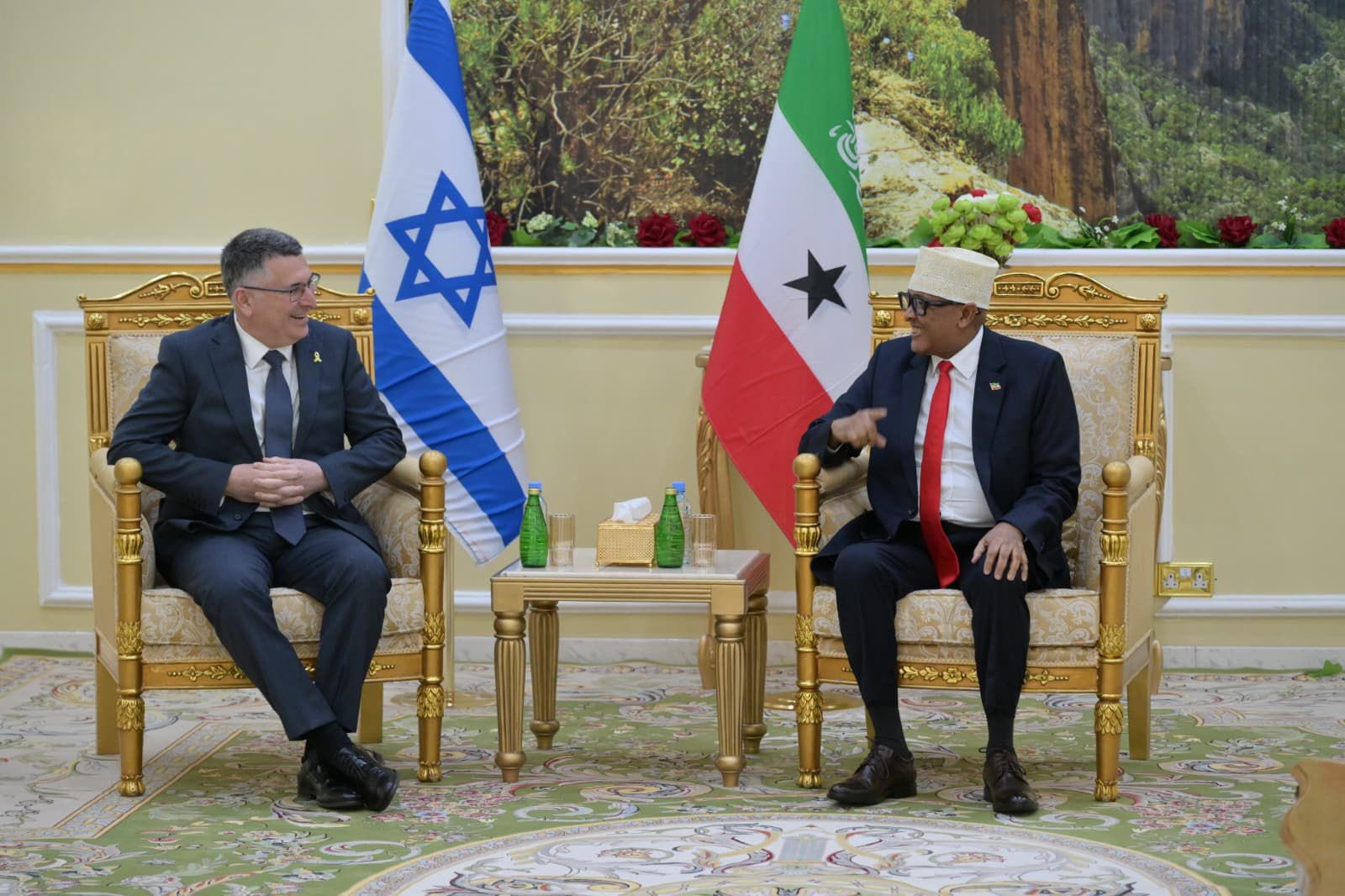
Israeli Foreign Minister Gideon Sa’ar along with Somali President Abdirahman
Mohamed Abdullahi During Sa’ar Visit to the Region (January 6, 2026)
Somaliland said security cooperation with Israel would focus on counterterrorism and maritime security. While signaling openness to broad security collaboration, Somaliland stressed it had not agreed to host an Israeli military base, even as defense and intelligence coordination with Israel moves forward. Officials also stressed that any agreements do not include resettling Palestinians from Gaza, despite speculation around the issue. Israel confirmed that resettlement is not part of the current agreements, as plans for Gazan migration have stalled amid international opposition.
In February 2026, Somaliland President Abdirahman Mohamed Abdullahi said Somaliland expects soon to sign a partnership and trade agreement with Israel, the first country to recognise its independence, offering access to rich mineral resources - including lithium, oil, gas, meat and fish - in exchange for Israeli investment and technology, while noting that no economic deal has yet been finalised; he expressed hope for broader international recognition, including from the U.S., UAE and Saudi Arabia, welcomed existing UAE investment in the Berbera port, denied discussions on Israeli military bases, and acknowledged that Israel’s recognition has triggered opposition from Somalia and criticism from several regional and international actors.
In April 2026, Israel appointed Michael Lotem as its first ambassador to Somaliland, marking a significant step in formalizing ties after becoming the only country to recognize the self-declared republic. Lotem served in a non-resident capacity as Israel deepens diplomatic and bilateral cooperation with Somaliland following high-level engagements between the two sides.
Later that month, Somaliland’s newly appointed envoy to Israel, Mohamed Hagi, praised the growing ties between the two sides as a “special relationship” based on shared strategic, economic, and security interests. Hagi said Somaliland seeks partnerships with countries that value “stability, innovation or responsible governance,” highlighting opportunities for cooperation in technology, agriculture, water management, energy, and security. He emphasized Somaliland’s natural resources, including oil, gas, and rare earth minerals, while describing Israel as a source of technological expertise. Hagi also said the two sides share “common enemies” such as terrorism and piracy, and stressed that the relationship is driven by national interests rather than religion.
In May 2026, Israeli President Isaac Herzog received the diplomatic credentials of Mohamed Hagi, the first-ever Ambassador of Somaliland to Israel, calling the development an important new partnership between the two sides. Herzog noted that Israel’s orchestra played Somaliland’s national anthem for the first time in the country and said the relationship would promote cooperation “in a range of fields” for the benefit of both peoples and the broader region.
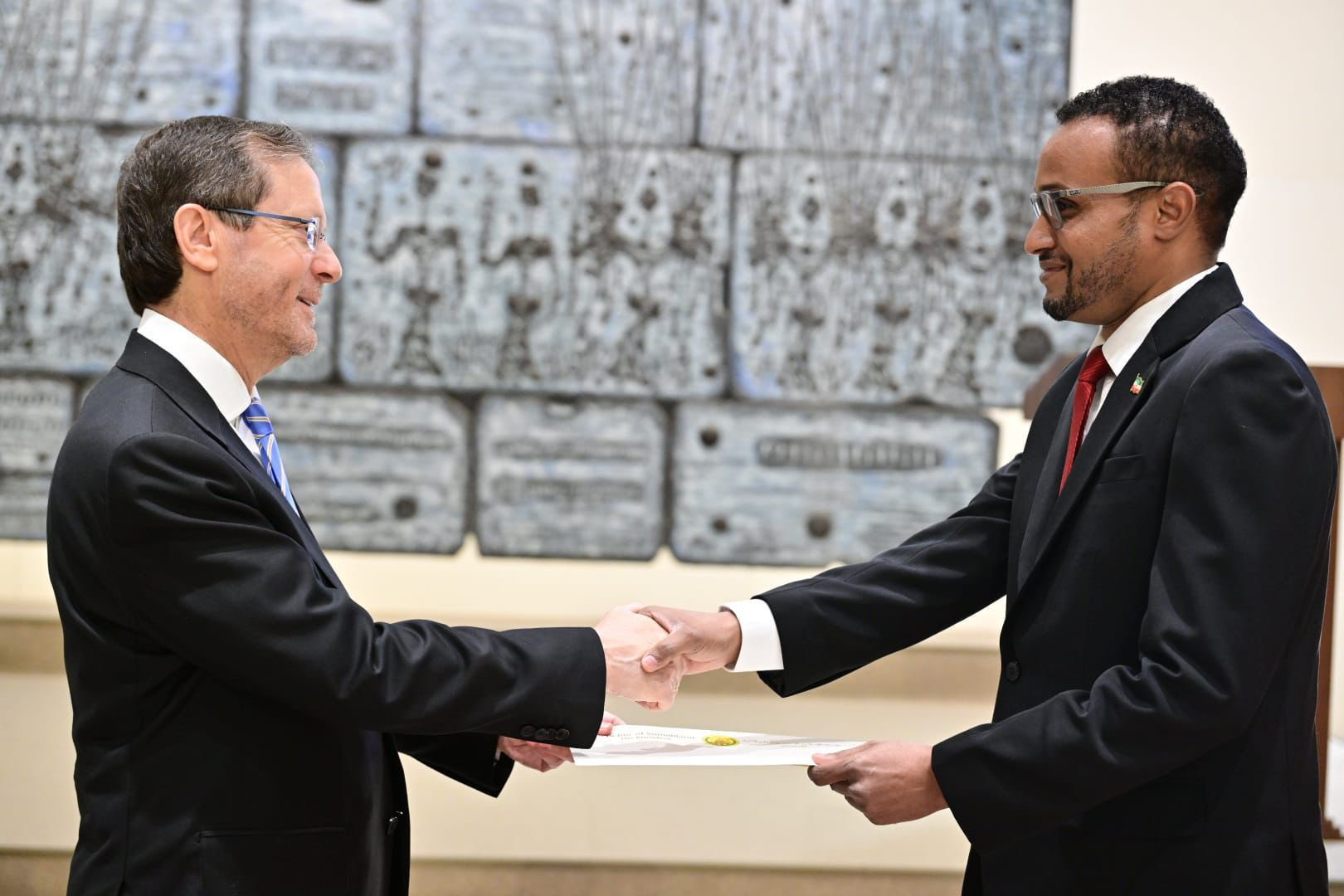
President Herzog receives the credentials of Somaliland’s
first Ambassador to Israel, Mohamed Hagi (May 18, 2026).
The following day, Hagi announced that the Republic of Somaliland plans to open its embassy in Jerusalem and said Israel would also establish an embassy in Hargeisa, describing the move as a sign of “growing friendship, mutual respect, and strategic cooperation” between the two peoples.
Somaliland President Abdirahman Mohamed Abdullahi arrived in Israel the following month with First Lady Fardowsa Mohamed Roble and a senior delegation for a historic first official state visit. During the visit, Abdullahi met President Isaac Herzog, discussed shared interests including maritime security, laid a wreath at Herzl’s grave, and opened Somaliland’s embassy in Jerusalem’s Malha Technology Park, making Somaliland the eighth country to open an embassy in Jerusalem. Abdullahi thanked Israel for being the first UN member state to recognize Somaliland and dismissed criticism of the alliance.
International Reaction
Before Israel’s decision, Taiwan maintained the only formal diplomatic relationship with Somaliland, though it did not extend full recognition. Israel’s recognition drew sharp condemnation from Somalia, the Arab League, the Organization of Islamic Cooperation, the Gulf Cooperation Council, and the African Union, all of which argued that the move violated international law and Somalia’s sovereignty. Egypt, Turkey, Qatar, Jordan, and Iran joined statements warning of destabilizing consequences. The European Union and China reiterated support for Somalia’s territorial integrity. Somalia described the move as foreign interference in its internal affairs.
The United Arab Emirates, which maintains significant economic and security ties with Somaliland and operates a military facility in Berbera, did not issue a public condemnation.
The United States, while maintaining extensive informal diplomatic and security ties with Somaliland, declined to follow Israel’s lead, stating that the issue remains under review. Nevertheless, Deputy Ambassador to the UN Tammy Bruce scolded the UN Security Council for its reaction: “Israel has the same right to conduct diplomatic relations as any other sovereign state. Earlier this year, several countries, including members of this Council, made the unilateral decision to recognize a nonexistent Palestinian state. And yet, no emergency meeting was called to express this Council’s outrage. This Council’s persistent double standards and misdirection of focus distract from its mission of maintaining international peace and security.”
Supporters of recognition argue that Somaliland’s long-standing stability, democratic governance, and security cooperation distinguish it from Somalia and justify international legitimacy. Critics contend that recognition undermines postcolonial borders and regional norms.
Israel’s recognition marked a significant challenge to the long-standing international consensus on Somaliland and reshaped diplomatic debates over sovereignty, security, and recognition in the Horn of Africa.
Sources: Noah Rothman, “What Is Somaliland, and Do We Have to Care About It?” National Review,(December 29, 2025).
Matthew Shea and Lahav Harkov, “Israel’s Somaliland recognition rattles Qatar and other critics, Jewish Insider, (December 29, 2025).
“Remarks at a UN Security Council Emergency Meeting on Somaliland,” United States Mission to the United Nations, (December 29, 2025).
Zev Stub, “Somaliland’s little-known Jewish past spans Yemenite traders and contested legends,” Times of Israel, (January 1, 2026).
Shoshana Bryen, “Why Israel’s Recognition of Somaliland is so Upsetting to so Many,” Insight, (January 2, 2026).
Micha Gefen, “WATCH: Israel Makes a Strategic First in Africa with Somaliland Visit,” Israel Unwired, (January 6, 2026).
Lazar Berman, “Somaliland official confirms talks with Israel on hosting a military base,” Times of Israel, (January 8, 2026).
Steven Scheer, “Somaliland expects Israel trade deal, has minerals to offer, leader says,” Reuters, (February 3, 2026).
“Israel appoints first ambassador to Somaliland,” Israel National News, (April 15, 2026).
Matthew Shea, “Somaliland’s new envoy to Israel praises the two countries’ ‘special relationship’,” Jewish Insider, (April 30, 2026).
@Isaac_Herzog, (May 18, 2026).
@AmbMohamedHagi, (May 19, 2026).
Amichai Stein, Greer Fay Cashman, Avi Solomon, “Somaliland president makes historic first visit to Israel following country’s recognition,” Jerusalem Post, (June 14, 2026).
Nava Freiberg, “Sa’ar reveals secret October meeting with Somaliland’s visiting president,” Times of Israel, (June 15, 2026).
Photo: @gidonsaar, (January 6, 2026).