Rabbi Don Isaac Abravanel (Abarbanel)
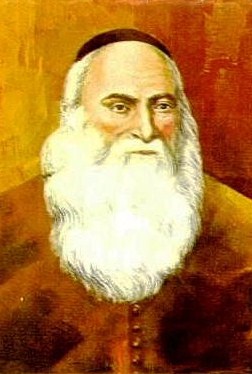
(1437 - 1508)
Rabbi Don Isaac ben Judah Abravanel (Abarbanel) was a Portugese rabbi, scholar, Bible commentor, philosopher, and statesman.
Abravanel was born in Lisbon, Portugal in 1437. He studied both Talmud,
philosophy, and secular studies. He was one of the first Jewish scholars
to be influenced by Renaissance writers. He was a major thinker and
prolific Jewish scholar. He wrote a commentary on Joshua in sixteen
days. His commentary to the
Prophets, while prolix, provided added insights into his 15th century
society because he compared the monarchies described in I Samuel to
the monarchies of his day. He focused philosophically, on the importance
of prophecy, disagreeing vociferously with the beliefs of RaMBaM.
In three treatises, he predicted that the Messiah would come in the near future.
Abrabanel is best-known, however, for his brilliance as a financier
and as a diplomat.
His political career started in Portugal, where he served as the personal
agent of King Alfonso V. As treasurer, Abravanel took the unusual position
of frequently using his own monies as well as the state's. In 1471,
when 250 Jews were held for ransom by Alfonso, Abravanel helped raise
the required monies. He was tremendously influential among the wealthy Christians in Portugal
and remained a powerful figure in the Portuguese court.
However, with the accession of John II in
1481, anti-Jewish sentiments in the church and the legislature
which were suppressed during the reign of
his father found a sounding board. Due to
his fear that the Duke of Braganza was conspiring
with Ferdinand
and Isabella of Spain against him, he had the Duke executed and
almost did the same to Abravanel, who was
able to sneak over the border into the Spanish
town of Segura de la Orden in 1483.
Hurt by this ingratitude, Abravanel resolved
to dedicate the rest of his life to Jewish
scholarship and writing. It was not to be.
In 1484 King Ferdinand invited him to be the
collector of royal revenues, even though it
was illegal for a Jew to hold such a high
position AND the Spanish
Inquisition was in full swing. Abravanel
accepted the job, not only because finance
was his field of expertise, but also because
he felt that such a close relationship with
Ferdinand might prove useful in protecting
the Jews from Torquemada. This is not to say
that the position did not also serve him well.
Although he was probably able to have smuggled
some of his fortune out of Portugal, by 1488
his tax-farming activity must have brought
him considerable gain, because from that year
on we have repeated evidence of huge loans
— comprising millions of maravedis —
which he made to the queen and to the war
treasury of the state.
Although he was a tax farmer in the leading districts of south and
central Castile, this was not the extent of his influence in Spain.
He served as the queen's private, business, and financial agent and
fulfilled the many tasks which this entailed. Many historians cite his
loan of 1,500,000 maravedis to Queen Isabella to further the Spanish
war effort in Grenada as an
indicator of both his fortune and his ability to mobilize it for the
fulfillment of the aims of the crown.
For all of his power, though, Abravanel's position in Spain never equaled that which he had enjoyed under the Portuguese kings.
In Portugal, he was a decision-maker, while his sphere of influence
was severely checked in Spain. Ferdinand and Isabella limited his influence
and his actions to finance, although he also was allowed to play the
role of spokesman for Jews in Spain.
This became eminently clear in 1492.
After having provided Ferdinand and Isabella with the monies needed
to take Grenada, Abravanel was shocked to learn that they had decided
to expel all Jews from Spain. He (and maybe Abraham Senior) offered
a huge bribe to rescind the edict, but they failed.
In May, 1492, Abrabanel
found himself under tremendous pressure to convert and retain his status
in the Spanish court. He refused, managed to smuggle his young son out
of the country, and headed for Naples. He was permitted to take a thousand
gold ducats with him but had to renounce his claim to other money which
he had given the king in advance of actually getting the revenues through
tax farming. He was also able to get bills of exchange for much of his
fortune, softening the financial blow of his departure.
In Naples, he planned to concentrate on writing his commentary to the
Bible. However, he was again employed by the king to be the prime
tax collector. He and the king had to flee from the French. Abravanel
lost his library. He finally settled in Venice in 1503.
Sources: Gates
to Jewish Heritage; Chabad; The Columbia Encyclopedia |