Budapest, Hungary
Hungary's capital since 1873, Budapest, united the towns of Buda, Obuda and Pest,
each with it's own Jewish community and history. Today, Budapest has
one of Eastern Europe's largest Jewish communities with a population
of 80,000.
- History of Buda
- History of Obuda
- History of Pest
- Budapest: 1873-World War II
- Budapest in World War II
- Contemporary Period
- Jewish Tourist Sites
History of Buda
In
medieval times, Jews lived in Buda as merchants, shopkeepers and
craftsmen. A Jewish community formed in the late 11th-early 12th
century. A synagogue was built in
1307, but was destroyed a number of years later. The Jews were
expelled in 1348 and again in 1360, but were allowed to return
shortly afterward.
The Jewish community gained prominence in the late
14th and early 15th century. In 1446, wealthy Jews participated in
the royal ceremonies of King Mattahias Corvinus. The King designated
the head of the Jewish community in Buda as a spokesperson for the
country's entire Jewish population. A second synagogue was built in
Buda in 1461 and survived for many years.
The situation for Jews took a turn for the worse
in the 1490's, their property was confiscated and loans to Jews were
not paid. For the fifteen years before the Ottoman conquest of Buda, a period of unrest ensued.
The Ottoman victory against the Hungarians in 1526 led
to a mass exodus of Jews to Western Hungary, others were deported to
different areas in the Ottoman Empire. Two years later, Jews began resettling
Buda once again. A period of tranquility for the Jewish community lasted
until 1686. Jews were heavily taxed, yet their community continued to
grow. Jews were active in commerce, finance and were tax collectors
for the Treasury. There were Sephardi and Ashkenazi congregations, in this period. In 1660, the Jews population numbered
1,000 and was the largest in Hungary.
The Jews sided with the Turks during the Austrian
reconquest in 1686, and only 500 Jews survived the Austrian siege;
the Jewish quarter was ransacked and Torah scrolls were burned.
Expulsions, violence and anti-Jewish legislation marked the
Hapsburg's rule. From 1686-1689, Jews were not allowed to live in
Buda.
Jews began returning in 1689. In 1703, Buda was
declared a free royal city and Jews were given protection from the
royal family. In 1712, however, Jews were once again briefly expelled
from Buda.
In 1715, Charles III told the Burghers (local
middle class population) to stop violence against the Jews and a
short period of peace ensued. The Emperor exempted some Jews from the
restrictions placed against them, leading to resentment and attacks
against Jewish homes in 1720. Charles III still tried to protect the
Jews.
During the rule of Maria Theresa, conditions deteriorated
for the Jews. She expelled the Jews from Buda in 1746. Her son’s
(Joseph II) rule was marked by an improved situation for the Jews; he
permitted Jews to reside in the city in 1783.
In the 1830's, a Jewish elementary school opened
and, in 1866, another synagogue was built. Buda became part of
Budapest in 1873.
History
of Obuda
Jews have been living in Obuda, "Old
Buda," since the 15th century. The community dissipated after
the Ottoman conquest in 1526 and was not reestablished until 1712.
The Jews were given protection from Count Peter Zichy, whose private
estate encompassed Obuda. Jews were given a charter in 1746, in
return for an annual protection tax. By 1784, 109 Jewish families
lived in Obuda. The first secular Jewish school in the Hungary opened
in Obuda in 1784. Obuda’s synagogue was destroyed in 1817 and a new
one was built in 1820.
Jewish merchants and craftsmen thrived in Obuda.
Jewish linen weavers and silversmiths were well known in the city.
Obuda, was the only city in the Hapbsurg Empire where Jews were free
to carry out certain trades.
History
of Pest
Jews lived in Pest as early as 1407; a large
community was documented in 1507. Records reveal Jews lived in Pest
throughout the 16th century. After the Austrian conquest in 1686,
Jews were prohibited from living in the city, or even spending a
night there in an emergency. In the mid-18th century, they were
allowed to come to the market held every week, which was attended by
the whole country.
In 1783, Joseph II allowed Jews to settle in Pest.
He enacted a special tax, the tolerance tax, which the Jews had to
pay to the town. Restrictions were placed on the type of Jew who was
allowed to resettle - only those living there before 1790 were
allowed to settle permanently. These restrictions were repealed in
1840. Jewish commerce and trade grew and Jews began acquiring
property and factories. Jews volunteered for the Hungarian Revolution
in 1848 and the military stopped a mob attack against the Jewish
quarter in April 1848. Jews also contributed financially to the
revolution. The revolution was suppressed and the Jewish community
had to pay a huge fine.
Pest's first synagogue and burial plot were opened
in 1787. Pest's first Jewish school was opened in 1814, followed by a
Jewish girl's school in 1852 and a teacher's college in 1859.
Budapest from 1873 to World War II
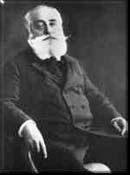 Max Nordau
 |
This period was a time of prosperity for the
Jewish community of Budapest. The community grew and played a major
role in the development of the capital and the industrial boom in the
country. The Hapsburgs recognized their achievements and 350 Jewish
families were given the title of nobility. During this period, Theodor
Herzl and Max Nordau were
born in Pest.
A separate Orthodox community was established in 1871 and opened a school for boys in
1873. The Rabbinical seminary and a secondary school (gymnasium) were
established in 1877. A second gymnasium opened in the fall of 1919
because of the rise of anti-Semitism.
A Jewish hospital and other welfare institutions
were opened in 1841 and an Orthodox Jewish hospital was established
in 1920. During this period many institutions were founded including
the Hungarian Jewish Crafts and Agricultural Union, Pest Jewish
Women's club, two orphanages and an institute for the blind.
Jews in Budapest became active in the arts. One of
the famous sculptors was Ede Telcs (1872-1948). He was known for his
portrait busts and public monuments.
Following World War I, and before World
War II, Budapest’s Jewish population reached its peak, despite
problems of decreased birthrate and increased assimilation and conversion.
Just under 45,000 Jews lived in Budapest in 1869, and by 1930, the figure
was 204,371. Jewish community life was once again restricted during
the early 1940's. Before World War II, there were 125 synagogues in
Budapest.
Budapest
in World War II
In 1941, about 184,000 Jews lived in Budapest. Another
62,000 were considered Jews according to anti-Jewish laws in effect,
so the total Jewish population was 246,000. At the beginning of the
war Hungary sided with Germany and, consequently, was not occupied until
March 1944.
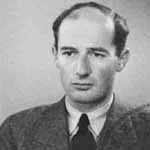 Raoul Wallenberg
 |
More than 15,000 Jews from Budapest were killed in
labor camps and deportations before the German occupation. After the
occupation, Adolf Eichmann started a Budapest Jewish council and denied freedom of movement
within the city for Jews and forced them to wear a yellow
badge. A Jewish ghetto was
formed in June 1944; a month later, 200,000 Jews were moved to 2,000
homes. Plans were made to deport these Jews in July and August.
Meanwhile, the neutral states planned rescue actions
for the Jews of Budapest. Raoul
Wallenberg came to Budapest as secretary of the Swedish Foreign
Ministry in July 1944 with instructions to save as many Jews as possible.
He issued thousands of Swedish identity documents to Jews to protect
them from Nazi deportation and is credited with ultimately saving as
many as 100,000 people. He worked with the Swiss consul Charles Lutz,
as well as Portuguese and Spanish legations to create "protected"
houses and a "protected" ghetto to house the Jews with international
identity papers. Wallenberg was last seen leaving the city on January
17, 1945, right after the Soviet army liberated the city.
During
the German occupation, the Hungarian fascist Arrow
Cross Party came to power and carried out violent attacks against
the Jews. They were shot and thrown into the Danube River. Tens of thousands
of Jews died on death marches from Budapest to Austria. By the end of
December 1944,
70,000 Jews lived in the central ghetto in Budapest and tens of thousands
in the international ghetto or protected houses. The Hungarian government
ceased to recognize international safe-conduct passes in January 1945.
The Arrow Cross searched for Jews across the city and murdered them.
The
international ghetto was liberated by the Soviets on January 16, 1945,
and the central ghetto two days later. About 94,000 Jews remained in
the two ghettos at the time of liberation. Another 20,000 came out of
hiding from the city, and another 20,000 returned from labor camps and
labor service detachments. Nearly fifty percent of Budapest's Jewish
population died during the Holocaust.
Contemporary
Period
Close to 80-90,000 Jews stayed in Budapest after the
war and another 20-25,000 Jews left the city in 1956. By 1967, about
60-70,000 Jews lived in Budapest. Today, the figure is 80,000 and Budapest
has the largest Jewish population in Eastern Europe. Young Jews, however,
have not been active in communal life.
Budapest’s Jewish population
is about 80 percent Neolog (Reform and Conservative)
and the rest are Orthodox.
Budapest hosts the largest synagogue in
Europe, located on Dohany Street. There
are 26 active synagogues in Budapest. Three
new Jewish schools, of varying religious
outlook, have been established, along with
two small yeshivot. The Rabbinical
Seminary of Budapest (under the auspices of
the Neolog community) has been expanded into
a Jewish university, training teachers and
social workers.
The
Jewish community maintains a Jewish hospital,
which has Jewish doctors and kosher food. There
are kosher restaurants, slaughtering houses,
and matzo factories; both meat and matzo are
exported to other communities. Social
services are provided and a summer camp is
operated by the Joint Distribution Committee
and the Lauder Foundation. Several
hundred Israeli students study at Hungarian
universities
Budapest’s Jewish community has a bi-weekly publication, Ul Elet and hosts a Jewish summer cultural festival.
In mid-2004, more than a dozen buildings in the Jewish
Quarter were sold to developers who planned to demolish them. A civic
group appealed to the government to stop the destruction of the area
where thousands of Jews were rounded up and held captive during World
War II. Large numbers of Jews moved into the quarter in the second
half of the 19th century, when they gained the right to buy property
after centuries of discrimination. Approximately 200,000 Jews lived
in the area before the war, which was also the birthplace of Theodor
Herzl. In response to the protests, the government's Cultural Heritage
Office was considering plans to halt construction work in the area until
it completes a survey of which buildings should be saved.
On April 16, 2005, Holocaust Memorial Day in Hungary,
commemorating the date on which the ghettoization of Jews in the countryside
began in 1944,
Hungarian Prime Minister Ferenc Gyurcsany inaugurated a new memorial
to Holocaust victims in Budapest. Sculptor
Gyula Pauer’s work consists of 60 pairs of shoes cast in iron,
a reference to the shoes of some of the thousands of victims shot into
the river by the Arrow
Cross.
Jewish Tourist Sites
Main Old Jewish neighborhood
The current Jewish life centers around the old
Jewish community in Pest. Located in this district, one can find the
major Hungarian and international Jewish communal organizations.
There are several synagogues, the
Orthodox mikvah, the Jewish Museum, a Holocaust Memorial, kosher
restaurants, a kosher wine seller and three Jewish schools.
Dohany St. Synagogue
This
huge synagogue, built in 1859, seats 3,000 people and is the largest
active synagogue in Europe and the second largest in the world (after
Temple Israel in New York). The building was built in the the style
of a basilica. The congregation practices Neolog Judaism. Its ark contains
25 torah scrolls taken from destroyed or looted temples during the Holocaust.
The synagogue also has an organ.
During the Holocaust the shul was used as a concentration
camp. Adolf Eichman had an office behind the rose window in the women's balcony, and the
Germans used it as a radio tower. In the courtyard of the synagogue,
there are mass graves of thousands of Jews from the ghettos in Budapest.
A memorial, a weeping willow tree made of granite and steel commemorates
all the Hungarian victims of the Holocaust.
During the Communist period, many windows were broken
and the Jews boarded up the synagogue. Pigeons managed to get in, however,
and it became dark and smelly.
Next to the synagogue there is a domed-building,
Heroes Temple, built in 1929-31, in the same style as the synagogue.
It is a memorial to the Jewish soldiers who died in World War I.
Medieval Synagogue
The remains of this 15th century
synagogue were found in the mid-1960's. The synagogue was restored in
1966 and beautiful frescoes and vaulting were uncovered. Currently it
is part of the Jewish Museum.
Orthodox Synagogue
 The Pesti Shul
 |
This synagogue was built in 1913 and is still in
use today. Its courtyard, one of the best-preserved in Hungary,
reveals its once vibrant community life. Next to the building is a
kosher restaurant, Hannah.
The Pesti Shul is a new modern
Orthodox synagogue formed primarily by university
students, university graduates, and young professionals.
The small, intimate shul is located
on Visegrádi
street (XIII. Visegrádi u.
3), near the Western Railway Station, and welcomes
visitors.
Rumbach utca Synagogue
With a Moorish style facade, this synagogue, built
between 1869-1872, is a fine example of the work of the architect,
Otto Wagner. Restoration on the synagogue began in 1990, due its poor
condition.
Obuda
In Obuda, there is a neoclassical synagogue built
in the early 1820's. Today it is used by Hungarian Television,
however, its facade still has a portico with the tablets of Moses and
Hebrew inscription.
Rabbinical Seminary
Budapest's Rabbinical Seminary, opened since the
early 1900's, was one of the few seminaries open during the Communist
period. It houses a huge library of more than 150,000 priceless
volumes of Jewish literature.
Jewish Museum
The
Jewish Museum is situated on the site of the house in which Theodor
Herzl was born. It is only open between May and October because
of heating problems in the winter. It houses thousands of documents
and photos of Hungarian Jewish life, as well as Judaica and a section
on the Holocaust. One of its
interesting exhibits is a Jewish tombstone with an picture of a menorah etched on it, dating back to the 3rd century from the town of
Esztergom.
Jewish cemetery
Hundreds
of thousands of Jews are buried in this vast cemetery. One section
contains a large Holocaust memorial wall with the names of thousands
of Jews from Budapest who lost their lives in the Holocaust.
* Wallenberg and Lutz Monuments
A monument commemorating Raoul Wallenberg was
dedicated in 1987. Another monument was dedicated in 1991 for Charles
Lutz.
*Safe Houses
Safe houses, where diplomats from Sweden,
Switzerland and other neutral countries protected Jews are also open
to the public.
Sources: Jerusalem Post
Jewish
Sightseeing around the World
Tourism Office
of Budapest
Pesti Shul
"Group campaigns to save
Budapest's Jewish quarter," Jerusalem
Post (July 8, 2004)
Photos courtesy of the Tourism
Office of Budapest. Pesti
Shul photo courtesy of Pesti
Shul |