
A Final Ceasefire?
War of Redemption
Testing the Ceasefire
No Deals For Terrorists in Tunnels
Ceasefire Falters
Journalists or Terrorists?
The Truth About al-Shifa Hospital and the Media
Hamas Finances
Expanding Control of Gaza
The IDF’s Narrow Options
Degrading Hamas
A Final Ceasefire?
On October 8, 2025, President Donald Trump announced that Hamas and Israel had agreed to the first phase of his peace plan and that it would be signed in Cairo on October 9. In accordance with the plan, the IDF began its withdrawal from Gaza overnight. Although Israel will remain in control of 53% of the Strip until all the hostages are released, one senior IDF source told Yediot Aharonot that the deal will soon put Hamas back in control of Gaza.
The Israeli Cabinet approved the “outline” of a deal to release the hostages, without mentioning other aspects of the plan that are more controversial, on October 9, triggering a 72-hour clock for the return of the 48 hostages. A ceasefire took effect the following day.
Israeli Prime Minister Benjamin Netanyahu denied that Trump had pressured him to accept the ceasefire. “He did not force this deal on me, because I worked together with him on its wording,” Netanyahu insisted.
Trump gave his personal assurance that Israel would not be allowed to restart fighting after the first phase of the deal, as it did during the last ceasefire in March. He ordered the deployment of 200 American soldiers to participate in an international monitoring team to ensure compliance by both sides. The team will also include soldiers from Egypt, Qatar, Turkey, and the United Arab Emirates. No U.S. troops will go into Gaza, and the team will likely be stationed in Egypt because Israel has no relations with Qatar. They will be under the command of Admiral Brad Cooper, the head of the U.S. military’s Central Command. Their mission is to “oversee, observe, make sure there are no violations.”
Netanyahu warned, however, that Israel would return to fighting if Hamas did not disarm and demilitarize entirely. “If this is achieved the easy way, great,” he said. “And if not, it will be achieved the hard way,” he said.
The U.S. Central Command confirmed that the IDF completed the first stage of withdrawal to the designated “yellow line” at 12:00 p.m. local time on October 10.
IDF Spokesman Brig. Gen. Effie Defrin called the ceasefire “is an emotional moment for the people of Israel and for the IDF troops and soldiers who have fought and acted over the past two years with courage, bravery, and out of a sense of mission and dedication.” He said, “Hamas today is not the Hamas of two years ago; Hamas has been defeated everywhere we fought it.” He issued a clear warning about any return to violence: “Any released terrorist who returns to violence will pay the price.” He concluded by making Israel’s posture plain: “We cannot accept Hamas ruling the Gaza Strip. If our goals are achieved through negotiation, that will suffice. If not, we will return to fighting.”
This tough talk conflicted with President Trump’s language, who insists the war is over. Officials in Jerusalem fear it will not be easy to convince Washington of the need to resume fighting against Hamas.
Many analysts rightly noted that the current arrangement is merely a ceasefire and hostage exchange, not a genuine end to the war. Hamas has made clear it will neither disarm nor renounce its claimed right to continue armed resistance against Israel.
After the ceasefire took effect, thousands of displaced Gazans rushed to return north, eager to see what remained of their homes after two years of devastating war. The initial joy of return quickly gave way to grief and despair as people confronted scenes of destruction—entire neighborhoods flattened, streets buried under rubble, and basic infrastructure obliterated.
Hamas’s internal security forces made their first public appearance, signaling that the group still controls key areas of the Strip and remains the dominant power despite the war’s devastation. The group was also preparing a violent campaign to reassert control over Gaza, targeting rival clans, militias, and anyone it accuses of collaborating with Israel. According to the BBC and Palestinian sources, the group recalled about 7,000 fighters and began arresting and executing suspected opponents after the ceasefire began. Using mafia-like tactics reminiscent of its early years, Hamas plans to eliminate dissent through assassinations and intimidation.
Rival figures such as Hussam al-Astal and Yasser Abu Shabab continue to defy Hamas, while powerful clans like the Doghmush and Mujaida are bracing for attacks. Analysts warn that Hamas’s campaign to crush internal opposition threatens to plunge Gaza into renewed violence just as the Trump peace plan seeks to establish postwar governance. Israeli officials have urged protection for anti-Hamas clans, fearing they will be slaughtered once Israel withdraws. It took only a day before Hamas publicly executed four men accused of spying for Israel in Gaza City. Later, Hamas reportedly executed 52 members of the Dagmoush clan. “It’s a massacre,” one clan member’s daughter said. “They’re dragging people away, children are screaming and dying, they’re burning our houses.”
Human rights organizations and others worldwide who had demonstrated on behalf of the Palestinians in Gaza were silent about these killings.
A Saudi diplomatic source told Israel Hayom, “Excessive Qatari involvement in the next stages of the plan and Gaza’s reconstruction will cause Trump’s plan to collapse. Qatar’s interests are different, it will undermine deradicalization efforts and try to ensure that Hamas remains in the picture and returns to power in the not-so-distant future.”
Maintaining peace will also be difficult unless and until a multinational force is created to take responsibility for Gaza.
In the first serious breach of the ceasefire, two soldiers were killed and one severely wounded on October 19 in Rafah after terrorists emerged from a tunnel. Israel replied with airstrikes targeting tunnel locations that were previously avoided due to the possibility of hostages being held there. More than 100 targets were struck and 15 terrorists were eliminated. Afterward, Israel said it would adhere to the ceasefire but continue to respond to threats.
To Israel’s surprise and consternation, President Trump sided with Hamas in asserting that the attack on IDF troops was by “some rebels within.” He told reporters, “As you know, they’ve been quite rambunctious. They’ve been doing some shooting, and we think maybe the leadership isn’t involved in that.”
“We want to make sure that it’s going to be very peaceful with Hamas,” he added. “It’s going to be handled toughly, but properly.”
Witkoff and Jared Kushner reportedly told Strategic Affairs Minister Ron Dermer the U.S. wanted Israel to “respond proportionately but show restraint.” They also told Netanyahu directly, “Do not act in a way that would endanger the ceasefire. We want to do everything to reach the second phase,” the envoys reportedly said, adding that while “self-defense” is acceptable, “risking the ceasefire” is not.
War of Redemption
On October 19, the Israeli government voted to officially name the war with Hamas “The War of Redemption.” Netanyahu told his Cabinet: “We rose up dynamically on our feet and returned intensive war to our enemies. We removed the existential threat of the Iranian axis from us. We established the national redemption project in the Land of Israel, in our strong and flourishing state. During ‘Operation Rising Lion’ against Iran, I emphasized the exalted destiny rooted in our heritage: ‘The people will rise up like a lion.’ [Numbers 23;24] This holds true for the entire campaign: This is the War of Redemption of our people, as a direct continuation of the War of Independence.”
Historically, Israeli leaders have tried to assign official names to wars, but these efforts have rarely stuck. For example, while attempts were made to give the 1967 war a different title, it is almost universally known as the Six-Day War. In the current conflict, opposition leaders have accused Netanyahu of attempting to “rebrand” the war to deflect attention from his government’s failures on and before October 7. Many Israelis refer to it as the “October 7 war,” but for clarity, it will be referred to here as the Israel-Hamas War.
Meanwhile, Lazar Berman wrote in the Times of Israel, “No one seems to have informed Hamas that it has been defeated” and “only two of the 20 clauses have been fully carried out, both of them concessions by Israel. It released thousands of Palestinian prisoners and gave up any potential plan to push Gazans to emigrate.” Furthermore, Hamas officials have repeatedly stated they have no intention of disarming. To the contrary, it immediately began eliminating its opposition. “This is not the behavior of a whipped organization that is about to hand over power and give up violence,” Berman observed.
According to Haaretz, the IDF believes Hamas has reasserted complete control over Gaza’s governing institutions since the October 10 ceasefire. Despite widespread devastation, there have been no significant protests or signs of opposition. Local militias Israel once supported have been dismantled, and Hamas forces are reportedly killing suspected collaborators. Hamas has restaffed government offices, reactivated its police, and begun restoring order and infrastructure.
After months of journalists and NGOs dismissing Israeli claims that Hamas operates from hospitals, Hamas gunmen seized the Jordanian Field Hospital complex in Gaza City, reasserting control over what residents and Israeli officials said had long served as a militant stronghold. The terrorists expelled other Palestinians at gunpoint and took over both the medical facility and the surrounding neighborhood following Israel’s withdrawal from the area.
On October 21, President Trump said that several U.S.-aligned Arab and regional states have offered to send forces into Gaza to “deal with Hamas” if the group violates the ceasefire agreement. He described their willingness as unprecedented enthusiasm for regional cooperation and claimed such unity “has not been seen in a thousand years.” Trump said he told these countries—and Israel—to wait, expressing hope that Hamas would comply with its commitments. If not, he warned, the response would be “fast, furious, and brutal.”
Meanwhile, U.S. drones began flying over Gaza to monitor the truce.
Defence Minister Katz revealed that 60% of Hamas’s underground tunnel network remains and that the IDF would prioritize the destruction of the tunnels in the yellow zone under Israeli control. It was thought that Israel had avoided striking tunnels where hostages were believed to be held.
Katz also announced that, effective October 28, the state of emergency declared on October 7, 2023, would be lifted. Initially imposed nationwide, the measure granted the IDF Home Front Command sweeping powers to restrict public gatherings and seal off areas during the war. In recent months, those emergency powers had remained in effect only in the southern regions, where fighting persisted. Katz said in a statement, “I have decided to adopt the IDF’s recommendation and to remove, for the first time since October 7, the special situation on the home front.” He added that the decision “reflects the new security reality in the south of the country, achieved thanks to the determined and powerful actions of our heroic troops against the Hamas terror organization.”
Testing the Ceasefire
Earlier, the IDF conducted a precision strike in the southern Gaza Strip against a group of Hamas operatives who crossed the “Yellow Line,” the boundary marking Israel’s military pullback zone, and posed an immediate threat to nearby troops. The strike eliminated the danger, with Palestinian sources reporting two fatalities.
Israel also killed a member of PIJ in central Gaza who was planning an imminent attack on Israeli soldiers. Rubio said this was not a violation of the ceasefire. “Israel didn’t surrender its right to self-defense,” he said. “Obviously, the ceasefire is based on obligations on both sides...They have a right if there’s an imminent threat to Israel, and all the mediators agree with that.”
Another IDF soldier was killed in Rafah on October 29, prompting Israel to launch strikes targeting dozens of terrorists, observation posts, a weapons production site, rocket and mortar launch positions, and underground tunnels. The IDF also captured terrorists who crossed the “Yellow Line” trying to reach a mosque used as a Hamas headquarters and training facility that held RPG missiles and other weapons, along with detailed models of Kibbutz Sa’ad and Kibbutz Alumim.
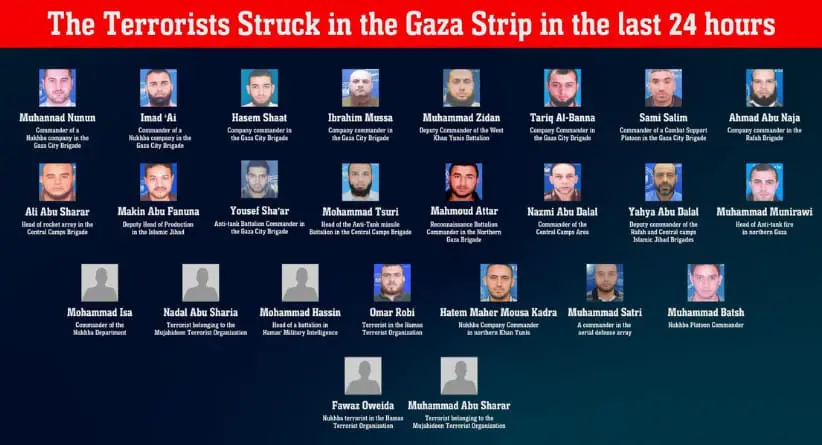
Hamas terrorists killed on October 28-29 (IDF Spokesperson Unit)
“As I understand it, they took out an Israeli soldier,” Trump told reporters aboard Air Force One. “So the Israelis hit back and they should hit back. When that happens, they should hit back,” he added.
Israel said afterward it remains committed to the ceasefire even though Hamas still had not fulfilled its commitment to return the bodies of all the hostages. The government also abandoned plans to expand the “Yellow Line” in response to Hamas violating the agreement after the United States vetoed the idea.
According to the Times of Israel, Egyptian and Qatari mediators notified Hamas on October 29 that the group had 24 hours to evacuate its fighters from the Israeli-controlled eastern half of Gaza or risk being exposed to IDF fire. The deadline expired, and Israel now has the approval of the US, Egypt, and Qatar to engage Hamas targets on the Israeli side of the “Yellow Line.” The IDF believes terrorists are still in tunnels in areas under IDF control. They are believed to have been responsible for the two attacks on Israeli troops after the ceasefire. Hamas insists it is not responsible for those operatives because “communication has been cut off” from the area.
On November 3, Israel denied reports that it planned to grant safe passage to about 200 Hamas terrorists trapped in tunnels beneath IDF-controlled areas of southern Gaza, mainly Rafah. Earlier media reports claimed Israel might allow the fighters to cross into Hamas-held territory if they surrendered their weapons or if Hamas returned more bodies of slain hostages. After the reports sparked widespread backlash, an Israeli official—widely understood to represent Prime Minister Netanyahu’s office—insisted the prime minister “is not allowing safe passage for 200 Hamas terrorists.”
In an unusually optimistic appraisal, Oded Ailam, a former head of the Counterterrorism Division in the Mossad, suggested that by mid-September 2025, Hamas’s control over Gaza had effectively collapsed. When the IDF ordered civilians to evacuate northern Gaza, roughly 800,000 Gazans complied—defying Hamas’s threats and marking the first large-scale public rejection of its authority. Since then, Hamas has disintegrated into disorganized, semi-independent cells with no central leadership or strategy. Most of its senior and mid-level commanders have been killed, its finances drained, and its governing capacity destroyed. In the resulting power vacuum, about ten major clans have begun cautiously asserting autonomy, signaling the erosion of Hamas’s rule. What remains of Hamas’s activity consists of isolated, uncoordinated attacks reflecting desperation more than purpose—the group now at its weakest point since its founding.
No Deals For Terrorists in Tunnels
The United States reportedly urged Israel to allow safe passage for some 200 Hamas fighters trapped in Gaza as part of a broader ceasefire framework tied to President Trump’s peace plan. Under the plan, fighters would hand over their weapons to representatives of the U.S.-led Civil-Military Coordination Center in Kiryat Gat. They would then either receive safe passage to a third country or be permitted to withdraw to Hamas-controlled territory west of the Yellow Line. Netanyahu rejected the proposal, declaring that Israel would not allow the terrorists to escape.
The Trump administration proposed that the terrorists surrender and hand over their weapons to a third party—Egypt, Qatar, or Turkey. In return, Israel will grant a “pardon” to the terrorists and will not kill them, provided they do not return to terrorist activities.
Netanyahu and Kushner agreed that the issue would be resolved jointly, and that Israel would not take significant action without first informing Washington.
Chief of Staff Lt. Gen. Eyal Zamir had suggested linking any such arrangement to the return of Lt. Hadar Goldin’s body, an Israeli officer killed in Gaza in 2014. Netanyahu rejected that linkage, emphasizing that “there is no connection between the terrorists and the release of hostages.” He reaffirmed that Israel’s military follows directives from the political leadership, whose mission remains to eliminate Hamas’s military presence, confiscate its weapons, and secure Gaza’s demilitarization — key objectives of the Trump peace plan.
Meanwhile, Hamas was reportedly using schools and hospitals in Gaza for interrogations and to monitor aid distribution, echoing tactics used before and during the Gaza war. According to the Palestinian Authority daily Al-Hayat Al-Jadida, Hamas has redeployed its security forces, including internal policing units and the Al-Qassam Brigades, across most areas not under Israeli control. The group is also auditing international aid agencies, imposing taxes and levies on aid, and establishing a dedicated department to manage these activities, while summoning agency employees for information on aid amounts and distribution methods.
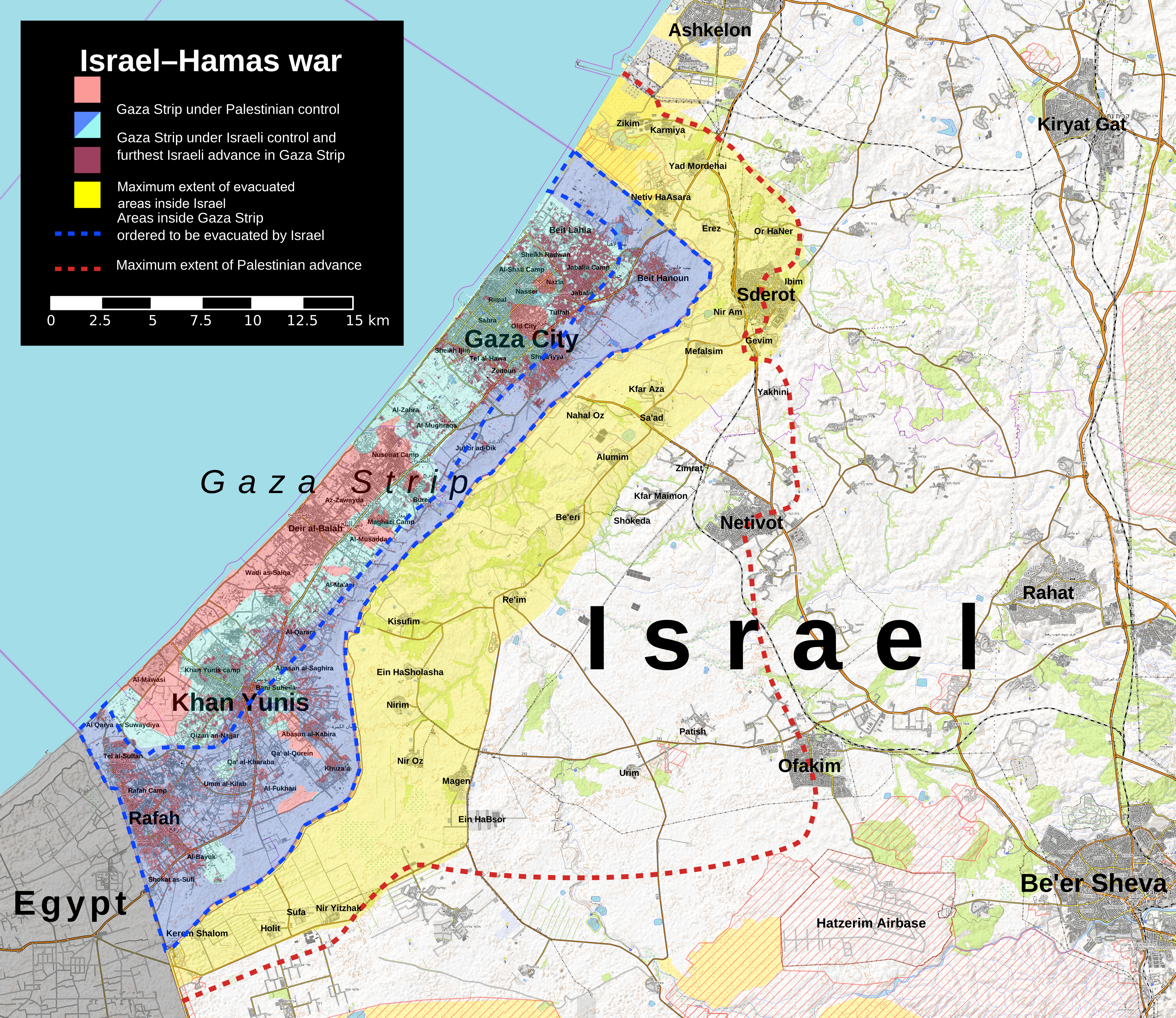
Map of Gaza as of October 10, 2025
Click to Enlarge
Ecrusized, influenced by user Rr016., CC BY-SA 4.0 via Wikimedia Commons
Ceasefire Falters
The IDF carried out airstrikes across Gaza on November 19 after Hamas gunmen fired on Israeli troops operating along the “yellow line” buffer zone near Khan Younis, violating the ceasefire. No Israeli soldiers were hurt. The strikes—mainly in Gaza City’s Zeitoun neighborhood and guided by Shin Bet intelligence—killed the Hamas battalion commander for Zeitoun and a senior naval operative, according to the IDF. Palestinian sources reported additional strikes in Khan Younis, Shijaiyah, and central Gaza City, with at least 25 people killed.
While international attention focused on the UN Security Council's endorsement of President Trump’sGaza plan, Hamas has been steadily reasserting authority in areas west of the yellow line where Israel withdrew after the October 10 ceasefire. With no competing governance, Hamas continues to run civilian life, collect taxes, and manage humanitarian aid. Its redeployment has reduced looting and street crime, leading some residents to view its renewed presence as stabilizing despite the destruction it caused.
Analysts say Hamas is rebuilding its public standing and now controls about 47% of Gaza—home to most of the population—while the IDF controls the remaining 53%. Western officials warn that delays in implementing Trump’s plan could entrench long-term division between the two zones.
On November 20, the IDF revealed it has uncovered one of the largest and most sophisticated Hamas tunnel networks discovered to date in Gaza—spanning 4.3 miles, reaching depths of 82 feet, and running beneath dense civilian areas in Rafah, including an UNRWA compound and multiple public institutions. The system contained 80 hideouts, served senior Hamas operatives, and concealed the body of slain IDF Lt. Hadar Goldin for more than 4,000 days until his remains were returned in November 2025.
In late November, Israel reportedly offered Hamas a deal to allow terrorists trapped in tunnels in Rafah to surrender in exchange for safe transfer to Israeli prisons. The proposal—conveyed through mediators—would later enable the terrorists to be released and relocated to Hamas-controlled areas of Gaza if they disarm, renounce terrorism, and agree not to return to fighting. Hamas acknowledged for the first time that its operatives are trapped and appealed for international pressure on Israel to release them. Despite the offer, the fighters did not surrender and repeatedly attempted to escape or attack IDF forces. It was unclear whether Hamas leadership could communicate with them.
Hamas had little reason to capitulate, given its success in regaining its authority. As the New York Times reported on December 8, Hamas was restoring its presence across the areas Israel left. Its police returned to patrol the streets, fighters set up checkpoints, and the group resumed key government and security functions. It was executing rivals, detaining opponents, and imposing fees on certain high-value goods entering Gaza.
Even after significant losses, intelligence assessments indicated Hamas retained roughly 20,000 fighters and much of its tunnel system, enabling it to replace commanders and regroup out of sight. Residents say the group is weaker than before the war, but it was clearly reestablishing order and
projecting authority.
In an apparent breach of the ceasefire, Netanyahu and Katz ordered the killing of senior Hamas leader Ra’ad Sa’ad on December 13, citing his role in directing Hamas’s postwar rearmament and IED attacks that wounded IDF soldiers. Sa’ad was also a key planner of the October 7 massacre and one of the last senior figures involved in that attack still alive.
Israeli security agencies said they acted on real-time intelligence when Sa’ad briefly surfaced above ground in Gaza City. However, reports suggest the strike may have been approved quickly without extensive debate and possibly without prior U.S. notification.
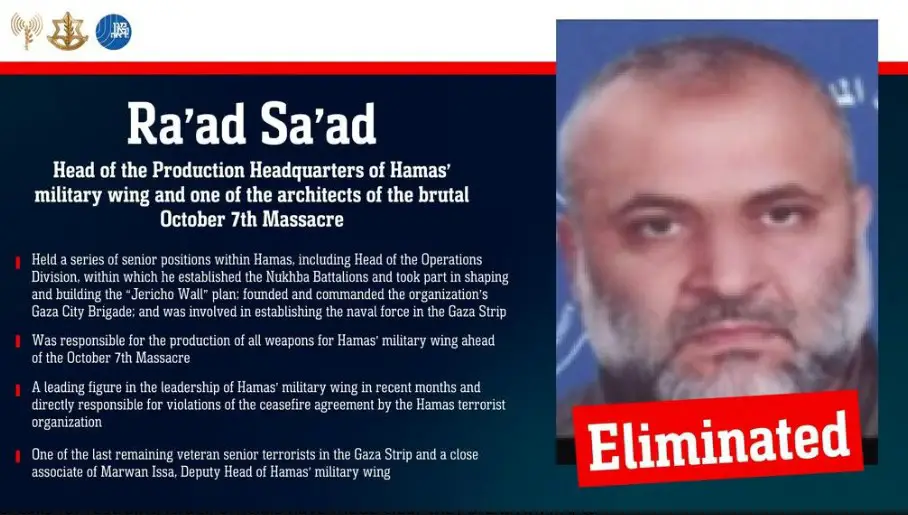
Israel’s killing of Sa’ad was intended as a strategic message to Washington and regional mediators that Israel would not accept Hamas retaining military or governing power in Gaza, even under a ceasefire. Israeli officials viewed Sa’ad’s daylight movement along a main Gaza road as a sign of growing Hamas confidence and consolidation during the truce.
By striking him publicly despite U.S. calls for restraint, Israel aimed to warn Hamas leader Izz al-Din Haddad and others that no diplomatic process or international pressure would allow Hamas to reestablish itself as an armed authority. The operation also reflected Israel’s broader approach of using ceasefires to continue intelligence-based actions against Hamas leadership while reinforcing that Hamas’s survival in Gaza is a red line.
Journalists or Terrorists?
Between October 7, 2023, and November 30, 2025, Hamas and international groups reported between roughly 220 and 256 Palestinian media personnel killed. An investigation by the Intelligence and Terrorism Information Center identified 266 individuals labeled as journalists or media workers killed during the war and found that about 60% were members of or affiliated with terrorist organizations, primarily Hamas and Palestinian Islamic Jihad. Many held dual roles as both media workers and military operatives.
The study found 104 Hamas-affiliated individuals and 45 linked to PIJ among the dead, along with smaller numbers from other armed groups. This blending of journalism and militancy, including cooperation with outlets such as Al Jazeera, undermines the credibility of reporting, complicates the legal status of journalists under international law, and endangers legitimate reporters by making it difficult to distinguish between civilians and combatants.
The Truth About al-Shifa
A December 17, 2025, report by investigative journalist David Collier, using newly analyzed footage and geolocation data, revealed that al-Shifa Hospital served as a primary command-and-distribution hub for Hamas on October 7, 2023.
Using frame-by-frame analysis, Collier identified a stolen IDF jeep carrying at least six hostages—including female surveillance “spotters”—entering the hospital gates. The convoy, including a vehicle carrying hostage Naama Levy, bypassed the fully operational Al-Ahli Arab Hospital to reach al-Shifa. This suggests the destination was chosen for its role in Hamas’s command structure rather than a need for urgent medical care. Footage shows multiple stolen military vehicles converging at the hospital within minutes, met by armed terrorists and celebratory crowds.
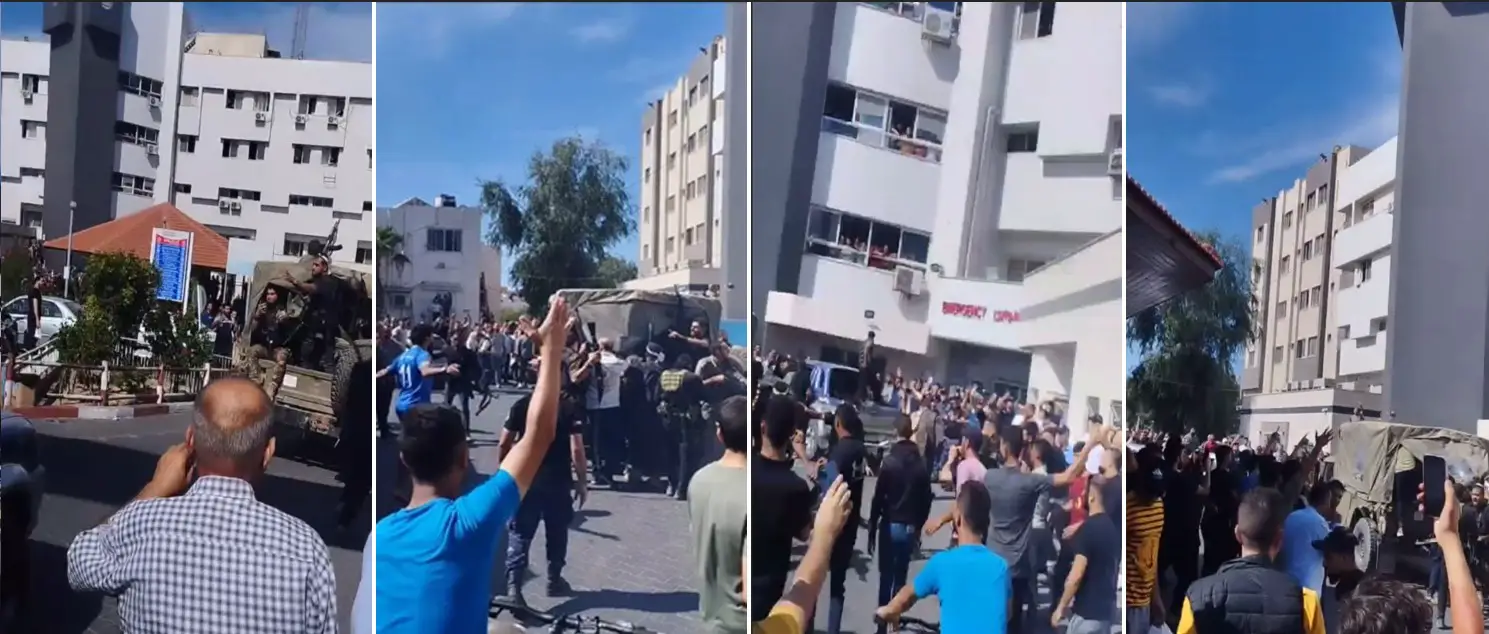
Armed and unarmed terrorists along with celebrating crowds surround the hostage vehicles at the entrance to al-Shifa Hospital (October 7, 2023)
The report alleges a “massive journalistic failure” and complicity among those on the ground who witnessed these events in real-time. Photographers on-site, including those from major agencies, documented the arrival of hostage vehicles but captioned the images as the “transfer of wounded Palestinians.”
Despite live reporting throughout the morning, no journalist or hospital administrator reported the presence of hostages or armed Hamas units.
The hostages received only “rudimentary field dressings” rather than professional care before being moved into the tunnel network beneath the complex.
Collier concluded that al-Shifa served as a primary operational hub where hostages were processed and distributed. The fact that this occurred in front of rolling news cameras—yet remained unreported for years—points to a coordinated effort to obscure al-Shifa’s integration into Hamas’s military infrastructure.
As 2025 ended, the IDF was racing to locate and destroy Hamas and Palestinian Islamic Jihad tunnels between Gaza’s border fence and the Yellow Line before diplomatic pressure halted operations. Israeli security sources said the scale of the effort reflects a major prewar intelligence failure, with Military Intelligence underestimating both the size of the tunnel network and its central role in Hamas’s combat doctrine. Earlier assessments that most tunnels had been destroyed were later revised sharply downward, from roughly 75% to about 25%.
Hamas Finances
Israel’s sustained military campaign has effectively strangled Hamas’s financial lifelines, plunging the organization into a severe liquidity crisis. By systematically raiding exchange companies across the West Bank, the IDF has successfully “dried up” primary funding conduits, leaving Hamas unable to meet full payroll obligations for the first time in years. While Iranian support remains vital, logistical bottlenecks prevent physical delivery of funds into Gaza. Hamas has been reduced to issuing only partial payments to operatives and civilian staff, scavenging dwindling cash treasuries and squeezing internal commercial sources to maintain baseline operations—revealing significant erosion of the group’s economic staying power.
This analysis is contradicted by Israeli intelligence estimates that Hamas has amassed between 400 million shekels ($127 million) and 1 billion shekels ($318 million) in cash inside Gaza, hidden in tunnels or moved early in the war from bank vaults. The group has increased salaries and is financially secure for years, largely due to Qatari funding approved by Israel.
Hamas also profits heavily from taxing aid and commercial goods entering Gaza, currency exchange fees, smuggling—including cigarettes and dual-use materials—and informal money transfer networks. Since the ceasefire, it has revived its tax system, expanded revenues, maintained basic governance, and redirected funds to rebuild military infrastructure, including tunnels. Hamas has imposed new levies on Gaza’s street vendors and traders, including taxes on market stalls, imported goods, money-changing, and tobacco, forcing traders to pay large upfront fees and high sales taxes.
Hamas continued paying salaries to tens of thousands of bureaucrats and operatives even during the war. According to The Guardian, it resumed paying $260 to $485 monthly—quite high for Gaza today. Contrary to other reports, Hamas enters 2026 in one of its strongest financial positions in years. Israeli officials warn Hamas remains economically entrenched, faces no internal opposition, and is far from defeated.

On January 8, 2026, Hamas attempted to launch a rocket, but it fell harmlessly inside the Gaza Strip before the IAF struck the launch site.
IDF officers are divided over whether the tunnels uncovered during the prolonged fighting were actually destroyed. Officers in the Combat Engineering Corps argue that some of the methods used did not fully render the tunnels inoperable and that they could be re-excavated. The IDF employs different techniques depending on the tunnel: in some cases, sealing entrances, in others, demolishing key junctions within the network. Hamas, meanwhile, invested significant resources in learning how to overcome the damage—re-digging tunnels and concealing their activity deep underground.
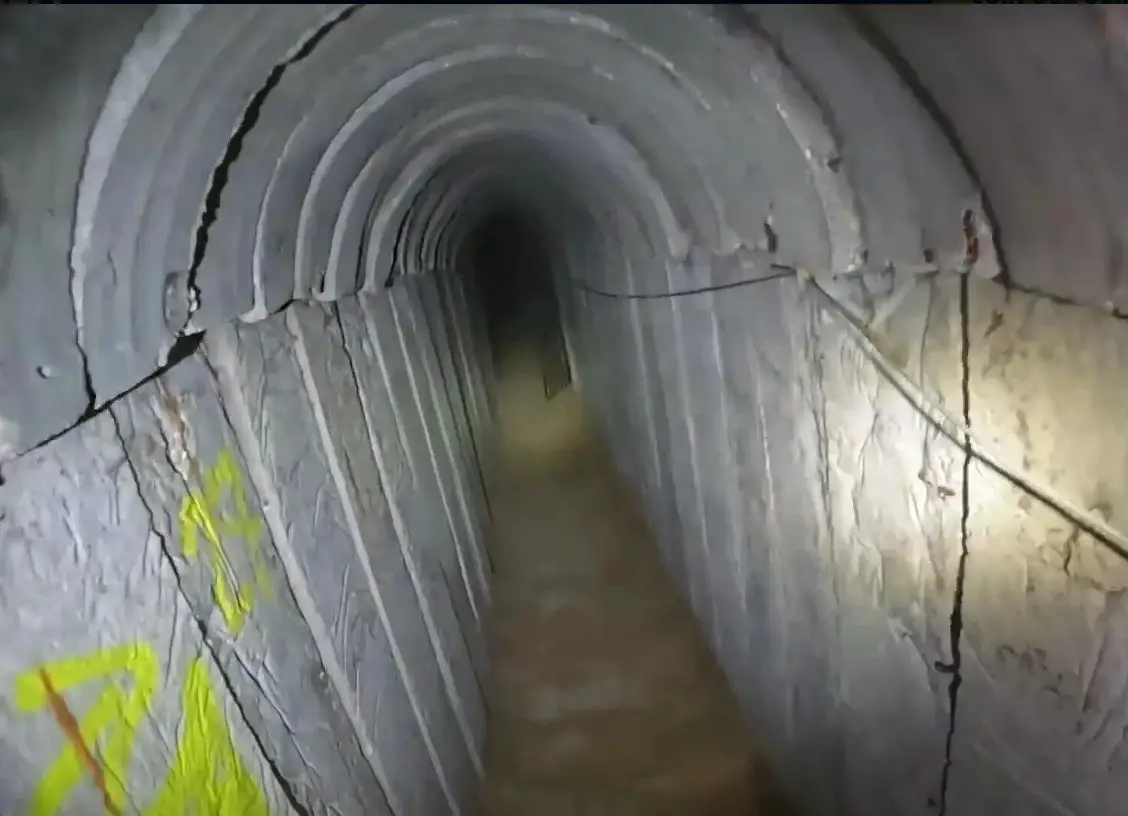 Tunnel in Beit Hanoun (IDF Photo)In Early February 2026, the IDF uncovered a major weapons cache in southern Gaza, including about 110 mortar rounds, rockets, and other military equipment hidden inside UNRWA blankets and humanitarian aid supplies. The discovery, made by the 7th Armored Brigade during routine patrols in Israeli-held territory east of the Yellow Line, was described as one of the largest single finds of longer-range weapons since the October 2025 Gaza ceasefire deal.
The IDF continued to eliminate terrorists in Gaza despite the ceasefire. On February 16, for example, the 7th Armored Brigade eliminated six Hamas operatives found hiding in tunnels on the Israeli side of the “Yellow Line” in Rafah, bringing the sector total to about 50 terrorists killed or captured in recent months.
The IDF announced that combat engineers destroyed a one-kilometer-long Hamas tunnel in northern Gaza’s Beit Hanoun during mop-up operations near the Israeli side of the ceasefire line. The tunnel contained multiple rooms used by operatives as hideouts, and troops discovered several explosive devices inside. It was demolished by the elite Yahalom combat engineering unit.
The military estimated that at least 60% of Hamas’s tunnel network—believed to span roughly 350–400 miles across Gaza—remains intact.
Expanding Control of Gaza
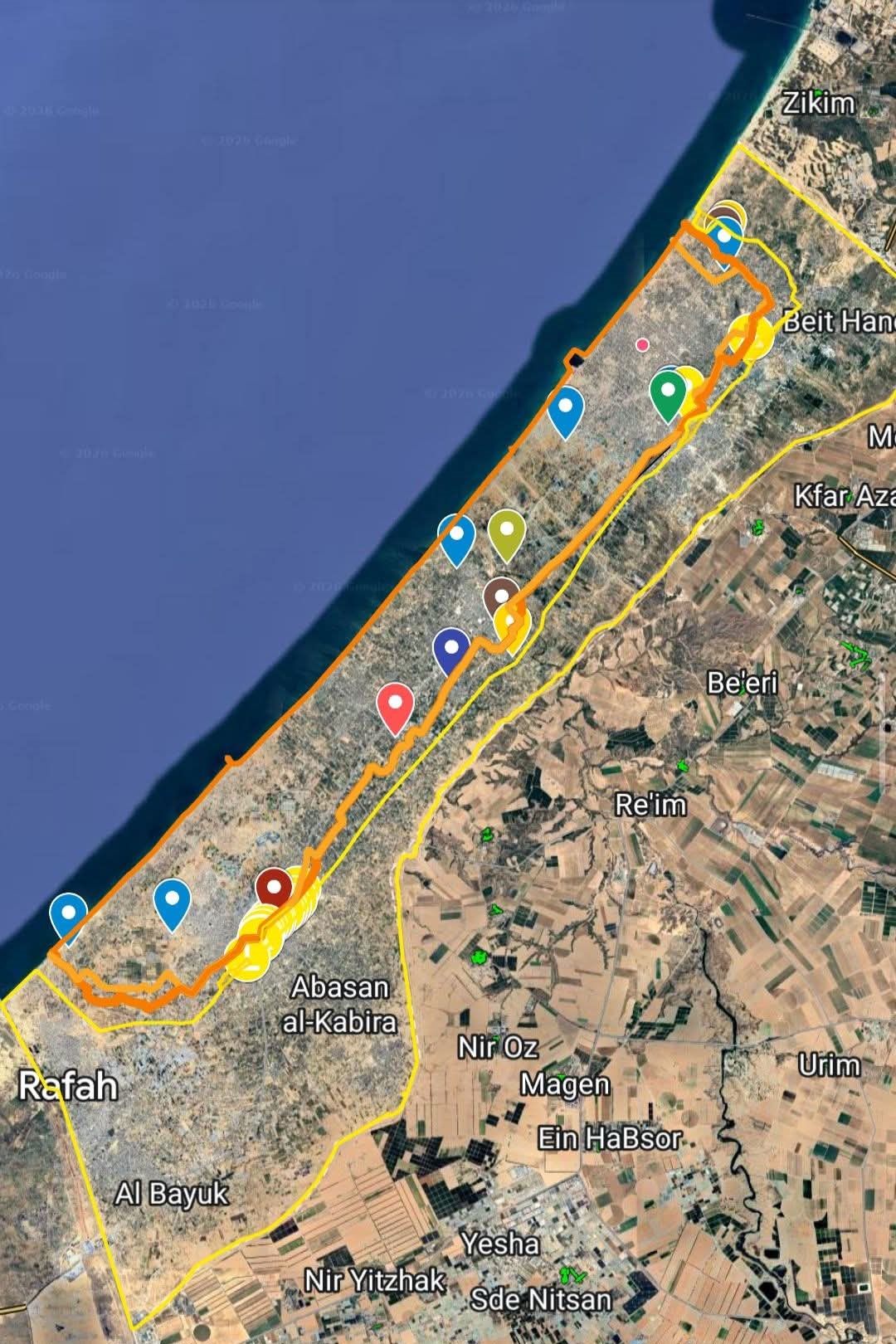
Israel quietly expanded its controlled zone in Gaza beyond the ceasefire line agreed in October 2025, with new maps sent to aid groups in mid-March 2026 showing an “orange line” marking a restricted area that now encompassed an estimated 64% of Gaza’s total territory. The maps had been distributed to humanitarian organizations but never released publicly, and Israel had not communicated the boundary’s location to Palestinian civilians.
 Source: @FreePalestineHQ
The original ceasefire had established a “Yellow Line” marking Israeli military positions, demarcated on the ground with concrete blocks. According to two aid sources who shared the maps with Reuters, Israel had since moved the Yellow Line forward to absorb what had previously been the expanded zone, while the orange line now marked an even larger restricted area beyond it. Israel said the zone between the two lines existed to facilitate aid delivery and required humanitarian groups to coordinate their movements with the military, while insisting civilians were not affected. Critics and aid workers disputed this.
Palestinian analysts and Arab governments interpreted the expanding control as an effort to compress nearly two million Palestinians into an ever-shrinking coastal strip to make remaining in Gaza untenable — a step toward permanent displacement from territory Palestinians sought as part of a future state.
On May 16, 2026, the IDF confirmed that it killed Hamas’s Gaza chief and military leader, Izz al-Din al-Haddad. Nicknamed “The Ghost,” al-Haddad was described by Israel as one of the last surviving senior architects of the October 7 massacre and a key figure in Hamas’s hostage system, who allegedly surrounded himself with hostages to avoid being targeted. The IDF said he had recently worked to rebuild Hamas’s military capabilities and plan attacks despite the October ceasefire. Chief of Staff Lt. Gen. Eyal Zamir called the strike a “significant operational success” and said Israel would continue pursuing those involved in the October 7 attack.
On May 27, Hamas confirmed that Israel killed al-Haddad’s recently named successor, Mohammed Odeh, along with his wife and two of his children, in a strike in Gaza City.
Israel has also slowly moved the Yellow Line to incorporate more of Gaza within Israeli control. It is now estimated to hold 59% of Gaza, up from 53% at the time of the ceasefire. On May 28, Netanyahu said he directed the IDF to seize 70% of Gaza. The IDF has also been fortifying the line with a deep trench and high sand berms along its length, designed to be harder to breach.
On June 1, Israel eliminated Youssef Ayesh Awad Ramadan, a deputy commander of a Nukhba Force cell, who took part in the invasion on October 7 and the kidnapping of Hersh Goldberg-Polin, Alon Ohel, Eliya Cohen, and Or Levy.
The IDF’s Narrow Options
By June 2026, the IDF had established a network of roughly 40 fortified outposts across Gaza. These installations resembled American counterinsurgency bases used in Iraq and Afghanistan, housing combined armor, infantry, and engineering units capable of shifting rapidly from routine operations to combat. Positioned behind the “Yellow Line,” the outposts were supported by trenches, surveillance systems, and extensive tunnel-detection efforts. Along Gaza’s border, Israel had rebuilt and strengthened its security barrier, incorporating advanced observation and remote-defense systems. The military’s primary concerns had shifted from large-scale assaults to guerrilla attacks, roadside bombs, and infiltration attempts.
The IDF estimated that around 20,000 operatives were still present in Gaza, including thousands of experienced fighters. However, the organization had largely lost the ability to conduct large-scale coordinated military operations. Instead, it had reverted to guerrilla tactics, relying on small cells, intelligence gathering, recruitment, and limited attacks. Hamas continued manufacturing explosives and probing Israeli defenses, but commanders believed it no longer posed the same conventional threat it once had.
At the same time, Hamas’s governing authority had weakened. Targeted strikes against its leaders, police forces, and administrative personnel had eroded its ability to control daily life. Armed clans increasingly challenged their authority, and many areas experienced a growing governance vacuum. Reports described rising crime, violence, theft, and social disorder, with tribal and family networks often serving as the only remaining sources of stability.
Humanitarian aid continued entering Gaza through international channels, but the situation remained dire. While aid helped provide food, water, and medicine, Israeli officials claimed Hamas diverted part of the supplies and revenues to sustain its operations and recruit new members. Meanwhile, reduced international attention and financial constraints had forced aid organizations to scale back food and medical services, further worsening living conditions.
Journalist Ron Ben-Yishai argued that Israel had two strategic options. One was a large-scale military offensive to seize the remaining Hamas-controlled territory, including Gaza City. Military commanders believed such an operation could be launched quickly, but it would require substantially more troops, entail significant casualties, and likely provoke international opposition. The second option was a prolonged campaign of attrition, relying on intelligence, drones, targeted strikes, and continued territorial control to gradually weaken Hamas while preventing its recovery.
Israeli military intelligence and Southern Command warned Chief of Staff Lt. Gen. Eyal Zamir in June 2026 that Hamas was rebuilding its military capabilities and preparing for renewed conflict. According to the report, Hamas was producing hundreds of explosive devices and anti-tank missiles each month, recruiting young fighters, resuming training for its elite Nukhba force, rebuilding underground infrastructure, and attempting to smuggle drones and communications equipment into Gaza from Sinai. Intelligence officers reportedly assessed that Hamas remained firmly in control of Gaza and was unwilling to relinquish power.
The report said the IDF believed these developments strengthened the case for resuming offensive operations against Hamas. However, the United States reportedly opposed a renewed offensive, preferring to maintain the current situation in Gaza while advancing President Trump’s Board of Peace initiative.
Despite grumbling from the Trump administration, the IDF continued to target the perpetrators of the massacre and any terrorists identified as a threat to the troops. The military was also building an earthen barrier along the yellow line and had completed about 14 miles (more than half the length of Gaza) by mid-July.
In August, the IDF destroyed two Hamas weapons depots in mosques in Gaza City and Deir al-Balah, which the military said was “another example of Hamas’s systematic exploitation of civilian infrastructure, including mosques, in violation of international law, to advance and execute terror attacks against IDF troops and Israeli civilians.”
Degrading Hamas
The IDF and Shin Bet continued working to degrade Hamas’ finances and prevent the restoration of its infrastructure and military capabilities, including by eliminating terrorists and targeting networks of money changers and facilitators involved in transferring hundreds of millions of dollars. Nearly every day, the IDF reported killing another terrorist, with an emphasis on tracking down those directly involved in the October 7 attack and the taking of hostages.
On September 23, for example, Muhammad Abu Alwan, head of Hamas’ Finance Department, was killed in an airstrike. Abu Alwan was involved in budgeting all of Hamas’ branches and directed the transfer of more than $1 billion during the war to fund Hamas’ terrorist activities.
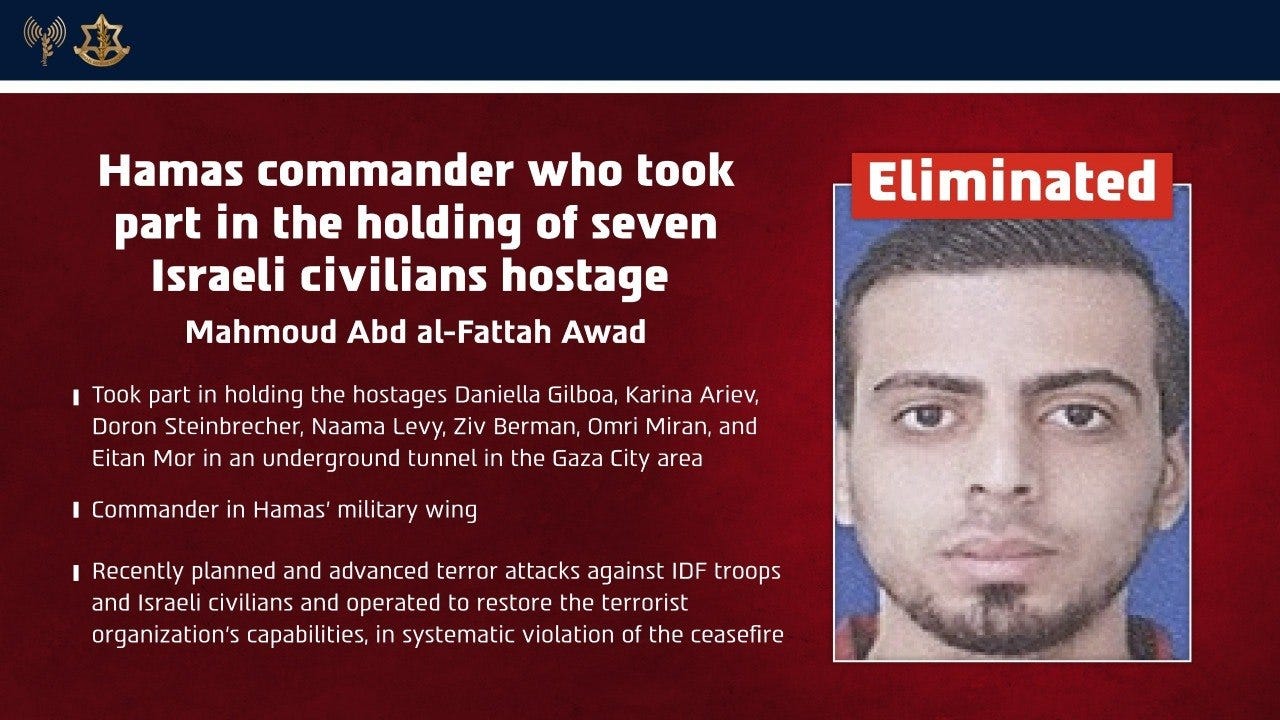
Earlier, Mahmoud Abd al-Fattah Awad, a commander in Hamas’ military wing who held seven Israeli civilian hostages in an underground tunnel, was eliminated. As in the case of most such targeted assassinations, the IDF accused him of working to restore Hamas’ capabilities in violation of the ceasefire.
Meanwhile, Hamas worked to entrench its influence in Gaza ahead of the planned handover to a technocratic administration, KAN Reshet Bet reported. The group placed affiliated figures in clan positions through council elections and the appointment of mukhtars, and installed loyalists as heads of neighborhood committees in refugee camps and tent villages. It secured clan dependence by offering help with family disputes and access to humanitarian aid, while camp service committees reported to Hamas and monitored residents. Institutions such as Gaza’s chamber of commerce remained under its control.
Although Hamas said it would cede authority, a senior Palestinian official in Ramallah told the Jerusalem Post that it had merely dissolved its “emergency committee” and immediately appointed another temporary governing body. Some clans cooperated under pressure, and when Hamas announced the dissolution of its governing body, clan representatives echoed its statements at a press conference to lend it legitimacy.
Table of Contents for the Israel-Hamas War
Bibliography and Photo Credits
About Mitchell Bard