John Kerry
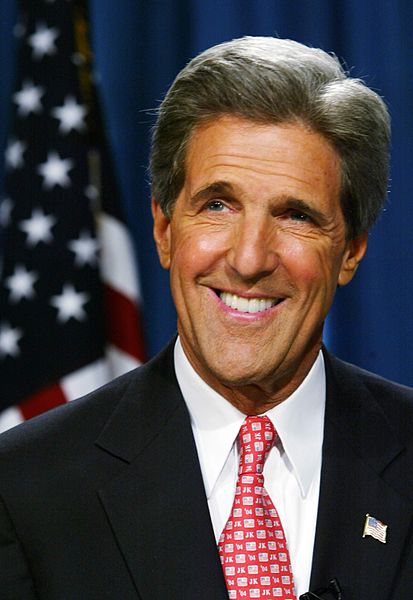
Learn More about Democratic Nominee John Kerry:
AICE does not rate or endorse any candidate for political office. This page is for informational purposes only.
- Policy Statement
- Presidential Platform on Israel
- Legislative Record on Israel/Middle East
- Foreign Policy Speech (Georgetown)
- Remarks on Middle East Peace
- Speech to Arab American Institute
- Remarks at Council on Foreign Relations
- Statement to JTA
- Middle East Strategy
- Remarks on Trip to Israel
- Select Quotes & Statements
Policy Statement:
"Senator Kerry has long been a staunch supporter
of Israel. As he said in his address at Georgetown University, “Israel
is our ally, the only true democracy in a troubled region…America
has always been committed to Israel’s independence and survival
we will never waiver.” He believes that America must be actively
engaged in working towards a peaceful solution of the Middle East conflict
that ensures Israel’s security while eventually providing for an
independent Palestinian State. “American engagement and successful
mediation are not only essential to peace in this war-torn area,”
he said, “but also critical to the success of our own efforts against
terrorism.” In order to address the root causes of terrorism, Senator
Kerry advocates implementing measures to improve social, economic, and
political conditions throughout the Middle East as part of a comprehensive
multilateral effort to move the region towards the modern world and
away from Islamic fundamentalism. “What we need in the Middle East
is an aggressive, proactive, superengaged, leveraged kind of diplomacy
that agrees on how we can move them to modernity and in fact invests
in it,” he said. “In the next few years, if changes aren’t
made, the potential for violence in that region will only increase…We
must give countries in the Middle East a reason to want peace.”"
Presidential Platform Regarding Israel
John Kerry has been at the forefront of the fight for Israel’s security during his nineteen years in the US Senate. His pro-Israel voting record is second to none.
John Kerry did not wait until he was running for president of the United States to visit Israel - he has been there on numerous occasions throughout his public life. Through his meetings with Israeli political and military leaders – and especially his interaction with ordinary Israelis – he has experienced the everyday security threat that Israelis face and this has deepened his understanding of Israel’s security needs. In short, John Kerry will never do anything to compromise that security.
John Kerry believes that particularly in uncertain times like these we must reaffirm and indeed strengthen our special relationship with Israel, our most steadfast friend and ally in the region. His commitment to a safe, secure, democratic Jewish state of Israel is unwavering. It comes from a personal belief that Israel’s cause must be America’s cause.
John Kerry understands that anti-Semitism masked in anti-Israel rhetoric is a dangerous trend threatening both Israel and Jewish communities around the world. John Kerry has always fought against anti-Semitism and as president, he will take governments around the world to task for failing to address this escalating threat.
Israel’s Right to Respond to Terrorism: Kerry supports Israel’s right of self defense to eliminate threats to its citizens, including actions taken by Israel against Hamas, Islamic Jihad and other terrorist groups in Gaza. In spring 2002, when Israel launched Operation Defensive Shield to root out Palestinian terrorists and dismantle the Palestinian infrastructure, Kerry co-sponsored a resolution expressing solidarity with Israel and called for continued assistance in strengthening Israel's homeland defenses.
Supporting Israel’s Plan to Withdraw from Gaza: John Kerry expressed support for Prime Minister Ariel Sharon’s unprecedented plan to withdraw from the Gaza Strip. He recognizes that in any final settlement for Israel to remain a Jewish State, Palestinians must settle in a future Palestinian State rather than in Israel, and that in light of demographic realities, a number of settlement blocks will likely become a part of Israel.
Fighting Against Saudi Government Anti-Semitism: John Kerry has forcefully spoken out against anti-Semitic statements by Saudi government officials, saying it calls into question their commitment to combating terrorism and pledging that as president, he will never permit these kinds of attacks to go unanswered.
Israel’s Security Fence Is A Legitimate Right of Self Defense: John Kerry supports the construction of Israel’s security fence to stop terrorists from entering Israel. The security fence is a legitimate act of self defense erected in response to the wave of terror attacks against Israeli citizens. He believes the security fence is not a matter for the International Court of Justice.
New Palestinian Leadership: John Kerry believes that Yasser Arafat is a failed leader and unfit partner for peace and therefore has supported his total isolation. He has demanded a new, responsible Palestinian leadership, committed to ending the violence and fighting terror – in word and in deed – and will work tirelessly to ensure that this new leadership emerges.
Foreign Aid to Israel: John Kerry has always voted to maintain critical foreign aid to our ally Israel, resisting any attempts to cut it over his years in the Senate. In the early 1990s, he fought President Bush when his administration restricted aid to Israel through the loan guarantees program.
The UN and other International Organizations: John Kerry has always believed the US must stand solidly behind Israel at the UN and other international organizations. He recognizes the UN must establish more credibility on Arab-Israeli matters and would never hesitate to wield a US veto on the Security Council in the face of anti-Israel/Anti-Zionist resolutions.
Fighting to Move the American Embassy to Jerusalem: John Kerry has long advocated moving the US Embassy to Jerusalem, Israel’s indisputable capital. In 1999, he signed a letter taking President Clinton to task for not moving the embassy.
Maintaining Israel’s Military Superiority: John Kerry understands that America must guarantee Israel’s military superiority and supports carefully restricting arms sales to Arab countries in the region. He opposed the sale of Maverick missiles and F-15 fighter planes to Saudi Arabia.
Financing Terror: Kerry will demand accountability and action from Arab and European countries to eliminate sources of funds that flow freely to terrorist organizations. Kerry strongly believes the US must “end the sweetheart relationship with a bunch of Arab countries that still allow money to move to Hamas and Hezbollah and Al Aqsa Brigade.”
Isolating and Punishing Regimes of Terror: Kerry co-sponsored the Syria Accountability Act, which includes a ban on the export of military and dual use items to Syria. He believes that “we must ensure that Syria does not acquire and distribute additional weapons thereby exasperating tensions in the Middle East, raising potential threats to Israel, and undermining arms control.”
Preventing a Nuclear Armed Iran: John Kerry understands that a nuclear armed Iran is unacceptable. He believes the failure of the Bush Administration to thwart Iran’s efforts to amass nuclear weapons poses a real threat to the safety and security of Israel, the US and the rest of the free world.
Guiding Principles for John Kerry on Israel and the Israeli-Palestinian Conflict:
• As President, John Kerry will never force Israel to make concessions that compromise its security.
• As President, John Kerry would not expect Israel to negotiate without a credible Palestinian partner for peace - something that unfortunately does not exist today.
• As President, John Kerry would work to ensure and embrace strong bi-partisan support for matters concerning the security of the State of Israel.
• As President, John Kerry will provide the political and military support for Israel to fight terrorism. He understands that just as Israel has stood with the US in our fight against terrorism and Al-Qaeda, the US must stand firmly with Israel as it fights against terrorism and terrorist groups like Islamic Jihad, Hamas and Hezbollah. We must continue to stand shoulder to shoulder against terrorism and state sponsors of terrorism.
• As President, John Kerry will work to strengthen the economy of Israel, an economy that has suffered dramatically over the last few years during the latest violence in the region. In particular, he will act to jump start the high tech sector working to adapt many of the innovative “technologies” Israel has invented to combat terrorism. He will work to strengthen the US homeland while simultaneously strengthening the Israeli economy.
• As President, John Kerry will strengthen the working relationship and cooperation between the US Department of Homeland Security and the Israeli security establishment to share technology and lessons learned. In addition, he will establish a commission to see what the US can learn to strengthen the security of our homeland from Israel’s experience and success on matters such as airline and port security, nuclear plants and chemical storage facilities.
• As President, John Kerry will implement measures and programs to improve the social, economic, and political conditions throughout the Middle East as part of a comprehensive multilateral effort to move the region forward towards democracy and freedom and away from Islamic fundamentalism, including a wide-ranging Middle East trade agenda.
Legislative Record on Israel/Middle East
Legislation |
Kerry's Vote |
Final Status |
Foreign
Aid Appropriations |
|
supported pro-Israel position |
passed 96-2 |
|
supported pro-Israel position |
passed 65-27 |
FY 2000 Conference Report |
opposed pro-Israel position |
passed 51-49 |
|
supported pro-Israel position |
passed 97-2 |
|
supported pro-Israel position |
passed 90-3 |
|
supported pro-Israel position |
passed 91-8 |
|
supported pro-Israel position |
passed 93-7 |
FY 1996 Conference Report
|
supported pro-Israel position |
passed 90-6 |
|
supported pro-Israel position |
passed 91-9 |
FY 1995 Conference Report
|
supported pro-Israel position |
passed 88-12 |
|
supported pro-Israel position |
passed 84-9 |
FY 1994 Conference Report
|
supported pro-Israel position |
passed 88-11 |
|
supported pro-Israel position |
passed 88-10 |
|
supported pro-Israel position |
passed 87-12 |
FY 1992 Continuing Resolution
|
supported pro-Israel position |
passed 84-16 |
FY 1992 Appropriations Authorization |
supported pro-Israel position |
passed 61-38 |
FY 1992 Authorization |
supported pro-Israel position |
passed 74-18 |
Helms Amendment (Cutting 10% of FY1992 Foreign Aid) |
supported pro-Israel position |
defeated 87-12 |
|
supported pro-Israel position |
passed 76-23 |
|
supported pro-Israel position |
passed 89-11 |
Foreign
Aid: Israel Specific |
Letter to President supporting
levels of aid to Israel (July 1993) |
supported pro-Israel position |
78 signers |
Resolution supporting
loan guarantees to Israel (April 1992) |
supported pro-Israel position |
passed 99-1 |
Loan guarantee amendment (October 1991) |
supported pro-Israel position |
73 cosponsors |
Letter to President opposing
cuts foreign aid (February 1990) |
supported pro-Israel position |
73 signers |
Jerusalem |
Letter expressing disappointment
with the Administration for invoking the 1995 Jerusalem Embassy
Act waiver (July 1999) |
supported pro-Israel position |
84 signers |
Resolution commemorating
the 30th Anniversary of the reunification of Jerusalem (May 1997) |
supported pro-Israel position |
89 cosponsors |
Legislation mandating move of U.S.
Embassy to Jerusalem by May 1999 (October 1996) |
supported pro-Israel position |
passed 93-5/
77 co-sponsors |
Letter urging Secretary
Christopher to move U.S. Embassy to Jerusalem (March 1995) |
supported pro-Israel position |
93 signers |
letter to President Clinton
opposing U.N. language calling Jerusalem "occupied territory" (March 1994) |
supported pro-Israel position |
83 signers |
Resolution congratulating Israel on
25th anniversary of Jerusalem's unification (June 1992) |
supported pro-Israel position |
74 cosponsors |
Resolution declaring Jerusalem the eternal,
undivided capital of Israel (April 1990) |
supported pro-Israel position |
83 cosponsors |
Arms Sales |
Letter to President
opposing Saudi F-15 sale (November 1991) |
supported pro-Israel position |
57 signers |
Letter to President
opposing Maverick missiles to Saudi Arabia (September 1987) |
supported pro-Israel position |
68 signers |
Resolution disapproving Maverick missile
sale to Saudi Arabia (June 1987) |
supported pro-Israel position |
68 cosponsors |
Iran |
ILSA Extension Act of 2001 (July 2001) |
supported pro-Israel position |
passed 96-2 |
Iran Nonproliferation Act (February 2000) |
supported pro-Israel position |
passed 96-0 |
|
supported pro-Israel position |
passed 90-4 |
Letter to Vice President calling
for an end to Russian missile cooperation (March 1998) |
supported pro-Israel position |
47 signers |
Iran and Libya Sanctions Act (ILSA) of 1996 (June 1996) |
Did not consponsor |
45 cosponsors |
Miscellaneous |
|
Did not vote |
passed 95-3 |
|
supported pro-Israel position |
88 signers |
|
supported pro-Israel position |
passed 94-2 |
Letter urging Vice
President not to meet with Arafat until he has
taken necessary steps to end violence (March 2002) |
supported pro-Israel position |
52 signers |
|
supported pro-Israel position |
89 signers |
|
supported pro-Israel position |
87 signers |
Peace through Negotiations Act (October 2000) |
Did not cosponsor |
60 cosponsors |
|
supported pro-Israel position |
96 signers |
Middle East Peace Process Support Act (July 2000) |
Did not cosponsor |
36 cosponsors |
|
supported pro-Israel position |
passed 98-1/94 cosponsors |
|
supported pro-Israel position |
100 cosponsors |
|
supported pro-Israel position |
82 signers |
Letter to Arab
League calling for an end to boycott of Israel (November 1993) |
supported pro-Israel position |
77 signers |
Letter to President
Clinton urging President to press Syria to let Syrian Jews leave (May 1993) |
supported pro-Israel position |
73 signers |
Letter urging Secretary
of State to include Hamas in terrorism report (February 1993) |
did not sign |
55 signers |
Letter urging U.S. veto
of U.N. condemnation of Israel over Hamas expulsions (January 1993) |
supported pro-Israel position |
72 signers |
Letter urging Secretary
of State to keep Syria on State Department terrorism list (November 1991) |
supported pro-Israel position |
55 signers |
Resolution urging Arab states
to recognize Israel (March 1991) |
supported pro-Israel position |
83 cosponsors |
Letter to Israeli Ambassador
expressing solidarity with Israel (January 1991) |
supported pro-Israel position |
79 signers |
Letter opposing
linking withdrawal from Kuwait to West Bank/Gaza (October 1990) |
supported pro-Israel position |
53 signers |
Iraqi sanctions amendment prior to invasion
of Kuwait (July 1990) |
supported pro-Israel position |
passed 83-12 |
Letter and Resolution urging suspension
of US-PLO dialogue (June 1990) |
supported pro-Israel position |
56 signers/68 cosponsors |
Foreign Policy speech at Georgetown University (January 2003):
"We must embark on a major initiative of public
diplomacy to bridge the divide between Islam and the rest of the world.
We must make avoidance of the clash of civilizations the work of our
generation: Engaging in a new effort to bring to the table a new face
of the Arab world -- Muslim clerics, mullahs, imams and secular leaders
-- demonstrating for the entire world a peaceful religion which can
play an enormous role in isolating and rebutting those practitioners
who would pervert Islam's true message."
"The Middle East isn't on the Bush Administration's
trade agenda. We need to put it there. The United States and its transatlantic
partners should launch a high-profile Middle East trade initiative designed
to stop the economic regression in the Middle East and spark investment,
trade and growth in the region. It should aim at dismantling trade barriers
that are among the highest in the world, encouraging participation in
world trade policy and ending the deep economic isolation of many of
the region's countries."
"I propose the following policy goals:
We should build on the success of Clinton Administration's
Jordan Free Trade Agreement. Since the United States reduced tariffs
on goods made in "qualifying industrial zones," Jordan's exports
to the US jumped from $16 to $400 million, creating about 40,000 jobs.
Let's provide similar incentives to other countries that agree to join
the WTO, stop boycotting Israel and supporting Palestinian violence
against Israel, and open up their economies.
We should also create a general duty-free program
for the region, just as we've done in the Caribbean Basin Initiative
and the Andean Trade Preference Act. Again, we should set some conditions:
full cooperation in the war on terror, anti-corruption measures, non-compliance
with the Israel boycott, respect for core labor standards and progress
toward human rights.
Let's be clear: Our goal is not to impose some western
free market ideology on the greater Middle East. It's to open up a region
that is now closed to opportunity, an outpost of economic exclusion
and stagnation in a fast-globalizing world.
These countries suffer from too little globalization,
not too much. Without greater investment, without greater trade within
the region and with the outside world, without the transparency and
legal protections that modern economies need to thrive, how will these
countries ever be able to grow fast enough to provide jobs and better
living standards for their people? But as we extend the benefits of
globalization to people in the greater Middle East and the developing
world in general, we also need to confront globalization's dark side.
We should use the leverage of capital flows and trade
to lift, not lower, international labor and environmental standards.
We should strengthen the IMF's ability to prevent financial panics from
turning into full-scale economic meltdowns such as we've seen in Argentina.
And in the Middle East especially, we need to be sensitive to fears
that globalization will corrupt or completely submerge traditional cultures
and mores. We can do these things.
Fifth, and finally, we must have a new vision and
a renewed engagement to reinvigorate the Mideast peace process. This
Administration made a grave error when it disregarded almost seventy
years of American friendship and leadership in the Middle East and the
efforts of every President of the last 30 years. A great nation like
ours should not be dragged kicking and resisting - should not have to
be pressured to the task of making peace. A great nation like ours should
be leading the effort to make peace or we risk encouraging through our
inaction the worst instincts of an already troubled region.
Israel is our ally, the only true democracy in this
troubled region, and we know that Israel as a partner is fundamental
to our security. From Truman through Clinton, America has always been
committed to Israel's independence and survival - we will never waver.
Israel's security will be best assured over the long
term if real and lasting peace can be brought to the Middle East. I
know from my own trips to Israel that the majority of the Israeli people
understand and expect that one day there will be a Palestinian state.
Their frustration is that they do not see a committed partner in peace
on the Palestinian side. Palestinians must stop the violence - this
is the fundamental building block of the peace process. The Palestinian
leadership must be reformed, not only for the future of the Palestinian
people but also for the sake of peace. I believe Israel would respond
to this new partner after all, Israel has already indicated its willingness
to freeze settlements and to move toward the establishment of a Palestinian
state as part of a comprehensive peace process.
Without demanding unilateral concessions, the United
States must mediate a series of confidence building steps which start
down the road to peace. Both parties must walk this path together -
simultaneously. And the world can help them do it. While maintaining
our long term commitment to Israel's existence and security, the United
States must work to keep both sides focused on the end game of peace.
Extremists must not be allowed to control this process. American engagement
and successful mediation are not only essential to peace in this war-torn
area but also critical to the success of our own efforts in the war
against terrorism. When I visited the region last year, in meetings
with King Abdullah of Jordan, President Mubarak of Egypt, and Crown
Prince Abdullah of Saudi Arabia, it became clear that September 11th
had changed the imperatives of these countries. The Bush Administration
has missed an opportunity to enlist much greater support in the peace
process and needs to focus on this urgent priority- now.
The transformation of the Middle East which can come
from these efforts will determine much of our future - but we must also
look to the challenges on the rest of the planet. We must build a new
and more effective role for the United States in the rest of this complex
world."
On Middle East Peace:
A great nation like ours should not be dragged kicking
and resisting - should not have to be pressured to the task of making
peace. A great nation like ours should be leading the effort to make
peace or we risk encouraging through our inaction the worst instincts
of an already troubled region. Israel is our ally, the only true democracy
in this troubled region, and we know that Israel as a partner is fundamental
to our security. From Truman through Clinton, America has always been
committed to Israel's independence and survival - we will never waiver.
Israel's security will be best assured over the long
term if real and lasting peace can be brought to the Middle East. I
know from my own trips to Israel that the majority of the Israeli people
understand and expect that one day there will be a Palestinian state.
Their frustration is that they do not see a committed partner in peace
on the Palestinian side. Palestinians must stop the violence - this
is the fundamental building block of the peace process. The Palestinian
leadership must be reformed, not only for the future of the Palestinian
people but also for the sake of peace. I believe Israel would respond
to this new partner after all, Israel has already indicated its willingness
to freeze settlements and to move toward the establishment of a Palestinian
state as part of a comprehensive peace process.
Without demanding unilateral concessions, the United
States must mediate a series of confidence building steps which start
down the road to peace. Both parties must walk this path together -
simultaneously. And the world can help them do it. While maintaining
our long term commitment to Israel's existence and security, the United
States must work to keep both sides focused on the end game of peace.
Extremists must not be allowed to control this process. American engagement
and successful mediation are not only essential to peace in this war-torn
area but also critical to the success of our own efforts in the war
against terrorism.
When I visited the region last year, in meetings with
King Abdullah of Jordan, President Mubarak of Egypt, and Crown Prince
Abdullah of Saudi Arabia, it became clear that September 11 had changed
the imperatives of these countries. The Bush Administration has missed
an opportunity to enlist much greater support in the peace process and
needs to focus on this urgent priority- now. The transformation of the
Middle East which can come from these efforts will determine much of
our own security.
(Interview with Krystle Russin - Project
Vote Smart)
Remarks at the Arab American Institute:
If September 11th taught us anything it is that our
security begins here at home, but it doesn't end there. America's president
can never again walk away from the Middle East, and from the active,
engaged, consistent and fair search for peace. Forging a stable and
lasting peace in the Middle East is vital to American national security,
vital to the security of Israel, and other countries in the region.
And vital to the aspirations of the Palestinian people for a viable
Palestinian state. It is also an essential part of winning the war on
terror. Ignoring or downplaying the conflict, as the Bush administration
did for far too long, is a very dangerous game. I know from my many
trips to the Middle East that the majority of Palestinians and Israelis
want to live side by side, and they want to live in peace.
When I was in the region in early 2002 I saw, first
hand, the devastating impact of this ongoing conflict on the daily lives
of both Palestinians and Israelis. In Ramallah, for example, Palestinian
women traveling on foot were forced to stand in long lines at checkpoints
with their children tugging at their sleeves, their arms loaded with
groceries, or other basic needs, forced to walk over large open spaces,
going from one taxi, hopefully to the next. And while they were struggling
to get through the day Israelis were also living in fear of another
terrorist attack, not sure whether to get on a bus or to live in a restaurant.
Sadly, this situation is not better today, it is worse. The suffering
and harassment of Palestinians has grown, along with the apprehension
and fear of Israelis.
No peace process will ever be successful unless Israelis
and Palestinians are committed to that process and willing to take steps
that each side finds difficult. Palestinian leaders must bring an end
to the violence against Israelis, and find a way, with the help of others,
to rein in militant groups. Israel must be prepared to meet its obligations,
as outlined in the Bush administration's road map, and in the Mitchell
plan, with respect to settlements. The absence of movement on these
two critical issues only serves to convince each side that the other
is not really serious about peace. And I know how disheartened Palestinians
are by the Israeli government's decision to build a barrier off the
green line, cutting deeply into Palestinian areas. We do not need another
barrier to peace. Provocative and counterproductive measures only harm
Israel's security over the long-term, they increase hardships to the
Palestinian people, and they make the process of negotiating an eventual
settlement that much harder.
There is nothing to be gained in an endless cycle of
violence and reprisals that only point in a downward direction. There
is no future for that tiny sliver of land other than that of two nations,
living as peaceful neighbors, and the extremists on both sides need
to realize that. Israeli mothers, and Palestinian mothers cry the same
tears over their lost sons and daughters. And Israeli-Palestinian children
have no hopes for a lifetime of peace and prosperity, that do not involve
peace and prosperity for each other.
(Arab
American Institute, October 17, 2003)
Remarks at the Council on Foreign Relations:
On Bush Foreign Policy:
A foreign policy of triumphalism denies the true victories
that we need; and even more, it invites a new and wider, more fundamental
kind of conflict, and even war. It diminishes Islamic moderates and
it fuels the fire of jihadists, enabling them to attract more recruits
to their cause. The battle against terrorism is not and must not be
a modern crusade against Islam. But unless we as a nation change course,
we still could incite and invite a clash of civilizations, with catastrophic
consequences for the future. ...
On Saudi Arabia and Saudi Support for terror (including
against Jews & Israel):
One country that requires a great deal of scrutiny
is Saudi Arabia. Saudi Arabia's role in the financing of terror was
highlighted in a report published by this Council itself. And that report,
just to remind you, concluded: "For years individuals and charities
based in Saudi Arabia have been the most important source of funds for
al Qaeda. And for years, Saudi officials have turned a blind eye to
this problem."
Perhaps even more disturbing is the allegations that
al Qaeda continued to receive money from inside Saudi Arabia long after
the September 11th attacks. According to the Council's report, "Some,
whose donations go to al Qaeda, know full well the terrorist purposes
to which their money will be put."
The Saudi government now claims to be cracking down
on terrorist financing, but, frankly, their efforts and actions have
not matched their words. The United States must do everything possible
to ensure that Saudi reforms are real and not just window-dressing,
and there needs to be real accountability.
I have specific concerns. Saudi Arabia has long been
an exporter -- a supporter of Islamic extremism both here and elsewhere.
Saudi- funded hate speech can be found in schools, mosques and other
institutions across the world. Instead of -- they are currently fostering
hatred of Jews, Christians, Americans and the West. This kind of officially-
sanctioned bigotry breeds terrorism, particularly in countries that
fail to address the needs and concerns of their own populations, where
it is easy to find an excuse as an outlet. Spokesmen for the Saudis
now say that textbooks are being rewritten to remove "possibly
offensive" language and that Islamic clerics are being told to
tone down their rhetoric. But we need more than promises. We need to
see the new textbooks. And we need to hear what the government-financed
clerics are preaching.
Saudi officials and spokesmen have said repeatedly
that the Saudi government is opposed to every form of terrorism; yet
the Saudi regime openly and enthusiastically supports Palestinian terrorist
groups, such as Hamas. The Saudis cannot pick and choose among terrorist
groups, approving some while claiming to oppose others.
Beyond all this, one purveyor of Saudi hate speech
is a senior member of the ruling family, who serves as the top law enforcement
official in the kingdom. I'm referring to Prince Nayef, the Saudi interior
minister. More than a year after the 9/11 attacks, Prince Nayef told
an Arab media outlet that he thought the Jews were responsible for the
attacks on the World Trade Center and the Pentagon; and that is the
word that went out to the population. How can we ever begin to regard
Saudi Arabia as a reliable ally in the search for peace when its own
top law-enforcement officer, supposedly responsible for tracking down
terrorists, is a man who promotes wild anti-Semitic conspiracy theories
to explain away the 9/11 attacks?
The truth is that we have deep and, for the moment,
inescapable ties -- corporate and energy dependence -- that complicate
our relationship with Saudi Arabia significantly. And that is one of
the reasons why it is so compelling as a matter of national security
for the United States to adopt a different energy policy and move towards
true energy independence. In addition, we need to seek to create a real
partnership with the Saudis, a genuine partnership against terror, because
that is also in the interests of the Saudis.
On Israel and the Peace Process:
And just as America cannot go it alone, we cannot neglect
our indispensable role in the search for peace in the most volatile
region of the world. President Bush pays lip service to the idea that
Mideast peace is critical to the effort to combat terrorism, but his
administration has lurched from episodic involvement to recurrent disengagement,
jeopardizing, in my judgment, and in the judgment of many, the security
of Israel, encouraging Palestinian extremists, and undermining our own
long-term national interests and the efforts of the war on terror in
the long run.
Leaders of good will on both sides--private citizens
as well as elected officials--have worked hard in these last months
to advance the peace process, with some of them offering their own vision
of a final settlement. They understand, as President Clinton did, that
it may be easier to break the stalemate and end the violence fostered
by extremists if the end game is the focus, not the steps leading up
to it.
In the first days of a Kerry administration, I will
appoint a presidential ambassador to the peace process who will report
directly to me and the secretary of State, and who will work day to
day to move that process forward. There are a number of uniquely qualified
Americans among whom I would consider appointing, including President
Carter, former Secretary of State James Baker or, as I suggested almost
two years ago, President Clinton. And I might add, I have had conversations
with both President Clinton and President Carter about their willingness
to do this, and I think they would welcome it and embrace it as a means
of moving forward.
QUESTION: ...I wanted you to say a little bit more
about this very interesting idea of presidential envoys, two if I understood
it, one for the Middle East peace process and one for the Islamic world.
That's a very intriguing idea.
KERRY: David, thank you for your comments on the speech.
Look. Jimmy Carter, President Clinton, President George Herbert Walker
Bush, Jim Baker. I think Jim Baker made 14 trips there. I know he wasn't
all that popular at the end of a number of them and there were some
issues. But Larry Eagleburger, Brent Scowcroft. There's great talent
out there with people who have been through this. And it's astonishing
to me that we are not picking up somewhere near where we left off at
Taba, where most of the difficult issues were resolved, in many ways.
Obviously, there's a new prime minister, there's a
new government, the people elected their government and they have to
make those decisions, not us, but the United States has always been
the leverage, if you will, the broker of goodwill to try to bring the
parties together and to engage in what -- remember Henry Kissinger's
shuttle diplomacy? I mean, those were genuine efforts.
In this administration, we had 14 months of abandonment.
I was in the Middle East after September 11th. I met at length with
President Mubarak, with Crown Prince Abdullah, with King Abdullah, with
Prime Minister Sharon, with Arafat in the West Bank. All of them. And
every single leader, including our own ambassador, said to me, "Senator,
where is General Zinni? Why isn't there a special envoy here? This is
a moment of opportunity."
And the reason it was a moment of opportunity is because
both the Saudis and the Egyptians sensed their own fragility in the
wake of September 11th and the exposure they were receiving on the front
page of The New York Times and Washington Post. And it was a golden
moment to try to advance the cause of peace because it was suddenly
in their interest.
That's the job of a president, to help people to see
what is in their interest and to understand it. And I believe that a
special envoy of the quality of President Clinton or of President Carter,
or a combination of people, bipartisanly, would have the ability to
be able to raise the day-to-day diplomacy to a level that helps to give
strength to those who seek peace. And I am convinced, as most people
are, that the majority of people -- Palestinians and Israelis alike
-- want peace and understand there will be a two-state -- Palestinian
state, state of Israel -- living securely, ultimately, one day together.
And getting there is critical.
(Council
on Foreign Relations, 12/03/03)
Statement to Jewish Telegraphic Agency:
For 55 years, support of the State of Israel has been
a central keystone of American foreign policy. We cannot neglect our
indispensable role in the search for peace in the most volatile region
of the world.
But the Bush Administration’s lurching from episodic
involvement to recurrent disengagement has jeopardized the security
of Israel, encouraged Palestinian extremists and undermined our own
long term national interests.
Leaders of good will on both sides, private citizens,
and public officials are working to advance the peace process.
The recent effort by former officials of Israel and
the Palestinian Authority to lay out a possible agreement on final-status
issues demonstrates that they understand that it may be easier to break
the stalemate and end the violence fostered by extremists if the endgame
is the focus, not the steps leading up to it.
In the first days of a Kerry administration, I will
appoint a presidential ambassador to the peace process who will report
directly to me and the Secretary of State — and who will work day
to day to move the process forward and make an early assessment of how
to build on areas of agreement and disagreement.
The envoy that I will appoint will have the confidence
and ability to speak with all parties. After my trip to the Middle East
in early 2002, I publicly suggested that President Clinton would be
a superb choice for this position, and I continue to believe that.
I will also work to hold the Saudis accountable for
their continued reluctance to aggressively root out terrorism in the
Middle East. America cannot afford to be indifferent to a country whose
actions often speak louder than its words when it comes to fighting
terrorism.
Saudi Arabia’s support for Islamic extremism
is well known. And while Saudi officials and spokesmen have said repeatedly
that the Saudi government is opposed to every form of terrorism, the
Saudi regime openly and enthusiastically supports Hamas. The Saudis
cannot pick and choose among terrorist groups, approving some while
claiming to oppose others.
One would think that a president who threatens the
world by announcing “you’re either with us or you’re
with the terrorists” would be particularly troubled by the actions
of the Saudi regime. But then one would be underestimating the hypocrisy
that has become the hallmark of the Bush Administration.
It’s time to put the U.S.-Saudi relationship
on a frank and balanced basis.
Forging a stable and lasting peace in the Middle East
is vital to American national security, to the security of Israel and
other countries in the region, and to the aspirations of the Palestinian
people for a viable Palestinian state.
It is also an essential part of winning the war on
terror. The United States must actively engage in the peace process
— keeping both sides focused on the endgame of two states, Israel
and Palestine, living side by side in peace and security — and
helping them take the necessary steps to build enough confidence and
trust in each other to get there.
Israel’s very survival in a hostile and dangerous
region has always been predicated on the steadfast, unwavering and full
support of the United States. In my administration, America’s commitment
to Israel will never waiver.
(JTA,
January 6, 2004)
Middle East Strategy:
Q: If elected, would you plan to negotiate with Yaaser
Arafat or do you believe in the Bush administrations isolation of Arafat
or is there someone on the Palestinian side who you believe you could
negotiate with?
A: Thank you, I believe it was appropriate to isolate
Arafat.___ He refused an extraordinary deal, at the close of Clinton,
and in fact a year later he stood up and said "I wish I would have
taken the deal." ___ But there are ____ We can isolate Arafat and
raise the other Arab countries and others to ___ give more and get the
participation of all the parties that we need to get in order to move
the peace process forward, the new prime minister and in the fact the
Palestinian Authority has got to be given the capacity to deliver services
to the Palestinians. Right now Hamas has greater credibility with the
people because they have more money and more ability to be able to deliver
services and so its hard for Israel to find a legitimate partner to
be able to deal with. The last time I was in the Middle East I met at
great length with President Mubarak with Crown Prince Abdullah with
King Abdullah with Prime Minister Sharon, I met with Arafat the last
time I was in the Middle East. I met with the current Prime Minister,
who was not then Prime Minister and I came away absolutely convinced
this is not too long after September 11th, there is a great window of
opportunity to move the Middle East forward. Every diplomat I met, ours
included, and I read the cables from all the embassies, (pleading) with
our administration to get General Zinni and the special envoy back.
He refused, he didn't, he left them to their own devices, which spiraled
downward. I believe this administration has played a dangerous political
game in the Middle East, first off, and I believe that the result is
that we have not leveraged the movement towards peace the way we could.
It is clear to those who thought hard about it, that what happened in
Taba, which is where they negotiated in the last months of the Clinton
administration, is a close framework of what some kind of vision of
peace is gonna look like. The question now is can we have a President
who knows how to get from here to there. (I think I do), I'm not gonna
lay it all out today, but I will tell you that I've talked to President
Clinton, I've talked to President Carter one, either, both, are ready
and willing to serve as a special envoy. We should raise the level of
our involvement in the Middle East and resolving the question of peace
in the Middle East is critical to the long-term outcome of the War on
Terror and of America's security, it must be the overriding energy and
effort of the President and I promise you it will be. (Newton, Iowa
on Jan. 3, 2004)
On his trip to Israel:
My first trip to Israel made real for me all I'd believed
about Israel.
I was allowed to fly an air force jet from the Ovda
Airbase. It was then that Israeli insecurity about narrow borders became
very real to me. In a matter of minutes, I came close to violating the
airspace of Egypt, Jordan, and Syria. From that moment on, I felt as
Israelis do: The promise of peace must be secure before the Promised
Land is secure on a thin margin of land.
Back on the ground on that first trip, I toured the
country from Kibbutz Mizgav Am to Masada to the Golan. I stood in the
very shelter in a kibbutz in the north where children were attacked
and I looked at launching sites and impact zones for Katousha rockets.
I was enthralled by Tel Aviv, moved by Jerusalem and inspired by by
standing above Capernaum, looking out over the Sea of Galilee, where
I read aloud the Sermon on The Mount. I met people of stunning commitment,
who honestly and vigorously debated the issues as I watched and listened
intently. I went as a friend by conviction; I returned a friend at the
deepest personal level.
As the only true democracy in the Middle East, Israel
has both the burden and the glory of a vigorous public square. We as
Americans must be the truest and best kind of ally - forthright enough
to say what we think - and steadfast enough to stay the course in hard
passages as well as easy days.
Herzl's famous words - "If you will it, it is
no dream" - signify the promise and the greatest power of Israel
- and the hope that a fair and secure peace can be achieved. We must
be committed to support Israel in the exacting, essential search for
that dream.
I will never forget a moment on top of Masada, when
I stood on that great plateau where the oath of new soldiers used to
be sworn against the desert backdrop and the test of history. I had
spent several hours with Yadin Roman debating whether or not Josephus
Flavius was correct in his account of the siege - whether these really
were the last Jews fighting for survival - whether they had escaped
since no remains were ever found. After our journey through history
- which we resolved with a vote in favor of history as recorded - we
stood as a group at the end of the cliff and altogether we shouted across
the chasm - across the desert - Am Yisrael Chai. And across the silence
we listened as voices came back - faintly we heard the echo of the souls
of those who perished - Am Yisrael Chai. The State of Israel lives.
The people of Israel live.
In this difficult time we must again reaffirm we are
enlisted for the duration - and reaffirm our belief that the cause of
Israel must be the cause of America - and the cause of people of conscience
everywhere.
(Reprinted from the Brown Students for Israel publication
"Perspectives: An Israel Review") (Hillel)
Policy Quotes & Statements
On Saudi Support for Hamas:
And while Saudi officials and spokesmen have said repeatedly
that the Saudi government is opposed to every form of terrorism, the
Saudi regime openly and enthusiastically supports Palestinian terrorist
groups, such as Hamas. The Saudis cannot pick and choose among terrorist
groups, approving some while claiming to oppose others. Maintaining
a close relationship with a government that blesses Hamas with their
seal of approval can only hinder America's ability to effectively engage
in a meaningful Middle East peace process.
And while Saudi officials and spokesmen have said
repeatedly that the Saudi government is opposed to every form of terrorism,
the Saudi regime openly and enthusiastically supports Hamas. The Saudis
cannot pick and choose among terrorist groups, approving some while
claiming to oppose others.
(Forward,
12/12/03)
On "taking sides":
Howard Dean has said that Hamas' soldiers-no one has
ever called Hamas soldiers before. Howard Dean has said we don't take
sides in the Middle East. We took sides in 1948. Israel's our ally.
We always knew that.
(Meet
the Press, 1/11/04)
On Negotations and Israel's Partner:
"Today Hamas has more credibility with the people
than they do. And it's very difficult for Israel to negotiate because
Israel has nobody to negotiate with who can actually deliver"
(Jerusalem
Post, 1/27/04)
On Ariel Sharon:
"I believe Ariel Sharon is willing to make peace,
I really believe it."
(Haaretz,
1/27/04)
On Hamas vs. the Palestinian Authority:
"It's important for us to leverage the Palestinian
Authority in order for them to be stronger than Hamas on the ground."
(Haaretz,
1/27/04)
Statement after suicide bombing in Jerusalem
and on the Security fence:
"Today brings sad news of yet another horrific
suicide bombing yesterday in Jerusalem. I know every American joins
me in expressing condolences to the victims and their families, outrage
at the tactic, and condemnation of those who perpetrate, aid and abet
these acts of terror.
"It is ironic that this act of terror takes place
on the eve of consideration by the International Court of Justice of
Israel's security fence. The Court does not have and should not accept
jurisdiction over this case. Israel's security fence is a legitimate
act of self defense. No nation can standby while its children are blown
up at pizza parlors and on buses. While President Bush is rightly discussing
with Israel the exact route of the fence to minimize the hardship it
causes innocent Palestinians, Israel has a right and a duty to defend
its citizens. The fence only exists in response to the wave of terror
attacks against Israel.
"Yasir Arafat's support for terrorism has already
rendered him unfit as a partner for peace. If there is to be any progress
toward peace, the current Palestinian leadership can and must crack
down on the terror and stop teaching the hate that fuels it."
(National
Jewish Democratic Council/Kerry for President, February 23, 2004)
Remarks at the Ronald W. Burkle
Center for International Relations:
We need a major initiative in public diplomacy to bridge
the divide between Islam and the rest of the world. For the education
of the next generation of Islamic youth, we need an international effort
to compete with radical Madrassas. We have seen what happens when Palestinian
youth have been fed a diet of anti-Israel propaganda. And we must support
human rights groups, independent media and labor unions dedicated to
building a democratic culture from the grass-roots up. Democracy won't
come overnight, but America should speed that day by sustaining the
forces of democracy against repressive regimes and by rewarding governments
which take genuine steps towards change.
(John
Kerry for President, February 27, 2004)
On the Security Fence:
Sen. KERRY: Well, I understand the fence. And I think
it is, unfortunately, in these circumstances, Israel's response to a
real need, which is this extraordinary continuation of violence. I mean,
even this past week there's been more bombing. So I understand the fence.
It is a response to the need for security and the lack of a legitimate
entity to negotiate with on the other side.
(News
Forum, February 29, 2004)
“I believe that we must stand with Israel, supporting
our ally's right to build a security fence and to allow its own Supreme
Court — not the International Court of Justice — to address
the issue of the route of the fence. The fence has proven its value
as an anti-terror measure.”
(Forward,
(August 27, 2004)
Press Statement on the Terrorist Attack in Ashdod,
Israel
“Again and again we have witnessed the grave cost
of terror in Israel. My most profound sympathies are with the families
of the innocent people killed today, and with all Israelis, who have
too often suffered tragedy and violence. My commitment to peace and
security for Israel remains as strong as ever. And I repeat: the Palestinian
leadership must act to stop terrorism immediately. No free people shall
ever buckle in the face of terror, and I ask people everywhere to join
me in the strongest condemnation of attacks today. The attacks in Ashdod,
like the horrific attacks in Madrid, remind us that indeed all civilized
nations are joined as one in the global battle against terror. It is
fitting to repeat what I said on Thursday of the attacks in Madrid:
While these attacks remind us that the fight is far from over, they
also strengthen our resolve to stand together for the right of free
people to live in a peaceful world.” (Kerry
for President - Press Statement, March 14, 2004)
Forward magazine's "Campaign Confidential"
on Kerry's silence regarding the assassination of Hamas leader Ahmed
Yassin
John Kerry’s campaign last week used the excuse
that the senator was on vacation in Idaho to dodge repeated requests
from the Forward for a statement from him on Israel’s assassination
of Hamas head Sheikh Ahmed Yassin. It is still dodging the matter. (Forward, Campaign
Confidential, March 30, 2004)
Kerry on Right of Return
Kerry was also quoted, in The New York Sun, as saying:
"I've always felt that the right of return is contrary to the viability
of a Jewish state, and that's what Israel is." (Jerusalem
Post, April 15, 2004)
Kerry on the Israeli Assassination of Hamas Leader
Abdel Aziz Rantisi
MR. RUSSERT: Israel assassinated Hamas leader Rantisi.
Do you support that assassination?
SEN. KERRY: I believe Israel has every right in the
world to respond to any act of terror against it. Hamas is a terrorist,
brutal organization. It has had years to make up its mind to take part
in a peaceful process. They refuse to. Arafat refuses to. And I support
Israel's efforts to try to separate itself and to try to be secure.
The moment Hamas says, "We've given up violence, we're prepared
to negotiate," I am absolutely confident they will find an Israel
that is thirsty to have that negotiation. (NBC
News' Meet the Press, April 18, 2004)
Kerry on President Bush's April 2004 Speech
MR. RUSSERT: On Thursday, President Bush broke with
the tradition and policy of six predecessors when he said that Israel
can keep part of the land seized in the 1967 Middle East War and asserted
the Palestinian refugees cannot go back to their particular homes. Do
you support President Bush?
SEN. KERRY: Yes.
MR. RUSSERT: Completely?
SEN. KERRY: Yes. (NBC
News' Meet the Press, April 18, 2004)
Kerry on Bush's diplomacy (as it relates to the
Arab-Israeli conflict)
I think this administration has proven, frankly stunningly,
ineffective in diplomacy. Just even in the announcement in the last
few days, I think there were Arab leaders who were taken by surprise
by this announcement. I don't think that surprise evidences the kind
of groundwork of diplomacy necessary. (NBC
News' Meet the Press, April 18, 2004)
Kerry on Carter and Baker as Envoys, Middle East
Peace Process
MR. RUSSERT: You also said in December that you would
consider as presidential ambassadors to the Middle East President Clinton,
but also former President Carter and Secretary of State Baker. You then
met with Jewish leaders and said, "I will not send Carter or Baker."
Why?
SEN. KERRY: I think that what I was trying to talk
about, Tim, was a kind of potential for bipartisanship as to how you
might be able to approach putting a special envoy in place. The names
obviously need to be acceptable to everybody within the community. You've
got to do that as a matter of diplomacy. Subsequent to those names being
floated, obviously, some people have different views about it.
MR. RUSSERT: Why do you think Carter and Baker are
not acceptable?
SEN. KERRY: Well, that's not important. What's important
is how to resolve the crisis, how do you move forward. I believe there's
a way to move forward, I'm convinced of that. Now, I think what the
president did in the last few days is to recognize a reality that even
President Clinton came to. If you're going to have a Jewish state, and
that is what we are committed to do and that is what Israel is, you
cannot have a right of return that's open-ended or something. You just
can't do it. It's always been a non-starter. I personally said that
at a speech I gave to the Arab community in New York at the World Economic
Forum. I've said that. I've also said that it is realistic because we
know that at Taba they negotiated the annexation of certain territory.
So it's really stating a reality.
What this administration has not done that it needs
to do, what we need is a diplomacy that is ongoing and engaged with
the Arab community in order to help to create and help emerge the kind
of entity that will provide a peaceful resolution to this. Israel has
no partner, no one to be able to negotiate with today. I think the United
States and this administration could have done a much more effective
job of helping that to emerge, but they were completely disengaged.
I will not be disengaged. And I will have somebody involved in that
at the highest level that has the respect of the community, the trust
of Israel, and we will be able to move forward. (NBC
News' Meet the Press, April 18, 2004)
Kerry on his record and Saudi Arabia
"For 20 years, Joe will tell you, I have a 100
percent record -- not a 99, a 100 percent record -- of sustaining the
special relationship, the friendship that we have with Israel. I can
guarantee you that if president, I understand not just how we do that
but also how we need to end this sweetheart relationship with a bunch
of Arab countries that still allow money to move to Hamas and Hezbollah
and the al-Aqsa brigades."
Campaign spokesman David Wade said Kerry was referring
to Saudi Arabia. (Washington
Post, April 20, 2004)
Kerry on President Bush's meeting with Sharon and
the Bush's assurances to Sharon
Q Senator, it's Mike Mawgoff (ph) from the Pittsburgh
Post- Gazette. You've been critical, including here today, of President
Bush for too much unilateralism in foreign policy. But on one issue
it seems that-and correct me if I'm wrong-that you and he are pretty
much on the same page, and that's when it comes to Israel and Prime
Minister Sharon's disengagement plan which would leave Jewish settlements
on the West Bank. Many people in the Middle East believe that you cannot
separate what's going on in Iraq and Afghanistan from the Arab-Israeli
problem.
If you were president, would Prime Minister Sharon
be able to expect the same sort of support he's getting from President
Bush now on the questions of settlements?
SEN. KERRY: Prime Minister Sharon and the state of
Israel could rest assured that I will provide the continuity that has
been provided since the state of Israel was founded; that we will protect
the security and do what we need to for an ally and a special relationship
that exists and has through the years.
I believe that what the president did in recognizing
the issue of the right of return and recognizing the issue of some of
the settlements really recognized the reality on the ground that's existed
in the negotiations in the last years. If you go back to Taba, President
Clinton in fact arrived at an agreement on right of return as well as
the annexation of a number of settlements. That obviously is not on
the table today, but the principle was accepted. So for people to sort
of raise a protest to that accepted principle at this point, I think
events have moved well beyond that.
What I fault the administration for is that they haven't
done enough to create the climate within the Arab world to advance an
entity within the West Bank-within the Palestinian Authority that is
capable of delivering a peace. Hamas has more influence in the street
than the Palestinian Authority does. And to a large measure, that's
an international responsibility that has been neglected, and the United
States has always been the world's leader in that endeavor. I believe
the absence of our leadership over the course of the last years has
contributed to the current instability and hatred that exists in the
region.
So I think we could help Israel even more, personally,
by leading Europe and other countries to the kind of development effort
economically that begins to show something to the Palestinians and begins
to create an entity with which Israel ultimately can negotiate. But
in the meantime, I support the building of the security fence, I support
Israel's need to be secure, and I recognize that there is not that entity
to deal with. But I fault this administration for its 14- month disengagement,
for pulling General Zinni back as a special envoy, and for failing to
understand the public diplomacy in the Arab world that is so critical
to advance our interests as a fair broker in the region and elsewhere.
(Remarks by Democratic Presidential Candidate John Kerry to Newspaper
Association of America/American Society of Newspaper Editors Joint Conference, Project
Vote Smart, April 23, 2004)
Kerry message on Yom HaAtzmaut (Israeli Independence
Day)
“The people of Israel should know that our pledge
to a safe and secure Jewish state is unwavering,” he said. “From
this enduring friendship will always come the promise of never-ending
support. Our commitment must be clear: We should never pressure Israel
to compromise its security; never coerce it to negotiate for peace without
a credible partner; and always work to provide the political and military
support for Israel’s fight against terror.” (JTA,
April 27, 2004)
Kerry interview with the Jewish Telegraphic Agency
on Israel's security
“I’m very sensitive to the pushback that
came from overly aggressive presidents who tried to just advance the
title” of a peace process, “without the substance,” Kerry
told JTA. “There’s always been a feeling of concessions driven
without a return on it. I will never voice a concession that somehow
puts Israel’s judgment of its security at risk.” (JTA,
May 3, 2004)
Kerry on President Clinton's peacemaking
After
praising President Clinton's efforts as an "honest broker"
between the Israelis and Palestinians, Kerry said, “Some people,
obviously there are a few people, who felt he pushed too hard.”
(JTA,
May 3, 2004)
Kerry on the multilateral approach
“The multilateral community has always been very
difficult with respect to Israel, and we have always stood up against
their efforts to isolate Israel,” he said. (JTA,
May 3, 2004)
Kerry on the UN
“None of that changes my record being wary”
of “the way the U.N. has been used as a sort of battering ram with
respect to Israel,” Kerry said. (JTA,
May 3, 2004)
Kerry on the Right of Return and Israel retaining
some communities outside the 'Green Line'
“‘Right of return’ is a non-starter.
We need to get a note of reality into these discussions,” he said.
Likewise, refusing to recognize the permanence of some
settlements is “disingenuous,” Kerry said. (JTA,
May 3, 2004)
Kerry on Failed Opportunities Post 9/11
“There was an opportunity to perhaps take advantage
of their [America's Arab allies] sensitivity to being hauled over the
front pages of every newspaper of the world when it happened,”
he said. “There were some opportunities there to advance the accountability
factor, the transparency factor, perhaps to get them to do a more overt
effort to helping some kind of legitimate entity to emerge with which
Israel could, in fact, negotiate.” (JTA,
May 3, 2004)
Kerry on Israel's needs regarding security
“I’m not about to go off on some grand design.
We’ve got to see where we are in terms of security, in terms of
where is the government of Israel at that point in time,” (JTA,
May 3, 2004)
Kerry on Arafat and the Palestinians
“He’s where he appropriately belongs now,
which is on the sidelines." (JTA,
May 3, 2004)
“As president, I will work with the Palestinian
community to empower new, responsible Palestinian leadership committed
to a permanent end to terror and the promotion of democracy. I will
ensure that allies are united in this effort, not working at cross-purposes
by propping up a failed Palestinian power structure.” (Forward,
(August 27, 2004)
Kerry on Israel and the Arab World
And I want you to know that, as president, my promise
to the people of Israel is this: I will never force Israel to make concessions
that cost or compromise any of Israel's security. The security of Israel
is paramount. And we an ally and we are a friend and we have a special
relationship, and we must remember that. We will also never expect Israel
to negotiate peace without a credible partner. And it is up to the United
States in my judgment to do a better job of helping the Arab world to
help that partner to evolve and to develop, and we should be engaged
in that effort. (ADL Conference,
May 3, 2004)
Kerry on Disengagement
And we will always work to provide the political and
the military and the economic help for the fight against terror because
it is our fight. Obviously, yesterday's vote raises questions about
where things are going. Israel has long wanted to be out of Gaza. We
all understand that. We even tried to see that happen with Egypt. And
whatever the future of this particular plan, if elected president I
will guarantee you that I will work continuously, never disengaging
as this administration did for so long, in a way that will advance that
cause. And I will also guarantee that we work hard to make certain that
we put pressure on the Arab countries. (ADL
Conference, May 3, 2004)
“I believe, in addition, that the withdrawal
from Gaza, which Prime Minister Sharon announced in April, holds great
promise. Indeed, this step enjoys overwhelming support among Israelis.
It must receive our support and backing as well.
The success of the withdrawal also requires a real
Palestinian effort to establish security — to ensure Gaza does
not remain a haven for terrorists to launch attacks on Israel. Experience
has made very clear that for the Palestinians to meet this key test,
new Palestinian leadership is required, as Yasser Arafat has proven
himself not to be a partner for peace.” (Forward,
(August 27, 2004)
Kerry on Terrorist Financing
But still, I wrote the money-laundering legislation
a number of years ago, and I will tell you that for a long time we have
known what the movement of money is and the flow to terrorist organizations,
including Hamas, Hezbollah, al-Aqsa Brigade, and so forth. (ADL
Conference, May 3, 2004)
Kerry on Anti-Semitism
And I personally remember sitting with Crown Prince
Abdullah and others, and President Mubarak, and asking questions about
what was happening, and also about the textbooks, and about the theory
that the Jews had in fact -- were responsible for 9/11. I was there
after 9/11 confronting them on these issues. (ADL
Conference, May 3, 2004)
“As president, I will use bold diplomacy to get
governments to recognize the growing crisis of resurgent anti-Semitism,
and take action to deal with it — not hide it. Silence will never
prevail — either abroad or at home. As president, I will support
the creation of an office within the State Department dedicated to combating
anti-Semitism, as well as adding reporting on acts of anti-Semitism
around the world to the State Department's annual human rights reporting.”
“I will launch an aggressive public diplomacy
campaign in Arab and Muslim countries to tackle head-on the anti-Semitic
and anti-Israel propaganda that fuels ignorance and hatred. This will
be a part of an expansive American-led, international effort to promote
democratic reforms throughout the Middle East by supporting secular
education, business development and educational initiatives. By carefully
targeting aid and development programs we can most effectively bolster
civil society groups to take action to advance reform.” (Forward,
(August 27, 2004)
Kerry on U.S. Engagement/Role in the Middle East
And I believe that it is critical that from the first
days of a Kerry administration, the world understands that we are going
to be prepared to hold people accountable for their actions, and we're
going to fight for a safer world and build a stronger America. And that
is the first responsibility of the president, but there is no way to
do that without being more engaged as an honest broker, always in the
effort to try to advance the cause of peace. (ADL
Conference, May 3, 2004)
Kerry on Saudi Arabian Anti-Semitism
“Saudi Arabian Crown Prince Abdullah's outrageous
anti-Semitic comments this week blaming 'Zionists' for the terrorist
attacks in Saudi Arabia raises serious questions about the Kingdom of
Saudi Arabia's commitment to combating terrorism.
“President Bush has said nothing. As President,
I will never permit this kind of attack to go unanswered.”
(Project
Vote Smart, Kerry Campaign, May 5, 2004)
On Israeli morality in war
I also think, when you look at what Israel has done
for years, where they've faced terror for far longer than we have, that
they don't engage in that kind of activity. And they specifically decided
not to, because they want to keep the moral high ground. And they know
it doesn't serve them in the end. (FOX News Hannity & Colmes, Project
Vote-Smart, May 13, 2004)
Kerry on security and energy dependence
Finally, a new national security policy demands an
end to our dependence on Mideast oil. That is my fourth new imperative.
For too long, America has lost its voice when talking about the policies
and practices of some governments in the Persian Gulf.
We have been constrained by their control over the
oil that fuels too large a part of our economy. This is a weakness that
this Administration has ignored - and one that must be addressed. (Project
Vote Smart, May 27, 2004)
“I have a plan for energy independence from Mideast
oil in the next 10 years. I will invest in the research and exploration
needed to develop renewable energy sources. I will take the lead in
developing the new technology and production methods needed to ensure
that resources such as coal and natural gas are used more efficiently
and cleanly, and fully integrated into the new energy economy. I want
an America that relies on its own ingenuity and innovation and not the
Saudi royal family.” (Forward,
(August 27, 2004)
Kerry on Saudi Arabia
If we are serious about energy independence, then we
can finally be serious about confronting the role of Saudi Arabia in
financing and providing ideological support of al Qaeda and other terrorist
groups. We cannot continue this Administration's kid-glove approach
to the supply and laundering of terrorist money. As President, I will
impose tough financial sanctions against nations or banks that engage
in money laundering or fail to act against it. I will launch a “name
and shame” campaign against those that are financing terror. And
if they do not respond, they will be shut out of the U.S. financial
system.
The same goes for Saudi sponsorship of clerics who
promote the ideology of Islamic terror. To put it simply, we will not
do business as usual with Saudi Arabia. They must take concrete steps
to stop their clerics from fueling the fires of Islamic extremism. (Project
Vote Smart, May 27, 2004)
Kerry on Iran
"It is one of the ironies of the Middle East,"
he said. "You look at Egypt and Saudi Arabia and you have governments
who like us and people who don't. In the case of Iran, you have a government
who doesn't and people who do." He is "prepared carefully
to explore the possibilities of what direct engagement might provide.
But I'm not just going to engage in it for nothing." (Washington
Post, May 30, 2004)
“For too long, America has not led, and Iran's
program has advanced. Let me say it plainly: a nuclear-armed Iran is
unacceptable. I believe we must work with our allies to end Iran's nuclear
weapons program and be ready to work with them to implement a range
of tougher measures, if needed. Developing an international coalition
enhances our influence by ensuring that all nations are united in the
effort, leaving no room for Iran to play allies against one another.”
(Forward,
(August 27, 2004)
On Saudi Arabia
"We cannot be hamstrung on Saudi oil," he
said. "I don't believe we have a free voice in the Middle East
as long as we are dependent on the oil card. That is exactly what gets
played. I think there has been this sweetheart arrangement that has
deprived us of that ability." (Washington
Post, May 30, 2004)
“The greatest long-term strategic threat to U.S.-Israeli
relations is U.S. dependence on Mideast oil. A new national security
policy demands an end to that dependence. For too long, America has
lost its voice when talking about the policies and practices of some
governments in the Persian Gulf. If we are serious about energy independence,
then we can finally be serious about confronting the role of Saudi Arabia
in financing and providing ideological backing for Islamic fundamentalist
jihadists. This is a problem that this administration has ignored —
and one that must be addressed.” (Forward,
(August 27, 2004)
On Egypt and Foreign Aid
On Egypt, Kerry said that he would not tie foreign
aid to greater openness and reform. "I would first want to link
it to the warmth of the relationship with Israel and the effort to secure
general stability in Middle East," he said. "You have to put
your priorities first." (Washington
Post, May 30, 2004)
Kerry on Arafat
In a 1997 book, Kerry described "Arafat's transformation
from outlaw to statesman."
"Obviously, Yasser Arafat has been an impediment
to the peace process." "He missed a historic opportunity and
he's proved himself to be irrelevant."
"He was (a statesman) in 1995." "He
blew his opportunity in 1999, 2000," Kerry said. "As far as
I'm concerned, he's an outlaw to the peace process." (Associated
Press, March 9, 2004)
Echoed the Bush policy on the Palestinian-Israeli conflict
by defending Israel's right to build a security fence in the West Bank
and refusing to negotiate with longtime Palestinian leader Yasser Arafat.
"Yasser Arafat's moment in history is past," Kerry said. "He
allowed it to pass, and it's his problem."
But Kerry said he would be more active in trying to
help the Palestinians come up with new leaders capable of sealing a
peace deal. (USA
Today, June 4, 2004)
Jonathan Pollard
Kerry told a B'nai B'rith convention that he would
review the case for release of Jonathan
Pollard. (JTA, July 1, 2004)
Doing Better For Israel
“I believe that I can run a far more effective
war on terror and do better by Israel....Because I think the sweetheart
relationship between the administration and Saudi Arabia, and the lack
of willingness to hold Arab countries accountable for their newspaper
articles, for their anti-Semitism, for their conspiracy theories, to
stop the funding that goes to Hizballah, to Al Aqsa Martyrs Brigade,
to Hamas, has not made the world safer and has not protected Israel
(Conference call June 28, 2004, to B'nai B'rith convention, quoted in
the Forward,
(July 9, 2004).
Kerry On Syria
“The Syria Accountability Act, which I co-sponsored
in the Senate, gave the president authority to sanction Syria, a concrete
step against Syria's support for terror and its occupation of Lebanon.
As president, I will never delay implementing sanctions as the Bush
administration did for many months.” (Forward,
(August 27, 2004)
Kerry On his Commitment to Israel
“...we will never compromise America's special
relationship with our ally Israel. As president, I will never pressure
Israel to make concessions that will compromise its security.....My
commitment to a safe and secure Jewish state is unwavering. For 19 years,
this is a pledge I have kept in the United States Senate — whether
through my votes on economic aid, military security or the location
of the U.S. Embassy. And it is one I will continue to keep as I lead
a bold new effort to enhance regional security throughout the Middle
East.” (Forward,
(August 27, 2004)
|