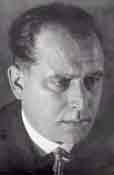
Julius Leber, the son of a bricklayer, was born on
November 16, 1891. After a brief formal education he became a journalist.
He developed left-wing political views and joined the Social Democratic
Party in 1913.
In 1914 he joined the German Army and during the First World War was wounded twice. He was also
decorated for bravery and by the end of the war he reached the rank
of second lieutenant.
During the German Revolution Leber supported the rebels
and helped put down the Kapp Putsch in Berlin in 1920.
Leber worked as editor of the SDP newspaper in Luebeck
before being elected to the Reichstag in 1924. Over the next few years
he became one of Germany's leading opponents of Adolf
Hitler and the Nazi
Party.
Soon after Hitler became chancellor in 1933, Leber was arrested and sent to concentration
camps at Esterwegen and Oranienburg as a "danger
to the State". After being released in 1937 he continued to work
with the resistance and joined forces with Adolf Reichwein, Claus
von Stauffenberg, Hans
Dohnanyi, Hans Oster,
and Carl Goerdeler in
an attempt to overthrow Hitler.
On July 4, 1944, Leber was arrested and charged with
being involved in what became known as the July
Plot. Although tortured for two months by the Gestapo,
Leber refused to confess to his involvement in the failed attempt to
kill Adolf Hitler. Julius Leber was found guilty and executed on January
5, 1945.