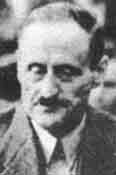
Ulrich von Hassell was born in Anklam, Germany,
on November 12, 1881. After studying law he entered the Foreign Office
in 1908. He married to the daughter of Alfred von Tirpitz and later
served as Counsul-General in Barcelona (1921-26), Ambassador in Copenhagen
(1926-30), and Ambassador in Belgrade (1930-32).
In 1932, Hassell was appointed Ambassador to Rome.
Initially a supporter of Adolf
Hitler, Hassell became increasingly critical of his aggressive foreign
policies and, in 1938, was sacked by Joachim
von Ribbentrop.
Hassell became an active opponent of the Nazi
government and joined forces with Ludwig
Beck and Carl Goerdeler.
During the Second World War he tried to recruit leading
generals such as Franz Halder, Friedrich Fromm and Erwin
Rommel to the idea of a negotiated peace with the Allies. Later
he tried to persuade them to carry out a military coup.
In April 1942, he was warned by Ernst Weiszacker,
State Secretary in the Foreign Ministry, that he was under investigation
by the Gestapo. However,
he ignored this warning and continued to conspire against Adolf
Hitler.
Hassell was arrested by the police following the July
Plot. He was convicted of high treason and executed on September
8, 1944. After the war, his diaries were found buried in the garden
and published as The Other Germany: Diaries 1938-1944 (1947).