Vienna, Austria
Known
for its waltzes and sweets, Vienna was the center of the Hapsburg empire
and the Austro-Hungarian monarchy. After World War I, it became the
capital of Austria and, from 1938 until 1945, served as the provincial
capital of the German Reich. Vienna was home to many influential Jews,
including Sigmund Freud, Theodor
Herzl, Gustav Mahler, Martin
Buber and Arthur Schnitzler.
- Early History
- Jewish Renaissance
- Rise of Anti-Semitism
- World War II
- Present Day Community
- Contacts
Early
History
Jews have a mixed history with Vienna, ranging from prosperity
to persecution. After the first influx of Jews arrived in Vienna in
the late 12th century, 16 Jews were murdered by Christians,
with the blessing of the pope. During the Black Death epidemic in 1348-9,
however, Vienna was one of the few cities that did not blame the Jews
for causing the scourge and it became a haven for many Jews refugees.
The Judenplatz in the center of Vienna was the site
of one of the largest synagogues in Europe. Jews comprised about five percent of the city's population.
In 1420, however, Duke Albrecht V expelled the Jews from Vienna, confiscated
their property, and destroyed their synagogue (its stones were used to build the University of Vienna).
In 1451, Jews were allowed to return and were given
special protection from the Hapsburg emperors. A second round of immigrants
came to Vienna from the Ukraine fleeing pogroms and persecution. Jews
were granted their own quarter in the city — later known as Leopoldstadt
— in 1624. Two synagogues were constructed in this ghetto, which
Leopold I destroyed when he disolved the ghetto in 1670. Leopold Church
was built on the site of one of these synagogues.
Another round of expulsions began in 1669, however,
the Jewish expulsion caused grave economic repercussions, so the emperor
invited the wealthier Jews to return and a third wave of immigration
started. In 1683, Samson Wertheimer and Samuel Oppenheimer, Jewish imperial
court agents, provided financial support to the Austrian army to get
rid of the invading Turkish army, thus strengthening Jewish ties to
the community.
Under the reign of Maria Teresa, a rapid anti-Semite,
many discriminatory laws were passed and the situation worsened for
Vienese Jewry. The tense atmosphere eased in 1782, when Joseph II, Maria
Teresa’s son and successor, came to the thrown and lifted many
of the restrictions. A Jewish printing press was started and Vienna
became the center of Hebrew publishing in Central Europe.
Jewish
Renaissance
The Jewish renaissance in Vienna began in 1848 and
lasted until the start of World War II. Jews were granted civil
rights, partially due to their participation in the 1848 civil war
and were allowed to form their own autonomous religious community,
which served the Jewish population of Vienna and of Austria as well.
Vienna also became a center of the Haskalah,
a movement toward secular enlightenment.
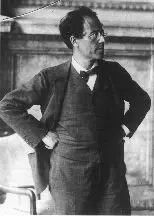 Gustav Mahler
 |
Full citizenship rights were given to the Jews in
1867, leading to a large influx of immigrants from the Eastern part
of the Austro-Hungarian empire, especially from Bukovina, Galicia,
the Czech lands and Hungary.
Jews became predominant in all spheres of life and
contributed to Vienna’s cultural and scientific achievements;
Jewish merchants, traders, entrepreneurs and businessmen contributed
to the prosperity at the turn of the century. Some of the famous
figures of the time included, Fanny Arstein, who hosted a salon
attended by the major personalities of the time, including the
emperor and Mozart. Prominent Jewish physicians included Sigmund
Freud, Alfred Adler, Wilhelm Reich and Theodor Reik. In the field
of Zionist politics, Theodore
Herzl and Max Nordau reigned. A well-known theologen, Martin
Buber also lived in Vienna during this period. Jews were also
active in music and theater, including Gustav
Mahler, Arnold Schonberg, Oscar Straus, Emmerich Kalman, Max
Reinhardt, Fritz Kortner, Lily Darvas and Elisabeth Berner. Writers
Arthur Schnitzler, Franz Kafka,
Stefan Zweig and Felix Salten have also become world-renown for their
works.
In the field of medicine, three out of four
Austrian Nobel Prize winners in
Medicine were Jewish. More than half of Austria’s physicians
and dentists were Jews and so were more than 60 percent of the
lawyers and a substantial number of university teachers. Many Jews
were leaders of the Social Democratic Party.
Jewish
religious life centered around Vienna’s two main synagogues,
the Vienna Synagogue and the Leopoldster Temple. The Vienna Synagogue
at Seitenstettengasse was built between 1824-1826. It was one of the
sympbols of the new tolerance in Vienna and the Jewish ocmmunity wanted
it to be splendid. The building was designed by Josef Kornhausel and
constructed similar to a residential building, because only churches
could be free-standing at that time. This saved the building from destruction
in 1938 because the Nazis did not realize it was a synagogue. The building
was used as a synagogue and school and had a mikvah inside it. Its cantors, Salomon Sulzer, and religious director, Rabbi
Isak Noa Mannheimer, reinterpreted Jewish prayers and created the "Wiener
Nussach" prayer tradition. The second synagogue, the Leopoldster
Temple, was consecrated in 1858. Besides for these two main synagogues,
Vienna had another 40 smaller shuls and minyans on the eve of the Anschluss.
A number of Jewish institutions were established in
Vienna, including a Rothschild hospital in 1872 and a Jewish Gymnasium
and Jewish Pedagogium, founded by Zwi Perez Chajes, the Chief Rabbi
of Vienna. The first Jewish museum in the world was founded in Vienna
in 1895. The museum was closed in 1938 and its contents confiscated
by the Nazis.
Because of the atmosphere of economic, religious
and social freedom, the Jewish population grew from 6,200 in 1860 to
40,200 in 1870 and, by the turn of the century, it reached 147,000.
By 1938, the Jewish population of Vienna peaked at 185,000 members.
Rise
of Anti-Semitism
While Jews were making great strides in Viennese
society, a backlash of anti-Semitism developed. One famous anti-Semite was Georg Schonerer, who portrayed
Jews as evil incarnate and was responsible for ransacking the office
of Neuss Wiener Tagblatt (a Jewish-owned newspaper) and for hitting
its Jewish employees. Schonerer was jailed for his actions, but after
his release, 21 members of the anti-Semitic nationalist party (Alldeutsch
Parti) were elected into the Austrian Parliament.
A second anti-Semite, Karl Leuger, had even more
influence over the racist atmosphere in Vienna. Leuger was elected
mayor of Austria five times between 1897 and 1910. At first, Emperor
Franz Joseph refused to support him, however, after Leuger’s fifth
reelection he accepted Leuger’s power. Leuger blamed the Jews for
Vienna’s financial problems and roused the crowds with anti-Semitic
fervor, while in private he still had a number of Jewish friends and
dined at their houses. Both Leuger and Schnorer influenced Adolf
Hiter, then a young man from Bravau on Inn, Austria. In Mein
Kampf, Adolf Hitler claims
he learned anti-Semitism from them.
In the 1930's increased anti-Semitism was directed
at the Social Democrat party, which was mainly run by Jews.
World
War II
In March 1938, Austria was annexed by Nazi Germany, the
Anschluss. Following the annexation, Jews were chased through the streets,
were forced to scrub the sidewalks and Jewish stores and apartments
were pillaged. The Social Democratic party was crushed and thousands
of Austrians who opposed Nazi rule were deported to concentration
camps and murdered.
The Nazis enacted the Nuremberg
Racial Laws in occupied Austria in May 1938.
Within a short period, Jews had lost nearly all of their civil liberties,
they were unable to attend university, were excluded from most professions
and were forced to wear a yellow badge.
All Jewish organizations and institutions were shut down. The Nazis
encouraged emigration and nearly 130,000 Jews left Austria, including
30,000 who went to the United States.
Many Jewish stores, factories and building were
destroyed during Kristallnacht on November 9-10, 1938. Public displays of hatred commenced across
the city and all of the city’s synagogues were ravaged. The only
synagogue that remained untouched was the central synagogue, hidden
because of residential surroundings. That night about 6,000 Jews were
apprehended and sent to Dachau.
The situation further deteriorated after the Wanassee
Conference in January 1942.
The remaining Austrian Jews were killed or sent to concentration camps;
more than 65,000 Viennese Jews were deported to concentration camps,
only 2,000 survived. About 800 Jews who managed to hide survived the
war.
Post-WWII & Present Day Community
Anti-Semitism
Anti-Semitic feelings persisted in Austrian society
for many years following World War II. and are still present today.
In 1986, Austrians elected Kurt Waldheim, a Nazi
collaborator, as president of Austria. Born near Vienna, Waldheim
held numerous diplomatic and political position, from Ambassador to
foreign minister to secretary general of the United
Nations. During World War II, Waldheim served as an interpreter
and intelligence offer for the German army unit that was responsible
for the deportation of the Jews of Salonika and for brutal action against Yugoslav partisans and civilians.
In the late 1980's, the Austrian government began
reexamining their role in the Holocaust.
In July 1991, the Austrian government issued a statement
acknowledging their role in the crimes perpetrated by the Third
Reich.
 The Vienna Synagogue
 |
Religion
Despite government efforts to acknowledge the past
and promises for a better future, Jews still face anti-Semitism on both the grassroots and state level manifested in vandalism,
swastika grafitti and attacks in the press. The recent rise to
power of Joerg Haider’s anti-immigration and ultra-nationalist
Freedom Party has caused great concern among community members.
Throughout his political career, Haider has used Holocaust
terminology and has legitimized Nazi policies and activities.
A number of Viennese Jews are trying to educate
Austria society and the international world about Austria’s role in
the Holocaust. One is the renowned Nazi hunter was Simon
Wiesenthal, whose documentation center has become a world-wide
clearing house for information pertaining to the Holocaust. A second
well-known educator was Peter Sichrovsky, whose book Strangers in
Their Own Land addresses how Jews can live in Germany and Austria
today.
Jewish community institutions
The Jewish community (Gemeinde) is run by the
Bundesverband der Israelitischen Kultusgemeinden. All Jews active in
the community pay a percentage of their annual income tax to the
community to subsidize its services. The Gemeinde helps fund an old
age home, the Jewish day school, kindergartens, the Austrian Jewish
Students Union, Jewish student organizations and several Zionist
youth groups (i.e. B’nai Brith, B’nai Akiva, Hashomer Hatzair)
and it maintains the Jewish cemeteries,
Vienna’s Sephardic community reestablished itself in May 1992 and built two synagogues
and a room used for festivities. Its activities are run by the
Sefardi Federation, which is separate from the primary Jewish
communal organization.
The “welcome service” center was created in 1980 to serve as a
resource center and provide information about
Jewish life and history of Viennese Jewry.
Religion
 Or Chadasch
 |
Today, Vienna has 15 synagogues, but the only surviving
synagogue from the pre-war era is the Vienna Synagogue (Stadtempel),
which houses the community offices and chief rabbinate. The synagogue
was damaged during the war and reopened in 1963 after extensive renovations.
The synagogue has limited visiting hours and heavy security (due to
a 1982 terrorist attack). The spectacular round sanctuary has the look
and feel of a Reform temple, but it
is an Orthodox congregation with
a separate gallery for women. Long discussions were held over whether
to permit an organ and adopt more elements of Reform Judaism, but, ultimately,
the decision was to stick with orthodoxy but to have some modern touches;
for example, the bimah was placed in front of the ark instead
of the middle of the sanctuary.
Besides for the Stadtemple,
there are a number of prayer rooms serving
various Hassidic sects and other congregations. Efforts made
by the Lubavitch movement have increased synagogue attendance,
especially of Georgian and Bokharan Jews,
who have since opened their own synagogue.
In 1984, the Zwi-Peretz Chajes-shule was
reopened and, in 1986, the Lauder Foundation
established the Beth Chabad Shules and other
educational institutions. In 1990, Or Chadasch,
the first and only Progressive Synagogue
in Austria, was established and built with
the help of the Israelitischekultus Gemeinde.
Education and Culture
Vienna has Jewish kindergartens and a primary
school and the Zwi Peretz Gymnasium opened in the late 1990's after
being closed for more than 50 years. During World War II, the Zwi Peretz
Gymnasium served as a deportation point for the city’s Jews. The
ultra-Orthodox community has its own educational system and separate
schools. In February 2004, the first yeshiva built since World War II
was inaugurated.
Vienna also hosts a Jewish sports club, S.C.
Hakoach and, in the late 1990's, a Jewish center opened on the site
of the former Leopoldster Temple, which was destroyed during the Holocaust.
The Jewish center houses the ESRA Center for Psychosocial Care and
other institutions. Vienna also has two kosher restaurants, a kosher supermarket, kosher butcher shops and bakeries.
There are a number of Jewish journals and
newspapers. The monthly, Die Gemeinde, is the official organ
of the community. Another publication is the Illustrietere Neu
Welt. The Jewish students also have their own bulletin called Noodnik.
Jewish Population
Vienna's Jewish population consists of Eastern European
refugees from the Holocaust era and
their children, returning expatriates who lived abroad during World
War II and Iranian Jews seeking asylum. Vienna has also served as a
transit point for Jews leaving the Soviet Union en route to the United
States or Israel. Since the 1960's, many Austrian Jews have immigrated
to other countries. More than 5,400 Austrian Jews have immigrated
to Israel. At the end of the 1990's, Vienna had 7,000 Jews registered
in their community. Nevertheless, the total Jewish population comes
to 15,000, including unaffiliated Jews.
Tourist Sites
The Jewish Museum chronicles the history
of Viennese Jewry and their role in the development of the city. A second
interesting museum is the Austrian Resistance Museums, which contains
documents and oral history relating to the Austrian struggle against
Nazism. Throughout the city are plaques and statues honoring the underground
fight against Nazism. More information about the Austrian role in
the Holocaust can be found at the Simon
Wiesenthal Documentation Center located in Vienna.
The Rossauer Cemetery is the oldest cemetery in
Vienna, dating back to the 16th century. Many of the tombs
were devastated in World War II, but have been renovated.
Located
in the heart of Vienna is the Stephansdom, a beautiful 12th century church, which contains stained glass windows depicting the Viennese
Jews during that period. Nearby is the Stadtempel and the Judenplatz,
the main square of the Jewish community for nearly 500 years. Today
in the Judenplatz, one can find the offices of a number of Sephardic organizations and a small beit
midrash. Inside one of these beit midrashes, is a subterranean
mikveh dating back to the 15th century.
The Judenplatz Museum contains a room where archaeologists
discovered the remains of the synagogue destroyed more than 500 years
earlier by Duke Albrecht V.
Also
within the Judenplatz is the Memorial to Austrian Holocaust Victims.
Unveiled in 2000, the reinforced concrete cube resembles a library of
7,000 volumes turned inside out. The doors are locked and the books
face inwards. The base of the memorial has the names of the places where
65,000 Austrian Jews were murdered by the Nazis. Created by British
artist Rachel Witeread, the memorial's barred room and books that cannot
be read represent the loss of those who were murdered.
Only a ten-minute ride from Stephansdom, the
Sigmund Freud House has been preserved as it was during Freud’s
life. Inside one can find memorabilia, including his pipe, walking
stick, cigar boxes, books, letters, photographs, writing desk and
psychoanalytic couch.
While most of the Jewish life in Austria is centered
in Vienna, there are other sites of Jewish interest around the country.
These include the Jewish Museum in Eisenstadt, located in the one-time
residence of Samson Wetheimer, a Hapsburg court Jew, and the Jewish
Museum in Hohenems. Another important historic site is Mauthausen,
perhaps the worst concentration camp of them all, located on the Danube
River, near the city of Linz.
Contacts
Israelitische Kultusgemeinde
www.ikg-wien.at
The Stadttempel (City Temple)
Seitenstettengasse 4
43-1-531-0417
[email protected]
Daily services
Or Chadasch
Robertgasse 2
43-1-967-1329
www.orchadasch.at
Vienna's only non-Orthodox congregation
Jewish Welcome Center
Stephansplatz 10
43-1-533-2730
www.jewish-welcome.at
Alef Alef
Seitenstettengasse 2
43-1-535-2530
Vienna's Leading Kosher Restaurant
Museum Judenplatz
Judenplatz 8
43-1-535-0431
www.jmw.at
Branch of the Jewish Museum of Vienna
Sources: "Joerg Haider: The Rise of an Austrian Extreme
Rightist" ADL
December 11, 1995.
Beker, Dr. Avi. (ed.) Jewish
Communities of the World. Lerner Publication Co. 1998.
Haslinger, Josef. "Jewish Vienna." Gangway
#1. June 1996
"Jewish Religious Community." IKG
Tigay, Alan M. (ed.). The
Jewish Traveler. Jason Aronson, Inc. 1994 & 2005.
"Vienna,
Austria."
"Waldheim, Kurt." Encyclopedia
Britannica.
"Waldheim, Kurt." Encarta
Enquire
Zaidner, Michael (ed.). Jewish
Travel Guide 2000. Vallentine Mitchell & Co. 2000.
Photos (except for Mahler) © Mitchell Bard
Or Chadasch photo courtesy of the synagogue |
