
After the exhilaration of the victory in the Six-Day War in 1967, Israelis became increasingly dispirited. The growing level of terrorism, combined with increasingly ominous threats from Egypt, made peace seem further away than ever. Rather than reconciling themselves to Israel’s existence, the Arab states looked for a way to avenge the humiliation of their defeat. The Soviet Union was contributing to the escalation of the war by supplying arms to the region. The Gulf Arab states were beginning to take greater control of their oil resources and use the revenues to flex their political influence.
Sadat Cries Wolf
Golda’s Fateful Decision
Unholy War
Hussein Doesn’t Repeat Mistake
Oil Becomes a Weapon
IDF Stages a Comeback
Superpower Chess
The View from Egypt
The U.S. Airlift
The Brink of Nuclear War
Saving the Losers
Disengagement Lays Groundwork for Peace
Syria Fronts the Rejectionists
Israel’s Political Earthquake
Egypt Saves Face
Sadat Cries Wolf
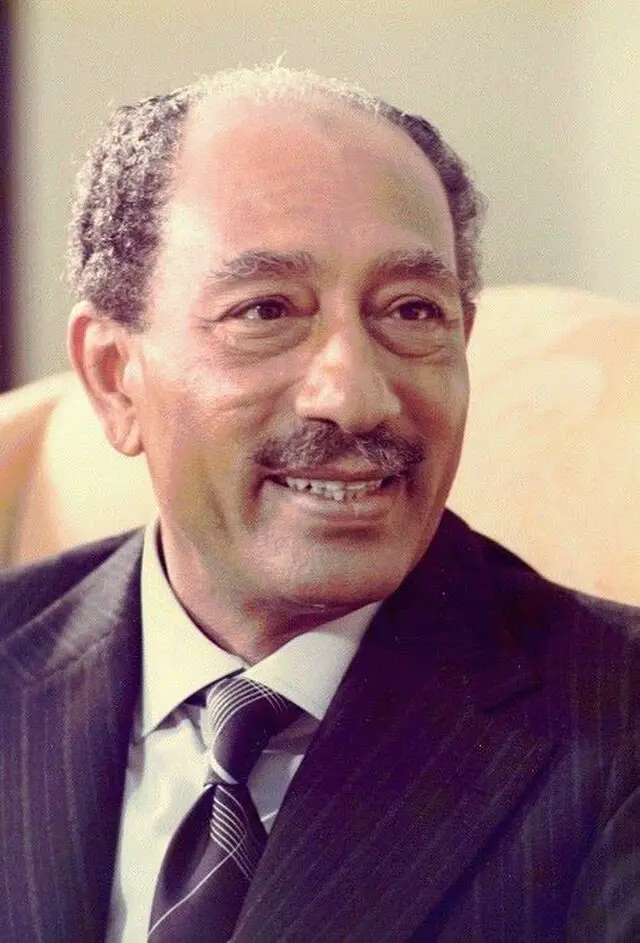 Andwar SadatIn 1971, Egyptian President Anwar Sadat raised the possibility of signing an agreement with Israel, provided that all the territories captured by the Israelis were returned. Later, many people would claim Israel missed an opportunity to avoid war, but the truth was that Sadat expected Israel to ignore the threats that led to the 1967 War and to capitulate to Egyptian demands without any guarantee of peace. The suggestion was a nonstarter from Israel’s point of view. Moreover, Sadat could not negotiate an agreement until Egypt erased the shame of 1967.
For all the talk of peace, though, it was still violence that grabbed the headlines. During the summer of 1972, Palestinian terrorists infiltrated the Munich Olympics and murdered 11 Israeli athletes.
With no progress toward peace, Sadat began to say that war was inevitable and that he was prepared to sacrifice one million soldiers in the showdown with Israel. Throughout 1972 and for much of 1973, Sadat threatened war unless the United States forced Israel to accept his interpretation of Resolution 242 — total Israeli withdrawal from territories taken in 1967.
Simultaneously, Sadat appealed to the Soviets to bring pressure on the United States and to provide Egypt with more offensive weapons. The Soviet Union was more interested in maintaining the appearance of détente with the United States than a confrontation in the Middle East; therefore, it rejected Sadat’s demands. Sadat’s response was to abruptly expel approximately 20,000 Soviet advisers from Egypt.
In an April 1973 interview, Sadat again warned that he would renew the war with Israel. But it was the same threat he had made in 1971 and 1972, and most observers remained skeptical. In fact, almost up to the start of the shooting, no one expected a war. “The news of the imminent attack on Israel took us completely by surprise,” President Nixon said later. “As recently as the day before, the CIA had reported that war in the Middle East was unlikely.”
Jordan’s King Hussein met with Prime Minister Golda Meir on September 25, 1973, supposedly to warn her of an impending war. Hosni Mubarak, however, claimed it was Yasser Arafat who warned the Israelis.
Had U.S. intelligence realized at the beginning of October 1973 that the Arabs were about to attack, Nixon might have been able to prevent the war through diplomacy or threats.
Golda’s Fateful Decision
Despite the conventional wisdom that Israel was surprised by the attack that did eventually come, the truth is the Israelis began to prepare for battle on October 5 and were convinced war was imminent the following morning. But, like U.S. intelligence officials, Israeli analysts were skeptical about the threat of war.
According to documents declassified in 2012, the failure to anticipate the Arab attacks was a result of a number of intelligence failures. For example, Israeli soldiers on the southern front were given a secret document that provided 14 signals that would indicate an Egyptian attack was forthcoming. None of those indicators was apparent before the invasion. Similarly, in the north, a warning was passed on to the commander that Syria planned to attack on October 2. That intelligence could not be confirmed and was dismissed. The Egyptian buildup was also similar to that in May 1973 and did not lead to war.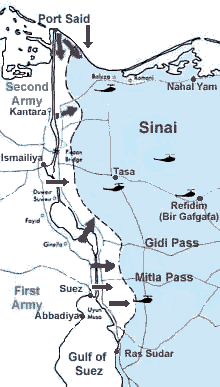
On October 4, a day before learning that Russian civilians were leaving Egypt and Syria, Military Intelligence reported the chances for war were low. Israel had a spy in Egypt; however, Ashraf Marwan,** the son-in-law of ex-president Gamal Abdel Nasser, passed on a warning to his Mossad handler in London that war was imminent a day and a half before it started. The Mossad director, Zvi Zamir, was informed by his aide and planned to meet with his agent in London the next day. Zamir subsequently learned from Israeli Military Intelligence that Soviet scientists were preparing to leave Syria, which added weight to the report of a pending war. Two weeks earlier, Israel learned that Russia was transferring Scud missiles to Egypt, another worrisome sign. According to Zamir’s aide, Alfred Eini, Marwan’s warning of impending war was not immediately relayed to the Prime Minister because the Mossad believed that Military Intelligence would do so. Zamir did not reach someone in the prime minister’s office until a day later, hours before the attack.
Deputy Chief of Staff General Israel Tal feared war was imminent and sought to persuade his superior, Chief of Staff General David Elazar, to implement precautions, strengthen the front line with Egypt, and call up reserves. If I am wrong and you are right, he said, we drafted them for nothing, inconvenienced them during the holidays, and wasted money. That would be a shame, but not too bad. On the other hand, if I am right and you are mistaken, we will face disaster.
It was not until 5 a.m. on October 6 that Elazar first recommended a full, immediate mobilization of forces and a preemptive air strike. He was overruled. A few hours later, a partial call-up of reserves was approved, but Meir still refused to authorize Elazar to take military action. She informed the U.S. ambassador of the situation and asked him to convey the message that the Arabs should be restrained. Henry Kissinger, now the Secretary of State, subsequently appealed to Sadat and Syrian President Hafez Assad not to act precipitously. He also cautioned Meir not to shoot first. Meir found herself in a nearly impossible position. The intelligence community had not given her sufficient warning of the impending attack to adequately prepare the nation for war. Still, Israel’s chances for victory and minimizing casualties could be greatly enhanced by a preemptive strike and the rapid mobilization of the IDF (Israel Defense Forces). However, she feared that striking first, as Israel had done in 1967, might so anger the United States that Nixon would not support Israel’s prosecution of the war or policies afterward. And, unlike 1967, she did not feel Israel could afford to go it alone.
Unholy War
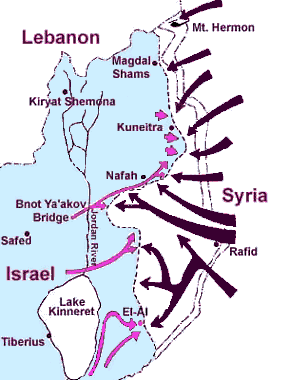
On October 6, 1973 — Yom Kippur, the holiest day in the Jewish calendar (and during the Muslim holy month of Ramadan) — Egypt and Syria launched a coordinated surprise attack against Israel. The equivalent of the total forces of NATO in Europe was mobilized on Israel’s borders. On the Golan Heights, approximately 180 Israeli tanks faced an onslaught of 1,400 Syrian tanks. Along the Suez Canal, fewer than 500 Israeli defenders with only three tanks were attacked by 600,000 Egyptian soldiers, backed by 2,000 tanks and 550 aircraft.
Hosni Mubarak, who was the Egyptian Air Force commander, said he started the war by attacking an Israeli communications base in his fighter jet six minutes before the rest of the Arab armies’ surprise attack on the Jewish state began at 2:00 p.m. He said Sadat and two other people were the only ones informed of his mission.
At least nine Arab states, including four non–Middle Eastern nations (Libya, Sudan, Algeria, and Morocco), actively aided the Egyptian-Syrian war effort. A few months before the attack, Iraq transferred a squadron of Hunter jets to Egypt. During the war, an Iraqi division of some 18,000 men and several hundred tanks was deployed in the central Golan and participated in the October 16 attack against Israeli positions. Iraqi MiGs began operating over the Golan Heights as early as October 8 — the third day of the war.
In addition to serving as financial underwriters, Saudi Arabia and Kuwait committed combatants to battle. A Saudi brigade of approximately 3,000 troops was deployed to Syria, where it participated in fighting near Damascus. Also violating Paris’s ban on the transfer of French-made weapons, Libya sent Mirage fighters to Egypt. Other North African countries responded to Arab and Soviet calls to aid the front-line states. Algeria deployed three fighter-bomber squadrons, an armored brigade, and 150 tanks. Approximately 1,000 to 2,000 Tunisian soldiers were positioned in the Nile Delta. Sudan stationed 3,500 troops in southern Egypt, and Morocco sent three brigades to the front lines, including 2,500 men to Syria.
Lebanese radar units were used by Syrian air defense forces. Lebanon also allowed Palestinian terrorists to shell Israeli civilian settlements from its territory. Palestinians fought on the Southern Front with the Egyptians and Kuwaitis.
In September 2013, Egyptian President Hosni Mubarak claimed that he personally started the Yom Kippur War during a secret mission during his time as an Egyptian air force commander. Mubarak stated that six minutes before the large attack on Israel commenced, including other Arab armies, he attacked an Israeli communications outpost in his fighter jet in the first attack of the war.
Hussein Doesn’t Repeat His Mistake
Jordan’s King Hussein, who apparently hadn’t been informed of Egyptian and Syrian war plans, chose not to fight this round, correctly calculating that his forces were vastly inferior to the Israelis. Hussein’s decision was crucial to Israel’s defense because it freed up forces that would otherwise have had to fight on a third front.
Still, Arab brotherhood required that Hussein contribute to the cause, so he sent two of his best units to Syria. Three Jordanian artillery batteries also participated in the assault, carried out by nearly 100 tanks.
Oil Becomes a Weapon
During the October War, the Arab oil-producing states imposed an embargo on oil exports to the United States, Portugal, and the Netherlands because of their support for Israel. The impact was to cause a shortage of petroleum in the United States and to quadruple gas prices. Americans soon had to contend with long lines at gas stations.
Several U.S. oil companies that got most of their petroleum supplies from the Middle East and depended on the goodwill of the Arab states to maintain their business relations in the region collaborated in the embargo against their own nation. Oil company executives lobbied the Nixon administration to offer more support to the Arabs and less to Israel. They, along with State Department Arabists, hoped to convince the public that Israel was to blame for the United States’ economic hardships and that it was far more important for the United States to ally itself with the Arab states than with Israel.
 |
The oil embargo was lifted on March 18, 1974, but the United States and other Western nations continued to feel its effects for years to come.
The IDF Stages a Comeback
Reports from all fronts were dire—casualties, wounded, prisoners, advancing Egyptian and Syrian forces. On the afternoon of October 7, Dayan returned from the southern front and stunned the cabinet by proposing a sweeping retreat, abandoning the Suez Canal entirely. “I underestimated the enemy’s strength, their military capabilities, and overestimated our own forces and their ability to hold,” Dayan told the room. “We have a very serious problem with the balance of power. They are fighting well and have good missile accuracy. This war is over Eretz Israel.” He and General Rehavam Ze’evi reportedly spoke of “the Destruction of the Third Temple.”
Ministers Galili and Allon countered with more optimistic assessments, but Dayan persisted. “In places where we can retreat, we will retreat. In places where we can’t, we’ll leave the wounded; whoever can arrive, will arrive. If they decide to surrender, they will.” Such words had not been heard in Israel’s defense establishment since the darkest moments of the War of Independence.
Then Dayan dropped an enigmatic comment: “There might be other thoughts on how to act in this situation.”
Meir had told IDF Chief of Staff Chaim Bar-Lev that Dayan “admitted to overestimating the strength of the IDF and underestimating the enemy’s capabilities. He believed the situation was dire. According to him, we needed to retreat to the Jordan border and hold the line until the last bullet. In the canal, we needed to fall back toward Egypt, and if that doesn’t help, to resort to extreme measures, echoing ‘let me die with the Philistines.’“ Bar-Lev added pointedly that “the prime minister seemed less shaken by the situation itself than by the volatility of the defense minister.”
After Chief of Staff David Elazar delivered his own grim but more measured assessment — warning that Egyptian and Syrian advances could mean “war within two to three days in Israel proper” — the discussion ended. Military leaders filed out. Dayan started toward the door as if to leave, then abruptly stopped, turned around, and told those remaining about a guest waiting outside whom he had invited to “expedite matters.” Standing at the door was Shalhevet Freier, head of the Atomic Energy Committee.
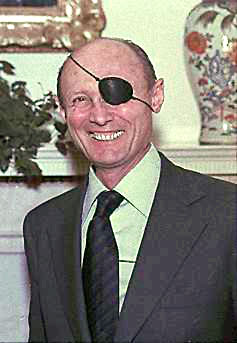 Moshe DayanAzariahu Arnan, the assistant to minister Yisrael Galili recounted that “Moshe Dayan feared we were losing the war and tried to hint in a smaller forum — which included, besides Golda, Galili and Yigal Allon — that maybe we should, as a threat or a trial explosion or the like, warn the Arabs to be cautious.” Both Galili and Allon told Meir “that this was madness, that it shouldn’t be done, and that we would win with what we’ve got. She accepted this view.”
In his own notes, Galili described Dayan entering “nervously” and turning to the prime minister to say, “Golda, we might need to be prepared with Dostrovsky’s things” — a reference to Israel Dostrovsky, the former director of the Atomic Energy Committee. “We should prepare for activation of the thing, we’ll discuss it further with you later.”
Critically, Dayan had already ordered the start of these preparations before the discussion. What he hadn’t said out loud, his actions had already set in motion.
“Let’s stop talking about this subject,” Meir said firmly. Galili looked at the defense minister and wrote to himself: “Has he gone mad?”
Galili left the room but returned to make certain Meir’s instructions were clear. The prime minister called Shalhevet Freier into the room and said, in the presence of everyone: “Nothing without my approval.”
Thrown onto the defensive during the first two days of fighting, Israel mobilized its reserves and began to counterattack. In the south, Israeli forces were having little success in stopping the Egyptian onslaught. Still, the Sinai Desert offered a large buffer zone between the fighting and the heart of Israel.
The situation was different in the north, where the Syrians had swept across the Golan and could, in short order, threaten Israel’s population centers. Consequently, most reserves meant for the Egyptian front were shifted to the Golan. The replenished Israeli forces stopped the Syrian advance, forced a retreat, and began their own march forward toward Damascus.
On October 9, Dayan returned from the bloody southern front to a meeting in “the pit” at IDF headquarters at around 4:30 in the morning. The atmosphere was apocalyptic. He turned to Air Force commander Benny Peled with a proposal that electrified the room: “Explore every option, even the wildest, that we could unleash on them — [censored] Damascus.” He continued: “Instead of whatever you’re planning, Benny, target Syria tomorrow morning, [censored] Damascus, drop bombs inside Damascus, Homs and Aleppo, Latakia. I need a dramatic effect so that Syria will cry out. Someone has to yell ‘stop the violence! They’re destroying Syria.’ Maybe someone will say, ‘Stop, cease fire.’ I have to break Syria now.”
Chief of Staff Elazar ultimately decided against the extreme measures.
 People from right to left: Major Gadi Zohar, adjutant of the chief of staff (wearing glasses, seen in profile); Brigadier General Yekutiel Adam, deputy commander of Northern Command (with a moustache, wearing an army beret); chief of staff David Elazar (with both hands on table); Major General Eli Zeira, head of Military Intelligence Directorate; Major General Rechav’am Ze’evi, special assistant for the chief of staff (who returned to service as the war began) - standing, with dark glasses; Major General Mordechai Hod, former head of Israeli Air Force, an aerial warfare advisor for the head of Northern Command and the head of Southern Command (who returned to service as the war began) - mustached, sitting; Major General Yitzhak Hofi, head of Northern Command - sitting, pointing to a location on the map (Photo: IDF Spokesperson’s Unit)
Superpower Chess
The Soviets gave their wholehearted political support to the Arab invasion. Starting as early as October 9, they also began a massive airlift of weapons, which ultimately totaled 8,000 tons of materiel. The United States had promised resupply, but was stalling. The United States had given Israel some ammunition and spare parts, but it resisted Israeli requests for greater assistance. Secretary of Defense James Schlesinger and his deputy opposed further shipments, fearing they would provoke the Soviets into entering the war, opening a dangerously short path to World War III.
Ambassador Simcha Dinitz met Kissinger and received devastating news: the U.S. could perhaps send two Phantom jets per day, and tanks were completely out of the question for weeks. All attributed to “logistics.”
Dinitz pushed back in a follow-up meeting, trying to convey the scale of the disaster. “I want to tell you that we’ve suffered very heavy losses, both in manpower and in equipment from the SAM-6 missiles, which have been very effective against our aircraft... It seems to me that the human losses amount to over a hundred, maybe even reaching hundreds.” Kissinger, skeptical, asked, “Hundreds?” Dinitz answered simply: “Yes, hundreds.”
He handed Kissinger a message from Meir: “Our extraordinary military efforts have exacted a heavy price, especially in aircraft. We face a massive quantitative gap. Our aircraft are damaged and depleted. The prime minister urgently requests that you immediately begin supplying some of the new Phantom jets, at the very least.”
Kissinger promised Dinitz that he would persuade President Richard Nixon to approve the weapons shipment, but he was playing a duplicitous game. Nixon had told Kissinger, “Let's give them some tanks. It will give them great confidence.” He added, “We can’t allow the Israelis to lose.” Kissinger, however, wanted to use the arms as leverage with Meir and recommended waiting until October 11, convinced Israel was exaggerating.
Meanwhile, the Soviet Union began airlifting supplies to Syria on October 10. Israel escalated its demands — 80 Phantoms and 80 Skyhawks. “The rate of attrition of our aircraft is so high that there is no possibility to delay this matter,” read a telegram from the Prime Minister’s Office. The Americans continued to delay.
By October 12, Meir was in near-despair. “I know what the danger is,” she said. “I say this with full awareness; in 1948, we did not face such a danger.”
The View from Egypt
In the greatest tank battle since the Germans and Russians fought at Kursk in World War II, roughly 1,000 Israeli and Egyptian tanks were massed in the western Sinai from October 12 through 14. On October 14, Israeli forces destroyed 250 Egyptian tanks in the first 2 hours of fighting. By late afternoon, the Israeli forces had routed the enemy.
Meanwhile, Israeli General Ariel Sharon had been chomping at the bit to cross the Suez Canal but had been ordered not to do so until after the main Egyptian force had been defeated in the Sinai. With that mission accomplished, Israeli paratroopers snuck across the canal and established a bridgehead. By October 18, Israeli forces were marching with little opposition toward Cairo. For the Israelis, the crossing was a great psychological boost; for the Egyptians, it was a humiliation.
At about the same time, Israeli troops were on the outskirts of Damascus, easily within artillery range of the Syrian capital. Prime Minister Meir did not want to attack Damascus, so the IDF stopped its advance and focused its activities on recapturing Mount Hermon — the highest peak in the region and a key Israeli radar and observation post that had fallen to the Syrians early in the fighting. On October 22, Israel once again controlled the Golan Heights.
Meanwhile, the air battles were one-sided. Israel lost only five planes and the Egyptians 172 in more than 50 dogfights. Israeli pilots shot down at least 334 Arab aircraft in aerial combat.
The U.S. Airlift
As Israeli troops began to advance on Damascus, the Soviets started to panic. On October 12, the Soviet ambassador informed Kissinger that the Soviet government had placed troops on alert to defend Damascus.
Israel decided to send Washington an ultra-classified cable. Dinitz was instructed to deliver the document only if no alternative existed. He apparently did so in a meeting with Kissinger on October 12. Its precise wording remains classified fifty years later, and the cable itself has vanished from the State Archives. Foreign reports claim Israel raised the nuclear option.
In a 1979 interview, Yigal Allon said the Americans “feared that if we enter a state of despair, we would take an act of desperation, something they did not want to happen.”
As the Soviets continued to pour weapons into the region, Kissinger concluded that the United States could not afford to allow the Soviet Union’s allies to prevail in the war. The secretary of state wanted to show the Arabs they could never defeat Israel with the backing of the Soviets. He also couldn’t afford to let U.S. adversaries win a victory over a U.S. ally. By sending arms to Israel, the United States could ensure an Israeli victory, hand the Soviets a defeat, and provide Washington with the leverage to influence a postwar settlement.
On October 12, Nixon ordered an emergency airlift – Operation Nickel Grass – to Israel. Suddenly, all the logistical problems disappeared. Cargo planes carrying spare parts, tanks, bombs, and helicopters flew round-the-clock to Israel, along with 20 charter flights and the first shipment of Phantom jets. Kissinger announced that the president “would not tolerate any more delays at the Pentagon,” otherwise, “we want the resignations of the officials involved.”
 American Starlifter C-141 cargo plane arrives in Israel with supplies during the Yom Kippur War (Photo: IDF Spokesperson’s Unit)
While the U.S. was resupplying Israel, the British, under Conservative Prime Minister Edward Heath, imposed an arms embargo. This inhibited Israel’s ability to get spare parts for its British-made Centurion tanks. Heath also denied the U.S. access to British bases in Cyprus to gather intelligence and would not allow British bases to be used to refuel or resupply Israel. One positive outcome of the British policy was to stimulate the creation of Conservative Friends of Israel (Labor Friends of Israel was established in 1957)/
The resupply efforts were further hampered by America’s other NATO allies, who, capitulating to Arab threats, refused to allow American planes to use their airspace. The one exception was Portugal, which, as a consequence, became the base for the operation. Between October 14 and November 14, 1973, 22,000 tons of equipment were transported to Israel by air and sea. The airlift alone involved 566 flights. To pay for this infusion of weapons, Nixon asked Congress for and received $2.2 billion in emergency aid for Israel.
The Brink of Nuclear War
On October 16, Sadat threatened to launch ground-to-ground missiles deep into Israel. Intelligence initially assessed that these were Soviet Scud missiles— dangerous but not a game-changer. Then Mossad chief Zvi Zamir received a phone call from his top spy in Egypt, Ashraf Marwan, who claimed Egypt had no fewer than 400 Scuds aimed at Israel — a dramatic jump from his previous report of just 20.
The information triggered a chain reaction. At a General Staff meeting on October 18, Deputy Chief of Staff Israel Tal asked, “In a desperate situation, won’t they use gas?” in the Scud warheads. Former Military Intelligence chief Aharon Yariv responded: “Yes, and they’ll also target Tel Aviv with a Scud. As of last night, the Egyptians understand that their situation is dire.”
Meir instructed Dinitz to ask Kissinger to have the Soviets warn Sadat that firing Scuds or using chemical weapons “would elicit a serious response from Israel.” What kind of response was left unspecified?
American intelligence confirmed Egypt had deployed Scud missiles in the Nile Delta capable of reaching deep into Israel. But then something far more alarming emerged: the vehicles used to deploy the missiles were identified as the same type used for launching nuclear-tipped missiles.
The CIA shared this with Israel. “The Americans told us, ‘What you’re seeing here is essentially a Scud unit with nuclear warheads,’“ recounted Yuval Ne’eman, who was invited to the U.S. Embassy in Tel Aviv to view the imagery. “The Americans gave us this picture and told us, ‘There might be nuclear warheads on those Scuds.’” Ne’eman rushed the information to Meir and the cabinet. “Dado ordered the deployment of the Jericho missiles,” Ne’eman wrote, “and requested that they be positioned so that they could be clearly seen in satellite images. This way, the Russians, who were launching a new satellite every two days, could photograph them. The intent was to let them know, without explicitly stating, whether or not we had suitable warheads for these missiles, but that the missiles were ready.”
At the secret air force base near Beit Shemesh, where, according to foreign reports, the Jericho missiles were stored, troops staged a performance designed for Soviet satellites. A truck carrying a Jericho missile executed maneuvers in the yard of a bunker, raising and lowering the missile in plain sight — without the shielding that normally prevents satellite imaging.
Dino Brugioni, who headed the National Photographic Interpretation Center for American intelligence, confirmed: “We observed activity at the Jericho missile base, and the CIA believed the missiles were armed with nuclear warheads.”
More likely, the missile was fitted with a dummy warhead.
Instead of restraining Egypt, the Soviets interpreted the Israeli missile activity as preparation for a nuclear attack and readied a counter-strike. American intelligence intercepted Red Army orders to the commander of a strategic ground-to-ground missile brigade near Kyiv, Ukraine. The orders were to deploy and prepare to launch 12 missiles targeted at the Ramat David air base, the Dimona nuclear reactor, and the Haifa oil refineries. The brigade commander later told a colleague the orders included replacing warheads with conventional ones — but American intelligence did not intercept that detail. From Washington’s perspective, Moscow was contemplating nuclear strikes on Israel.
Israel feared that even without nuclear missiles, Sadat might use Scuds with chemical warheads if his army faced collapse. Meir instructed Dinitz to relay a message through Kissinger to the Russians: “Sadat, who bears heavy responsibility for initiating the war, will bear even greater responsibility if he uses weapons of mass destruction like ground missiles or gases. Israel will find a way to respond.”
The Soviets responded by putting all seven airborne divisions on alert and warning Israel to withdraw or face “the most serious consequences” — interpreted in Jerusalem as a nuclear threat.
The situation grew even tenser over the next two weeks as Israeli forces reversed the initial Egyptian gains in the Sinai and began to threaten Cairo. At this point, Sadat began seeking Soviet assistance in pressuring Israel to accept a ceasefire.
On October 22, just before the ceasefire, Egypt and the Soviet Union underscored their threats by launching three Scud missiles with conventional warheads. One exploded near El-Arish; two near the canal bridgehead, killing seven IDF soldiers.
The ceasefire took effect that day, but Israel violated it by encircling the Egyptian Third Army and refusing to allow the Red Cross to bring in supplies.
American intelligence detected escalating Soviet preparations — seven dock landing ships and two helicopter carriers added to their Mediterranean fleet, additional Scud missiles delivered to Cairo. Most alarming of all, secret American sensors at the bottom of the Bosporus Strait detected that the Soviet naval vessel Mezhdurechensk was carrying nuclear armament. The ship arrived at Alexandria on October 24, confirmed by another Blackbird overflight. The Americans assessed that it was carrying nuclear warheads for Egypt’s Scud missiles.
The same day, Soviet leader Leonid Brezhnev issued an ultimatum: either joint Soviet-American forces would enforce the ceasefire, or the Soviets would “be compelled to urgently consider taking unilateral actions.” Nixon later wrote that Brezhnev’s words represented “perhaps the gravest threat to U.S.-Soviet relations since the Cuban Missile Crisis 11 years prior.”
Fearing that an Egyptian nuclear Scud launch would trigger an Israeli nuclear response, Nixon ordered the United States to prepare for World War III. Approaching midnight on October 24, he raised the alert to DEFCON III — the highest state of readiness since the Cuban Missile Crisis — while simultaneously conveying to Israel that it could no longer overlook ceasefire violations.
The United States was in the midst of the political upheaval of the Watergate scandal, and some believed Nixon was trying to divert attention from his domestic political problems, but the danger of a U.S.–Soviet conflict was real. In fact, this was probably the closest the superpowers ever came to a nuclear war other than the 1962 Cuban Missile Crisis. Fortunately, the Soviets backed down and never sent troops to fight.
To this day, it remains unclear what was actually aboard the Mezhdurechensk that triggered those sensors — and whether the entire terrifying chain of nuclear escalation, the pressure on Israel to halt its advance despite perhaps being able to capture Cairo, was set in motion by a technical glitch in a sensor deep in the waters of the Bosporus.
Saving the Losers
The Soviet Union showed no interest in initiating peacemaking efforts so long as it looked like the Arabs might win. The same was true for UN Secretary-General Kurt Waldheim. After the situation on the battlefield changed in Israel’s favor, however, desperate calls were made for the fighting to end.
On October 22, the UN Security Council adopted Resolution 338, calling for “all parties to the present fighting to cease all firing and terminate all military activity immediately.” The resolution also called for the implementation of Resolution 242. The vote came on the day that Israeli forces cut off and isolated the Egyptian Third Army and were in a position to destroy it.
On October 25, 1973, the war finally ended. Peace talks began, and Nixon ordered the de-escalation of nuclear readiness.
Israel reluctantly complied with the ceasefire, largely because of U.S. pressure but also because the next military moves would have been to attack the two Arab capitals, something few believed would be politically wise. By the end of the fighting, 2,688 Israeli soldiers had been killed. The one homefront casualty occurred when a FROG missile struck the pilots’ headquarters of the Ramat David air base. Combat deaths for Egypt and Syria totaled 7,700 and 3,500, respectively.
Disengagement Lays Groundwork For Peace
Ironically, the United States had helped save Israel through its resupply effort and then rescued Egypt by forcing Israel to accept the ceasefire. Henry Kissinger used U.S. power and diplomacy to try to bring about a war result that would allow the Egyptians to erase the stain of 1967 without allowing them to win or Israel to humiliate them again.
In January 1974, Israel and Egypt negotiated a disengagement agreement (Sinai I) through Kissinger’s shuttle diplomacy—so named because he flew back and forth between the two countries with American proposals and offers and counteroffers from both governments. The Sinai I Accord allowed Egypt to retain control of the Suez Canal, freed the Third Army, and established a ceasefire line on the eastern side of the canal, with a buffer zone between the two forces.
A second disengagement agreement (Sinai II) was signed in September 1975, which called for the withdrawal of Israeli forces from two strategic passes in the Sinai and some surrounding territory. The Egyptians were not permitted to reenter this neutral zone. Instead, U.S. peacekeepers were deployed to monitor the area.
Syria Fronts for the Rejectionists
The negotiations with the Syrians were more torturous. It was not until May 1974 that a separation-of-forces agreement was signed, creating a UN–policed buffer zone, reducing troop deployments, and returning the town of Kuneitra to Syria. And that came only after the renewal of fighting in March. Syria fired artillery at Israeli positions between March and May, during which 37 more Israeli soldiers were killed.
The United States rewarded Syria for the agreement with a modest grant of financial assistance[md], the first in 30 years, in hopes of building a new relationship with the regime of Hafez Assad and encouraging him to negotiate a peace agreement. As Nixon’s successors would also discover, Assad was happy to take whatever the United States was willing to offer, but he gave nothing in return. Rather than join the peace process, Assad became one of the leaders of the Rejectionist Front.
Assad was also determined to impede Israeli-Egyptian negotiations. He feared that an agreement between them would reduce Egypt’s willingness to fight for the Arab cause and that Sadat would accept a separate deal with Israel that would not address Syrian grievances.
Israel’s Political Earthquake
The fact that the Arabs had succeeded in surprising the IDF and inflicting heavy losses in the early part of the war against the supposedly invincible Israeli army was a traumatic experience for Israel. The government responded to public calls for an inquiry by establishing a commission chaired by Shimon Agranat, president of Israel’s Supreme Court.
The Agranat Commission concluded that Israeli intelligence had sufficient warning of the impending attack but, for a variety of reasons, had failed to interpret the information correctly. The commission did not assess the roles of Prime Minister Meir and Defense Minister Dayan, yet the public held them responsible for the mistakes. Chief of Staff Elazar bore the brunt of the commission’s blame and resigned.
The report also called for the removal of the head of IDF intelligence, Eliyahu Zeira, and his deputy, Arye Shalev. It was not until 2020, however, that the public learned that the commission had found that Zeira made a critical error by failing to activate “special means” in time to learn of the impending Egyptian attack. “It was his obligation to enable contact to be made with these sources so as to do everything possible to determine the enemy’s intentions,” the document reads. “A mistake that leads to the non-utilization of a vital intelligence source when it is most needed is a severe professional failure.” The commission also accused Zeira of misleading Israel’s military and political leaders into thinking he had activated the “special means.”
According to Ofer Aderet, “The exact nature of these means remains unclear to this day. Various reports, both in Israel and abroad, say they were sophisticated listening devices that could record telephone calls by Egyptian army officers. On the eve of the war in October 1973, Israel’s decision-makers were sure the technology would give the country a 48-hour warning.”
The public was angered by what many viewed as scapegoating career military officials for the mistakes of their political leaders. This outrage ultimately led Meir to resign. Dayan would have been the logical heir, but his reputation was now in tatters. The alternatives of the dominant Labor Party for a successor came down to a choice between two very different men. One, Minister of Information Shimon Peres, was a popular nonmilitary man who had played a key role in building the nation’s military might through his diplomatic skills. The other was Yitzhak Rabin, a native-born Israeli and military leader from the Haganah era, who had served as chief of staff during the Six-Day War and later as ambassador to Washington. In a tight election that fueled a 20-year political rivalry, Rabin was elected prime minister.
Egypt Saves Face
Although Egypt lost the war, with Israeli troops prepared to march on Cairo and the Third Army saved by the United States from annihilation, Egyptians saw the battle as a victory for them. They had surprised the arrogant Israelis and nearly defeated them. If not for U.S. support, many believed, they would have driven the Jews into the sea. Sadat did not seem to have that as his objective. It was more important for him to erase the humiliation of 1967. As Egyptian chief of staff Sa’ad Shazli said on October 8, 1973, “The war has retrieved Arab honor.” This psychological shift was critical to Sadat’s later ability to enter negotiations and reach a peace agreement with Israel.
Sources: Mitchell G. Bard, The Complete Idiot’s Guide to Middle East Conflict. 4th Edition. NY: Alpha Books, 2008;
Roi Mandel, “Declassified documents reveal failures of Yom Kippur War,” Ynet, (September 25, 2012);
Yaakov Lappin, “Declassified Yom Kippur papers reveal failures,” Jerusalem Post, (September 21, 2012);
Amir Oren, Yom Kippur War Redux / How Israeli and U.S. leaders ignored the Arab drums of war in 1973, Haaretz, (October 8, 2011):
Neville Teller, “The Conservative Friends of Israel,” Jerusalem Report, (March 23, 2020);
Ofer Aderet, “Military Intelligence Chief Misled Israeli Leaders Ahead of 1973 War, Declassified Doc Reveals,” Haaretz, (May 9, 2020).
“Air battle of Mansoura,” Wikipedia.
Ronen Bergman and Or Fialkov, “‘If that doesn’t help, resort to extreme measures’: The nuclear secrets of the Yom Kippur War exposed,” Ynet, (September 15, 2023).
Photo: Anwar Sadat, Public domain, via Wikimedia Commons.
*In the United States, the October 1973 war is typically referred to as the Yom Kippur War. Because the war was fought during the Muslim holy month of Ramadan, the Arabs and Muslims refer to it as the Ramadan War.
**An intelligence controversy exists over whether Marwan was a double agent. We will never know; Marwan fell to his death under mysterious circumstances in 2007.
***Ironically, Sadat was assassinated during a parade in Cairo in 1981, celebrating Egypt’s “victory” in 1973.