
Earlier, the cabinet approved allocating roughly $841 million over five years to expand settlements and retroactively legalize outposts constructed without government authorization.
The word “settlements” usually refers to the towns and villages that Jews established in Judea and Samaria (the West Bank) and the Gaza Strip (before the disengagement) since Israel captured the area in the 1967 Six-Day War. In some cases, the settlements are in the exact location where flourishing Jewish communities have lived for thousands of years.
History of the Settlement Movement
Outposts
Legalities
Obstacles
Right vs. Wisdom
Settler Violence
Settlement Advocates in the Government
Reversing Disengagement
Peace Agreements
History of the Settlement Movement
Following Israel’s resounding victory over the Arab armies in the Six-Day War, strategic concerns led both of Israel’s major political parties - the Labor and Likud - to support and establish settlements at various times. The first settlements were built by Labor governments from 1968 to 1977, with the explicit objective to secure a Jewish majority in key strategic regions of the West Bank - such as the Tel Aviv-Jerusalem corridor - that was the scene of heavy fighting in several of the Arab-Israeli wars. In 1968, only five sparsely populated settlements existed beyond the Green Line.
The second wave of settlement construction began with the 1968 occupation of the Park Hotel in Hebron, a city with a long, rich Jewish history dating back to biblical times that had only been interrupted by a massacre of Jewish residents by Arabs in 1929. During Passover 1968, Rabbi Moshe Levinger and his wife, Miriam, rented a hotel for ten days in the center of Hebron and invited 30 families to stay with them. In 1971, the government relocated them to Kiryat Arba, a former military base on the city’s edge.
Those who came to Hebron in 1968 were the first of the ideological settlers who believed that Israel’s victory the prior year was an act of God, which indicated divine providence that the historic Land of Israel should be restored to the Jewish people. In 1972, followers of Rabbi Zvi Yehuda Kook and his Gush Emunim movement established the settlement of Kiryat Arba just outside Hebron. Very few religious/ideological settlements were established until Menachem Begin was elected Prime Minister of Israel in 1977. Begin’s government, as well as subsequent Likud-led governments, provided financial incentives for Jews to move to parts of Judea and Samaria that did not necessarily have any strategic value. Their purpose was to solidify Israel’s hold on territory that was part of biblical and historical Israel and preempt the creation of a Palestinian state. Just after the 1977 election, 1,900 Jews were living in 38 settlements.
Today, a third group of Jews, considered “settlers,” moved to the West Bank primarily for economic reasons: the government provided financial incentives to live there, and the towns were close to their jobs. In recent years, many of these Jews have come from more religious communities because of housing shortages in places such as Bnei Brak and Jerusalem. An estimated 118,000 ultra-Orthodox Jews now live in settlements such as Beitar Illit and Modi’in Illit.
According to Professor Sara Hirschhorn, Americans comprise about 15% of the settlement population. Americans have founded several settlements, including Efrat and Tekoa. Initially, Americans who settled in the West Bank were liberal Jews who thought they were trailblazing pioneers like the Jews who came to Palestine in the early 20th century. Later, Americans moving to the area were predominantly Orthodox Jews. One of those immigrants, Baruch Goldstein, a doctor originally from Brooklyn who moved to Kiryat Arba, murdered 29 Muslim worshippers in the Tomb of the Patriarchs on February 1994.
|
However, the media and Israel’s detractors have falsely suggested that Israel has been building settlements for years when not a single new settlement was approved by the government for 25 years until March 30, 2017. On that date, the Israeli Security Cabinet gave their unanimous approval to begin the construction of a new settlement near Shiloh. The decision was decades in the making, finally prompted by an Israeli Supreme Court decision that forced the government to evacuate the settlement of Amona, which was illegally built on private Palestinian land. Prime Minister Benjamin Netanyahu promised the Jewish residents a new town would be built for them. Under the agreement, 222 acres of land near Eli were declared state land and 2,000 new housing units were approved for construction in the new settlement area. Construction on the new settlement, Amichai, began on July 12, 2017.
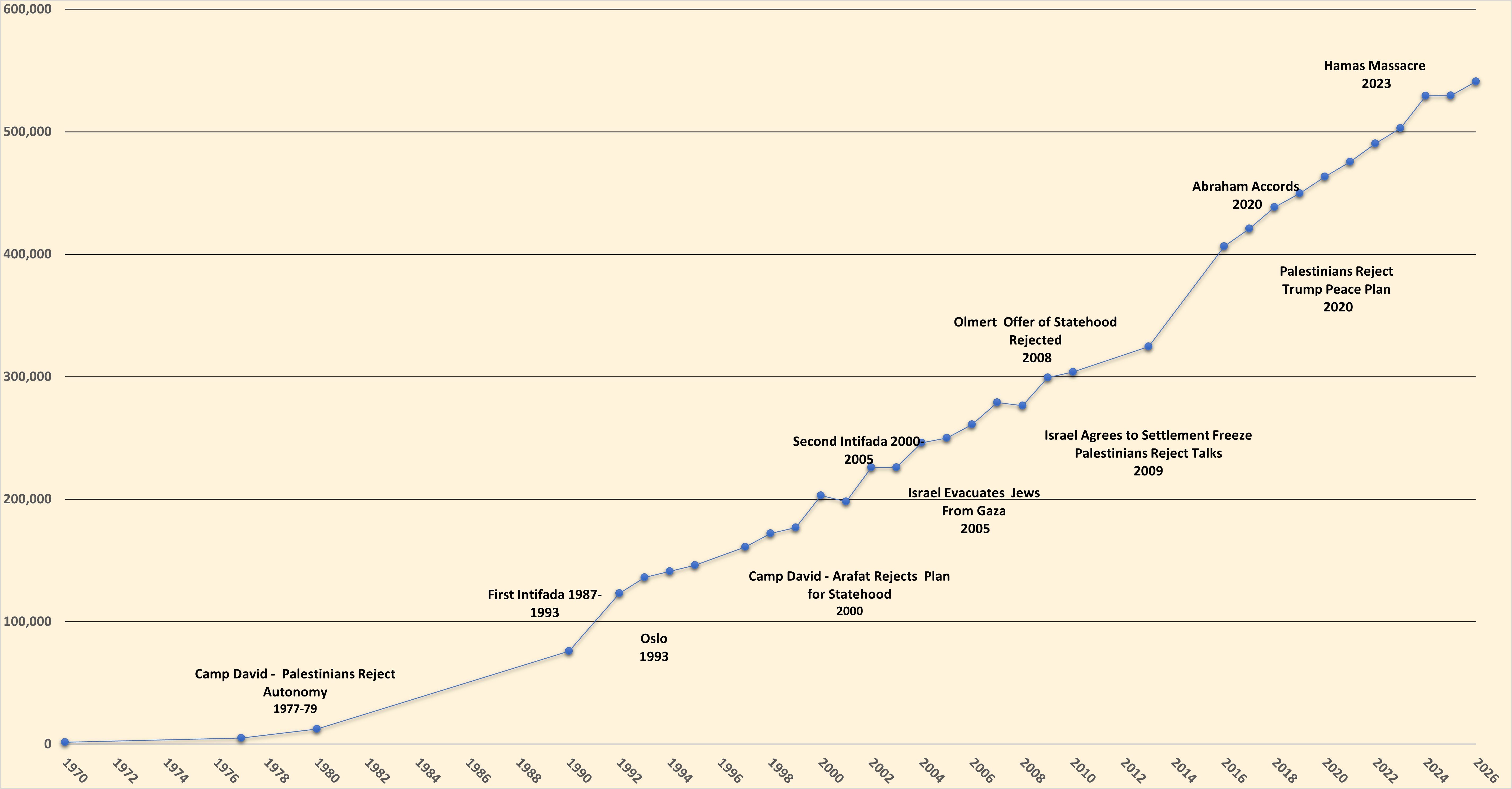
The estimate for the Jewish population in 147 West Bank communities, including 13 new ones, as of April 2026, was 541,085, roughly 5% of Israel’s total population. This figure excludes 340,000 residents of the Old City and 22 surrounding communities that the international community considers part of the West Bank. Critics suggest these figures imply that territorial compromise with the Palestinians is impossible. This may now be true as the number and distribution of the Jewish population are such that it will be difficult, if not impossible, to remove the number of settlers in the area genuinely envisioned (before the Trump plan) for a Palestinian state.
The overall area in dispute is very small. According to one organization critical of settlements, the built-up areas constitute only 1.7% of the West Bank or less than 40 square miles. Even if you add the unbuilt regions within the settlements’ municipal boundaries, the total area is only 152 square miles.
Outposts
|
Outposts are settlements typically constructed by a handful of people without government authorization. In 2003, President George W. Bush asked Israel to remove illegal outposts as part of the road map for peace. Israel subsequently removed some outposts; however, in February 2017, the Knesset passed the Regularization Law, which legalized outposts, including those built on private Palestinian land (after compensating the owners).
On September 15, 2019, the Israeli government legalized the outpost of Mevo’ot Yericho in the Jordan Valley. The attorney general said a transitional government could not do this, so it would not become official until a government coalition was formed. This would be the sixth official settlement since the Oslo Accords, following Havat Gilad (2018), Amichai (2017), Bruchin (2012), Sansana (2012), and Rechelim (2012).
On June 27, 2024, Israel legalized five towns – Avitar, Sde Ephraim, Givat Assaf, Hatz, and Adorim.
Legalities
Another charge is that settlements are “illegal.”
On November 18, 2019, Secretary of State Michael Pompeo expressed the Trump administration’s position that “the establishment of Israeli civilian settlements in the West Bank is not per se inconsistent with international law.”
The idea that settlements are illegal derives primarily from UN resolutions and the International Court of Justice (ICJ), an arm of the UN. The UN does not make legal determinations, only political ones. The ICJ “does not have jurisdiction over all disputes between UN member-states,” according to the Congressional Research Service. In fact, “with the exception of ‘advisory opinions,’ which are non-binding, the ICJ may only resolve legal disputes between nations that voluntarily agreed to its jurisdiction.”
Israel does not recognize the court’s jurisdiction on the settlement issue. Like other democracies, Israel has an independent judiciary. As Pompeo noted, its Supreme Court has “confirmed the legality of certain settlement activities and has concluded that others cannot be legally sustained.”
Legal scholars dispute the ICJ opinion that the settlements violate international law. Stephen Schwebel, formerly president of the ICJ, noted that a country acting in self-defense may seize and occupy territory when necessary to protect itself. Schwebel also observed that a state may require security measures to ensure its citizens are not menaced again from that territory as a condition for withdrawal.
The ICJ opinion was primarily based on a fallacious interpretation of the Fourth Geneva Convention, which says an occupying power “shall not deport or transfer parts of its own civilian population into the territory it occupies.”
The ICJ presupposes that Israel is now occupying the land of a sovereign country; however, as Dore Gold notes, “there was no recognized sovereign over the West Bank prior to Israel’s entry into the area.” Jordan had previously occupied the area.
A country cannot occupy territory with sovereign title; hence, the correct term for the area is “disputed territory,” which does not confer greater rights to Israel or Palestinians. The Palestinians never had sovereignty in the West Bank, whereas the Jews did for hundreds of years; therefore, “Israel has the strongest claim to the land,” according to legal scholar Eugene Kontorovich. “International law holds that a new country inherits the borders of the prior geopolitical unit in that territory. Israel was preceded by the League of Nations Mandate for Palestine; whose borders included the West Bank.”
Gold also notes the Convention was never meant to apply to a case like the settlements. Morris Abram, one of its drafters, stated that “its authors had in mind heinous crimes committed by Nazi Germany that were raised during the Nuremberg trials. These included forcible evictions of Jewish populations for purposes of mass extermination in death camps in places like Poland.” Israel is not forcibly transferring its population; Jews moving to the West Bank do so voluntarily.
Alan Baker, a former legal adviser to Israel’s Ministry of Foreign Affairs, adds that the “Oslo Accords instituted an agreed legal regime that overrides any other legal framework, including the 1949 Fourth Geneva Convention.”
Furthermore, UN Security Council Resolution 242 gives Israel a legal right to be in the West Bank. According to Eugene Rostow, a former undersecretary of state for political affairs in the Johnson administration, “Israel is entitled to administer the territories” it acquired in 1967 until “a just and lasting peace in the Middle East” is achieved.
United States policy has been inconsistent. State Department legal adviser in the Carter administration, Herbert Hansell, is believed to be the first U.S. official to argue the establishment of settlements in the “occupied territories,” which then included the West Bank, the Gaza Strip, the Sinai Peninsula, and the Golan Heights, is “inconsistent with international law.” This was consistent with the views of President Carter at the time, who was critical of Israeli settlement policy. Kontorovich noted that Hansell said the state of occupation would end if Israel entered into a peace treaty with Jordan, which it did in 1994. Nevertheless, the State Department never updated the memo.
Ronald Reagan rejected Hansell’s opinion of settlements. On February 3, 1981, he said, “I disagreed when the previous Administration referred to them as illegal, they’re not illegal.”
On July 20, 1991, Secretary of State James Baker was asked if the Bush administration regarded the settlements as illegal. His answer was, “This is not our policy.”
Secretary of State John Kerry and President Obama were very critical of Israel’s settlement policy, but Kerry did not call them “illegal”; he said they were “illegitimate.” His only statement regarding their “illegality” was when he mentioned “settler outposts that are illegal under Israel’s own laws.” Obama abstained rather than veto the UN Security Council resolution labeling settlements illegal, which was generally interpreted as an endorsement of that view; however, it did not affect U.S. policy since he left office shortly thereafter.
The Trump administration’s decision was praised by Israeli leaders but condemned by the Palestinians.
Joe Biden left no doubt about his opposition to settlements as a candidate. When Israel, for the first time during his administration, announced plans to build new homes in the territories in October 2021, his State Department condemned the decision.
Growth in the Jewish Population in the Disputed Territories
(Click to enlarge)
In response to a deadly terror attack near Ma’ale Adumim in which one person was killed and ten wounded, Israel announced on February 23, 2024, the intention to build 2,350 housing units in Ma’ale Adumim, 300 in Keidar, and 694 in Efrat. Construction would not begin for months, if not longer, as the units for Ma’ale and Keidar had not received even preliminary approval. Nevertheless, the Biden administration was “disappointed,” and the State Department announced the reversal of the Trump administration’s position, with Secretary of State Antony Blinken declaring that Israel’s plan was “inconsistent with international law.” The administration ingenuously described the decision as a return to the policy of Republican and Democratic presidents.
Obstacles?
Since 1967, Israelis have been divided over two competing ideas of what to do with the territories captured in the war. The Land for Peace advocates argue that Israel should evacuate most of the area in exchange for a peace agreement that provides Israelis with peace and security. y contrast, the proponents of Greater Israel insist that the land is part of the biblical homeland of the Jews and should become a permanent part of Israel.
Israel’s adversaries, and even some friends, assert that settlements are an obstacle to peace. The evidence points to the opposite conclusion. From 1949-67, when Jews were forbidden to live on the West Bank, the Arabs refused to make peace with Israel. From 1967-77, the Labor Party established only a few strategic settlements in the territories, yet the Arabs showed no interest in making peace with Israel. In 1977, months after a Likud government committed to greater settlement activity took power, Egyptian President Anwar Sadat went to Jerusalem. One year later, Israel froze settlements, hoping the gesture would entice other Arabs to join the Camp David peace process, but none would.
All the issues were resolved during the negotiations with Egypt, but one remained: Sadat’s insistence that all settlements in the Sinai be removed. Begin didn’t want to remove them, but he called Ariel Sharon for advice. Sharon said that the settlements should be dismantled in the interest of peace. Israel did just that in 1982, compensating residents for the loss of their homes, farms, and businesses, ranging from $100,000 to $500,000. Nevertheless, a small group of settlers in the town of Yamit refused to leave, and Sharon had the army forcibly remove them from their homes to comply with the terms of the agreement with Egypt.
In another Camp David summit in 2000 with President Bill Clinton and Israeli Prime Minister Ehud Barak, Israel offered to dismantle most settlements and create a Palestinian state in exchange for peace. LO Chairman Yasser Arafat rejected the plan but grudgingly accepted the idea that the large settlement blocs would be part of Israel in any peace deal.
When Arab-Israeli peace talks began in late 1991, more than 80% of the West Bank contained no settlements or only sparsely populated ones. Currently, about 68% of Israelis living in the West Bank live in the largest city, Betar Illit (population 74,760), and five settlement blocs – Ma’ale Adumim, Modi’in Ilit, Ariel, Gush Etzion, and Givat Ze’ev. All except Ariel lie within only a few miles of the 1949 armistice line (often inaccurately referred to as the 1967 border), commonly known as the Green Line. These settlement blocs could be brought within Israel’s borders to retain an Arab population (from the West Bank) of less than 50,000. It is inconceivable that Israel would evacuate large cities such as Ma’ale Adumim, with a population of over 50,000, even after a peace agreement with the Palestinians.
At the 2000 Camp David summit with PLO Chairman Yasser Arafat, President Bill Clinton, and Israeli Prime Minister Ehud Barak, Israel insisted that 80% of the Jewish residents of Judea and Samaria would be in settlement blocs under Israeli sovereignty. Clinton agreed and proposed that Israel annex 4-6% of the West Bank for three settlement blocs to accomplish this demographic objective and swap some territory within Israel in exchange. Arafat grudgingly accepted the idea that the large settlement blocs would be part of Israel in any peace deal but rejected the plan.
Nevertheless, Clinton’s map has served as a template for a two-state solution, despite the near-impossibility of its implementation given the West Bank's changing demographics. In 2000, a total of about 200,000 Jews lived in the disputed territories. Today, however, the population is 541,085, with 370,479 (68%) living in the areas Israel is expected to annex. An agreement to dismantle settlements outside the blocs would require the removal of more than 170,000 people. The expectation during the Camp David talks was that roughly one-third of the Jews living in other settlements would agree to move into these blocs or other parts of Israel. This assumption has never been tested; that number could be larger or smaller. If it is accurate, the percentage in the blocs would reach 79%, but still require Israel to evacuate more than 100,000 people.
Hebron represents one of the most challenging areas for Israel to consider evacuating in a peace agreement. Today, more than 600 Jews live in the city, and another 8,437 live in Kiryat Arba. The town was the first parcel of land purchased by the Jewish people in their Promised Land, has great religious significance, and is a place where Jews lived for centuries before the massacre of 1929, and finally resettled in 1968. The problem, politically, is that it is located too far from the Green Line to annex without making the establishment of a possible Palestinian state much more problematic.
|
The historical record shows that, except for Egypt and Jordan, the Arab states and Palestinians have been intransigent regardless of the scope of settlement activity. One reason is their conviction that time is on their side. Arabic writings frequently refer to the time it took to expel the Crusaders and suggest it might take a similar length to expel the Zionists.
Settlement activity may promote peace by forcing Arabs to question this tenet. The Palestinians now realize,” said Bethlehem Mayor Elias Freij, a member of the Palestinian delegation to the Madrid talks, “that time is now on the side of Israel, which can build settlements and create facts, and that the only way out of this dilemma is face-to-face negotiations.” Consequently, the Arabs went to Madrid and Washington for peace talks despite continued settlement activity. Similarly, the Palestinians negotiated with Prime Minister Yitzhak Rabin, even though he also allowed the number of settlers to grow.
Rights Versus Wisdom
Many settlement critics imply that it would be better for peace if the West Bank were Judenrein. It would undoubtedly be called racist if Jews were barred from living in New York, Paris, or London; barring them from living in the West Bank, the cradle of Jewish civilization, would be no less objectionable.
On the other hand, though Jews may have the right to live in the territories, it still might not be to Israel’s advantage for them to do so. Settlements create serious security concerns for Israel, requiring the deployment of forces to protect Jews living in communities outside the boundaries of the state and diverting resources that might otherwise be used to prepare the military for possible conflicts with enemy armies. The settlements also have had a budgetary impact as hundreds of millions of dollars are spent each year on infrastructure, incentives, and other material needs for Jews living in these communities. Many Israelis believe that the military and economic cost is not justified and support the removal of some settlements, those closest to the 1967 border (more accurately, the 1949 armistice line), and especially those surrounding Jerusalem; however, they are generally regarded as justified on various grounds and are likely to be incorporated within the ultimate boundary of Israel.
Some Israelis fear the Palestinians may be correct about time being on their side. For many years, projections anticipated an exponential increase in the population of Arabs in Israel and the territories. In 2004, for example, Arnon Soffer, Israel’s most prominent demographer, forecasted that in 2020, approximately 6,300,000 Jews would live in Israel, the West Bank, and Gaza combined, while the Palestinian population would be 8,740,000, leaving the Jews as the minority (42% – down from the current 73%) in their own country. This would create the so-called demographic dilemma: If these Palestinians all had the right to vote in a “Greater Israel,” Israel could not maintain its Jewish character, and if they were denied the right to vote, Israel would no longer be a democracy.
Since Soffer’s prediction, however, the Jewish birthrate has increased (to 3.03), and the Palestinians’ has declined (to 3.5) according to the latest population data (as of September 2025), the Jewish population was 7,758,000, and the Palestinian population in the West Bank, Gaza, and Israel (based on World Bank figures for the territories) is 7,419,152 (approximately 5.3 million in the PA and 2.1 million in Israel) Soffer underestimated the Jewish population and grossly overestimated the growth of the Palestinian population.
|
Such faulty predictions have bolstered the position of those who dismiss the so-called demographic threat to Israel and believe the combination of the Jewish birthrate and immigration will ensure a Jewish majority for the foreseeable future if Israel annexes the territories. While it is true the Palestinians would not comprise the large majority of “Greater Israel” Soffer predicted, if you add Israel’s current Jewish population (10,000,000) with the Palestinians in the territories, you get an entity with over 15.4 million people, and the percentage of Jews would be just 50%.
Settler Violence
The issue of settler violence presents a challenge for Israel. Incidents contribute to a narrative that paints Israel negatively on the global stage; however, reports of settler violence are often exaggerated, inaccurate, or fabricated. Michael Wolfowicz, a senior lecturer at the Hebrew University’s Institute of Criminology, noted that much of the data used by organizations like the United Nations and the Palestinian Authority is based on misleading or inflated statistics. For example, specific actions, such as entering the Temple Mount, have been classified as acts of violence when they may be more accurately categorized as trespassing.
Israel has focused primarily on the terror threat in the West Bank, often neglecting settler violence, which is frequently a reaction to Palestinian attacks. Some radical settlers have engaged in “price tag” attacks—acts of vandalism or violence carried out in response to actions they perceive as harmful to their interests, such as Palestinian attacks or government policies. Notable examples include uprooting olive trees, torching agricultural fields, and vandalizing Palestinian homes, vehicles, and infrastructure. There have also been cases of clashes with Israeli security forces. Israeli police and soldiers have also been accused of sometimes standing by without trying to stop or arrest Jews engaged in violence. Few are brought to trial or jailed.
The “Hilltop Youth” represents the core of a Jewish extremist movement in the West Bank. This term refers to a group of young Israeli settlers who occupy hilltops in violation of Israeli law to establish new settlements. Over the years, they have been known for committing so-called “price tag” attacks, targeting Palestinians or Israelis they perceive as obstacles to their settlement movement. These actions include vandalism and arson, resulting in significant harm to Palestinian communities.
The United States and others have criticized both the violence of settlers and the Israeli reaction. In response, the U.S. Treasury has imposed sanctions by designating specific individuals as “specially designated nationals,” resulting in asset freezes and prohibitions on financial transactions with them. Travel and visa bans have also been enforced against those targeted by these sanctions.
Many of Israel’s critics were lobbying the administration to impose additional sanctions on settlers before Biden left office. Toward that end, the Treasury Department announced on November 18, 2024, sanctions against Amana - the Settlement Movement of Gush Emunim Central Cooperative Association Ltd - and its subsidiary Binyanei Bar Amana Ltd., which it said were “involved with U.S.-sanctioned individuals and outposts that perpetrate violence in the West Bank.”
Three individuals and the Eyal Hari Yehuda Company were also sanctioned.
“The United States, along with our allies and partners, remains committed to holding accountable those who seek to facilitate these destabilizing activities, which threaten the stability of the West Bank, Israel, and the wider region,” said Deputy Secretary of the Treasury Wally Adeyemo.
On January 20, 2025, President Trump rescinded Biden-era sanctions on far-right Israeli settler groups accused of violence in the West Bank. The move, reversing Executive Order 14115, aligns with Trump’s prior lack of objection to settlements.
Israeli security agencies reported a sharp rise in extremist settler violence in the West Bank, with attacks increasing 27% in 2025 and severe incidents classified as terrorism jumping more than 50%. The IDF and Shin Bet recorded 867 “nationalistic crime” incidents, including 128 serious attacks such as shootings and arson, while prosecutions and convictions remain rare. Officials estimated about 300 Jewish extremists were involved, including 70 core perpetrators, many based in illegal outposts, and acknowledged failures to curb the violence amid weak enforcement, limited use of restraining orders, and court resistance. The military also dismissed dozens of settler-reservists over the past year for violations, including attacks on Palestinians.
In May 2026, the EU approved sanctions against several Israeli settlers accused of violence against Palestinians after Hungary dropped its veto, with EU foreign policy chief Kaja Kallas saying it was time to move “from deadlock to delivery” and that “extremisms and violence carry consequences.” The package also included new sanctions on leading Hamas figures. Separately, the EU is planning a €6 million program to support Palestinian victims of settler violence, including aid to civil society groups for protective equipment and protective presence in vulnerable communities. Israeli Foreign Minister Gideon Sa’ar strongly rejected the decision, calling it “arbitrary and political,” denouncing what he described as an “intolerable comparison” between Israeli citizens and Hamas terrorists, and arguing that Jews have a historic and legal right to settle in the Land of Israel.
Later that month, the EU announced new sanctions against four Israeli settler-related entities and three individuals under the EU Global Human Rights Sanctions Regime, accusing them of involvement in serious and systematic abuses against Palestinians in the West Bank. The new designations include the Nachala Settlement Movement and Daniella Weiss, Regavim and its director Meir Deutsch, Hashomer Yosh and its president Avichai Suissa, and the Amana cooperative association, which the EU says has supported forced displacement, settler outposts, demolition efforts, and violence against Palestinian communities.
On June 9, 2026, the foreign ministers of Australia, Canada, France, Norway, and the United Kingdom condemned what they described as escalating violence by extremist Israeli settlers against Palestinian civilians. The ministers said they had coordinated sanctions and other measures to hold violent settlers accountable, accused them of using violence to displace Palestinians, destroy property, and expand illegal settlement activity, and urged the Israeli government to investigate attacks, act against outposts and organizations that incite or sustain violence, and end what they called near-total impunity. The measures were linked to the five countries’ recognition of a Palestinian state and their broader effort to preserve the viability of a two-state solution, warning that additional steps could follow if Israel did not act quickly to address the situation on the ground.
Violent attacks by extremist Israelis against Palestinians in the West Bank that caused injuries or endangered lives prompted global headlines and condemnation throughout 2026. Israeli Prime Minister Benjamin Netanyahu dismissed the violence as the work of “150 or so kids, teens who are brought into the West Bank” and not the law-abiding citizens of the settler community.
The Trump administration turned a blind eye for the most part but finally became outraged in August when Israeli settlers surrounded three Palestinian homes in the northern West Bank town of Qusra, preventing the families from leaving for five days. In a rare rebuke, U.S. Ambassador Mike Huckabee referred to the settlers as “terrorists” and demanded that Israel take steps to end the violence. The White House also pressured Netanyahu to publicly condemn the attack, but he resisted criticizing the settlers, a key constituency, just weeks before the Israeli election.
On September 8, 2026, Britain announced a “new approach” toward Israel, including a ban on imports from Israeli settlements in the West Bank, sanctions against individuals and companies that finance or provide services for settlement expansion, and a prohibition on advertising settlement properties in the UK. Foreign Secretary Ed Miliband said the measures, expected to take effect within six to nine months, reflected Britain’s acceptance of the International Court of Justice’s view that Israel’s presence in the territories was unlawful, and accused the Israeli government of turning a blind eye to the “ethnic cleansing” of Palestinians by violent settlers. He also said evidence suggested war crimes may have been committed in Gaza, while stressing that Britain opposed the BDS movement and was targeting settlements rather than Israel itself. France and Canada were expected to introduce similar measures, and 9 more countries expressed similar condemnations in a statement. Israeli officials condemned the policy, warning that it would harm thousands of Palestinian workers. At the same time, Jerusalem reportedly considered retaliatory steps, including limiting British participation in Gaza aid coordination, closing the UK consulate in East Jerusalem, and restricting defense exports.
On October 16, 2026, Washington Post photographer Heidi Levine was injured when masked Israeli settlers attacked Palestinians harvesting olives near Abu Falah, northeast of Ramallah. Levine said attackers repeatedly kicked her and stole her cameras and phone; the newspaper demanded a thorough investigation. Israeli police opened an investigation, and the IDF condemned violence against innocent civilians. Prime Minister Benjamin Netanyahu’s office condemned violence against journalists and pledged accountability, but said the circumstances remained unclear. It called for investigators to establish who initiated the violence and warned against using the incident to demonize law-abiding West Bank settlers.
Settlement Advocates in the Government
To build a coalition that would ensure his return as prime minister, Benjamin Netanyahu brought leaders of two parties committed to the settlement project into his government in 2022. This set up a confrontation with the Biden administration, which adamantly opposed the expansion of settlements. The two governments sparred over the issue but soon became immersed in a dispute over Netanyahu’s plans to reform the judiciary. That, too, became overshadowed by the Hamas massacre of Israelis on October 7, 2023, and the war that followed.
During the months before the war, the administration had grown increasingly impatient with Netanyahu’s failure to rein in extremist settlers who were attacking Palestinians and vandalizing their property. The issue came to a head during the war as settler violence increased. The administration imposed visa bans on settlers involved in these attacks in December 2023. The policy had limited impact as many settlers are U.S. citizens who don’t need visas, and others would not likely try to enter the United States. Nevertheless, the following day, Israeli Defense Minister Yoav Gallant signed an order to detain without trial for four months any Israeli settler suspected of attacking Palestinians.
The establishment of new settlements was one of the principal motivations for Bezalel Smotrich’s entry into government. As a minister in the Defense Ministry and the Finance Minister, Smotritch was well-positioned to advance his agenda. After Gallant’s dismissal, he also found an ally in the new Defense Minister, Israel Katz. Together, they approved in May 2025 the construction of 22 new West Bank settlements, including several new communities and the legalization of several outposts.
“Jewish settlement in Judea and Samaria constitutes an essential protective wall for the security of the large population centers in Israel and we must do everything in order to broaden and strengthen this wall of protection,” Katz said, noting that this decision was ” also a strategic step to prevent the establishment of a Palestinian state that would endanger Israel.” He added the plan would result in “anchoring our historic right in the Land of Israel and constituting a crushing answer to Palestinian terror that tries to harm settlement and to weaken it.”
Smotritch called the decision “a once-in-a-generation decision.” Anticipating the inevitable international outcry, he said, “No foreign land have we taken, but rather the inheritance of our ancestors.”
If the government proceeds, four new communities would be established near the Jordanian border. In addition, Homesh and Sa-Nur, two former settlements evacuated during the 2005 disengagement from the Gaza Strip, would be reestablished. The Knesset previously repealed a law that forbade Israelis from entering those areas.
Israel’s cabinet voted on December 11, 2025, to grant official status to 19 previously unauthorized West Bank outposts, including two that had been evacuated some 20 years ago under the Disengagement Plan, according to media reports and settlement groups. The decision followed a December 7 announcement by the Interior Ministry finalizing the legalization of eight additional outposts. Finance Minister Bezalel Smotrich, himself a settler, praised the move as advancing “de facto sovereignty in Judea and Samaria.”
The outposts approved by the cabinet include Kida, Esh Kodesh, Givat Harel, Mishol, Kochav Hashachar North, Ganim, Kadim, Shalem, Har Bezek, Reihanit, Rosh Ha’ayin East, Tammun, Pnei Kedem, Yatziv, Ya’ar El Keren, Allenby, Yitav West, and Nahal Doron. Approximately half are located deep within the West Bank, with the remainder distributed roughly along the Green Line. Some, such as Givat Harel near Ramallah—established in 1998—and the nearby Esh Kodesh, founded in 2000, have existed for decades; Givat Harel had already been declared legalized in February 2023.
Since taking office in late 2022, the current government has approved construction or retroactively legalized nearly 70 settlements. By contrast, in the years before this administration, virtually no new settlements were approved, and few, if any, outposts were legalized after the late 1990s.
According to the UN, plans for nearly 47,390 housing units were advanced, approved, or tendered in 2025 compared with some 26,170 in 2024.
“These figures represent a sharp increase compared to previous years,” UN Secretary-General Antonio Guterres said, noting an average of 12,815 housing units were added annually between 2017 and 2022.
Reversing Disengagement
Israel officially reestablished the West Bank settlement of Sa-Nur on April 19, 2026. This occurred nearly 21 years after the settlement, along with Homesh, Ganim, and Kadim, which were evacuated under Ariel Sharon’s 2005 Disengagement Plan. Sixteen families moved in.
Finance Minister Smotrich called the move a “historic correction” to what he termed the “sinful expulsion from northern Samaria.” He declared it “a national holiday for the State of Israel” and said the settlement expansion was “killing the idea of a Palestinian state.” Defense Minister Israel Katz said it was intended to strengthen Israeli settlement and prevent Palestinians from establishing a presence in the area.
The legal path was cleared in stages. In March 2023, the government repealed the legislation prohibiting Israeli residence at the four northern West Bank sites. In May 2025, the security cabinet approved 22 new settlements, including Homesh and Sa-Nur. In December 2025, it approved another 19, including Ganim and Kadim. That same month, Israel expropriated 500 dunams of private Palestinian land to build a bypass road to Sa-Nur.
Sixteen families returned to Sa-Nur in April 2026. In August, Israeli settlers moved into homes in Ganim. The same month, construction began in Kadim, and the first families moved in, marking the completion of the resettlement of the four communities.
The Netanyahu government approved the establishment or legalization of 104 settlements and outposts across the West Bank, including 19 in the northern West Bank, and announced plans to legalize roughly 140 additional farm outposts.
Peace Agreements
The recognition of the demographic reality explains why no Israeli prime minister, even those rhetorically supporting “Greater Israel,” was willing to annex the territories and why Israelis have engaged in negotiations to trade land for peace and security. Still, when he presented the Interim Agreement (“Oslo 2”) before the Knesset on October 5, 1995, Prime Minister Yitzhak Rabin stated, “I wish to remind you, we made a commitment...to the Knesset not to uproot any settlement in the framework of the Interim Agreement, nor to freeze construction and natural growth.” Neither the Declaration of Principles of September 13, 1993, nor the Interim Agreement contains any provisions prohibiting or restricting the establishment or expansion of Jewish communities in the West Bank or Gaza Strip, While a clause in the accords prohibits changing the status of the territories, it was intended to ensure that neither side would take unilateral measures to alter the legal status of the areas (such as annexation or declaration of statehood).
In August 2005, Israel evacuated all the settlements in the Gaza Strip and four in the West Bank under the disengagement plan initiated by Prime Minister Sharon. This was a dramatic policy shift by a man considered one of the fathers of the settler movement. Sharon also said that Israel would not keep all the settlements in the West Bank. That looked like it could change when Benjamin Netanyahu was elected in 2019 after pledging to extend Israeli sovereignty to the Jordan Valley and all settlements in the West Bank. Netanyahu was on the verge of implementing the plan when he was convinced to abandon it as a condition for normalizing relations with Bahrain and the United Arab Emirates in what became known as the Abraham Accords.
Israel gave up all the territory it held in Gaza and evacuated some West Bank settlements without any agreement from the Palestinians, who now have complete authority over their population within Gaza. This offered the Palestinians an opportunity to prove that if Israel made territorial concessions, they would be prepared to coexist with their neighbor and build a state of their own Instead of trading land for peace; however, Israel exchanged territory for terror. Hamas came to power in the Palestinian Authority, and instead of using the opportunity to build the infrastructure for statehood, the Gaza Strip became a scene of chaos as rival Palestinian factions vied for power. Terrorism from Gaza also continued unabated, and Israeli towns have been repeatedly hit by rockets fired from the area Israel evacuated.
In January 2020, the Trump administration released its peace plan, which dramatically differed from prior American plans. Instead of calling for the establishment of a Palestinian state in more than 90% of the West Bank, the plan envisioned a state in 70% and, rather than expecting Israel to dismantle and evacuate a majority of settlements, it approved of Israel’s annexation of all the settlements Israelis had reservations about aspects of the plan, and the Palestinians rejected it outright.
Recognizing the lack of will on the part of both Israelis and Palestinians, President Joe Biden made no effort to launch a peace initiative After the war in Gaza began, however, he began to insist that it end with a resumption of talks to achieve a two-state solution Given that Israel was fighting a war against terrorists who became a threat after Israel evacuated the Gaza Strip, it was unlikely that Netanyahu or any other government was going to consider the establishment of a state that could turn into another Hamastan.
Sources: Anthony Cordesman, From Peace to War: Land for Peace or Settlements for War, (DC: Center for Strategic and International Studies, August 15, 2003), pp. 17-21.
Larry Derfner, “Sounding the Alarm About Israel’s Demographic Crisis,” Forward, (January 9, 2004).
Jerusalem Post, (January 8, 2004).
B’tselem, July 11, 2009.
Israeli Central Bureau of Statistics.
Herb Keinon, Security Cabinet Unanimously Approves new Settlement, First Time in 25 Years, Jerusalem Post, (March 31, 2017).
Sara Yael Hirschhorn, City on a Hilltop: American Jews and the Israeli Settler Movement, MA: Harvard University Press, 2017.
Mitchel Hochberg Instruction Begins at New Amona Settlement, The Washington Institute, (July 12, 2017).
Yotam Berger, How Many Settlers Really Live in the West Bank? Haaretz, (June 15, 2017).
Tovah Lazaroff, Settler housing construction drops to 6-year low under Trump, Jerusalem Post, (June 19, 2018).
David Rosenberg, “Israeli Jewish fertility rate tops Arab rate, hits 45-year high,” Arutz Sheva, (April 10, 2019).
“Cabinet Approves Mevo’ot Yericho, the 6th New Official Settlement since Oslo,” Peace Now, (September 15, 2019).
Michael Bachner, “Netanyahu says he will extend ‘Jewish sovereignty’ to all West Bank settlements,” Times of Israel, (September 1, 2019).
Ben Sales, “Netanyahu’s push to annex the Jordan Valley, explained,” JTA, September 10, 2019).
Stephen M. Schwebel, “What Weight to Conquest?” American Journal of International Law, (April 1970), pp. 345–46.
Eugene Rostow, “Bricks and Stones: Settling for Leverage,” New Republic, April 23, 1990).
Dore Gold, “A long awaited correction,” Israel Hayom, (November 18, 2019).
Stephen P. Mulligan, “The United States and the ‘World Court,’” Congressional Research Service, (October 17, 2018).
“Kerry: Israeli settlements are illegitimate,” Al Jazeera, (November 6, 2013).
“Excerpts From Interview With President Reagan Conducted By Five Reporters,” New York Times, (February 3, 1981).
Paul Claussen and Evan M. Duncan, Eds., American Foreign Policy Current Documents, (NY: William S. Hein & Co., 2008), p. 570.
Alan Baker, “The Legality of Israel’s Settlements: Flaws in the Carter-Era Hansell Memorandum,” JCPA, (November 21, 2019).
Eugene Kontorovich, “Pompeo Busts the ‘Occupation’ Myth,” Wall Street Journal, (November 19, 2019).
Ben Samuels, “U.S. gives harshest public rebuke yet on Israeli settlement plans,” Haaretz, (October 26, 2021).
Barak Ravid, “U.S. imposes visa ban on Israeli settlers who attacked Palestinians,” Axios, (December 5, 2023).
David M. Weinberg, “The myth of escalating settler violence,” JNS, (December 13, 2023).
Yaakov Katz, “West Bank Jewish Population Stats,” (Updated to January 1, 2024).
Liel Leibovitz, “The Fraudulent Case Against ‘Violent Settlers,’” Tablet, (February 7, 2024).
Laura Kelly, “US reverses Trump-era policy on Israeli settlement expansion,” The Hill, (February 23, 2024).
Hagar Shezaf and Ben Samuels, “Israel Planning 3,000 New Settlement Homes in Response to Fatal Terror Attack,” Haaretz, (February 23, 2024).
Sam Mendick, Julia Frankel, “Israeli settlers in the West Bank were hit with international sanctions I only emboldened them,” AP, (June 6, 2024).
Jacob Magid, “Security cabinet okays legalizing 5 outposts, sanctioning PA officials,” Times of Israel, (June 28, 2024).
Hezki Baruch, “Hebrew U. lecturer: ‘UN data on ‘settler violence’ based on false reports’,” Israel National News, (August 7, 2024).
Julian Borger, Quique Kierszenbaum, “US imposes sanctions on extremist Israeli settlers in West Bank,” Guardian, (August 24, 2024).
Romi Leibler, “Jewish extremism is threatening Israel’s legitimacy - opinion,” Jerusalem Post, (August 25, 2024).
Asaf Elia-Shalev, “US announces sanctions on Israel’s Hilltop Youth movement over West Bank violence,” Jerusalem Post, (October 2, 2024).
“Treasury Targets Organization with Ties to Violent Actors in the West Bank,” U.S. Department of the Treasury, (November 18, 2024).
Jonathan Landay, Humeyra Pamuk, Trump cancels sanctions on Israeli settlers in West Bank, Reuters, (January 20, 2025).
Yaakov “Ketzaleh” Katz, “West Bank Population Stats,” (January 1, 2025).
“Defense Ministry confirms government approval of 22 new West Bank settlements,” Times of Israel, (May 29, 2025).
“Cabinet legalizes 19 West Bank outposts, including 2 vacated in 2005 disengagement,” Times of Israel, (December 13, 2025).
Emanuel Fabian, “IDF: Settler violence rose by 27% in 2025, severe attacks spiked by over 50%,” Times of Israel, (January 20, 2026).
Yaakov “Ketzaleh” Katz, “West Bank Population Stats,” (January 1, 2026).
“Population, total - West Bank and Gaza,” World Bank Group, accessed March 19, 2026.
Jeremy Sharon, “‘Killing the idea of a Palestinian state’: West Bank settlement of Sa-Nur reestablished,” Times of Israel, (April 19, 2026).
Shir Perets, “EU approves sanctions on West Bank settlers after Hungary drops veto,” Jerusalem Post, (May 11, 2026).
@gidonsaar, (May 11, 2026).
“Extremist Israeli settlers: EU lists four entities and three individuals,” ECCEU, (May 28, 2026).
@jnbarrot, (June 9, 2026).
“Netanyahu: Settler Violence in the West Bank Caused by '150 or So Juvenile Delinquents,'” Haaretz, (August 7, 2026).
Amichai Stein, “https://www.jpost.com/israel-news/article-902632,” Jerusalem Post, (July 15, 2026).
Sam Metz and Aref Tufaha, “Israeli settlers’ siege of Palestinian homes draws a sharp US rebuke,” AP, (August 13, 2026).
Matan Golan, “Israeli Settlers Move Back to Northern West Bank Settlement Evacuated in 2005,” Haaretz, (August 13, 2026).
“US wants Netanyahu to condemn settler violence in Qusra,” Al Jazeera, (August 14, 2026).
“UK imposes sanctions on Israeli settlements,” BICOM, (September 8, 2026).
“Miliband accuses Israel of turning a blind eye to ‘ethnic cleansing’ as he introduces trade ban on settlement goods,” Jewish Chronicle, (September 8, 2026).
Yoav Etiel, Amir Bohbot, “WATCH: Washington Post photojournalist wounded in clash between Israelis, Palestinians in West Bank,” Jerusalem Post, (October 16, 2026).
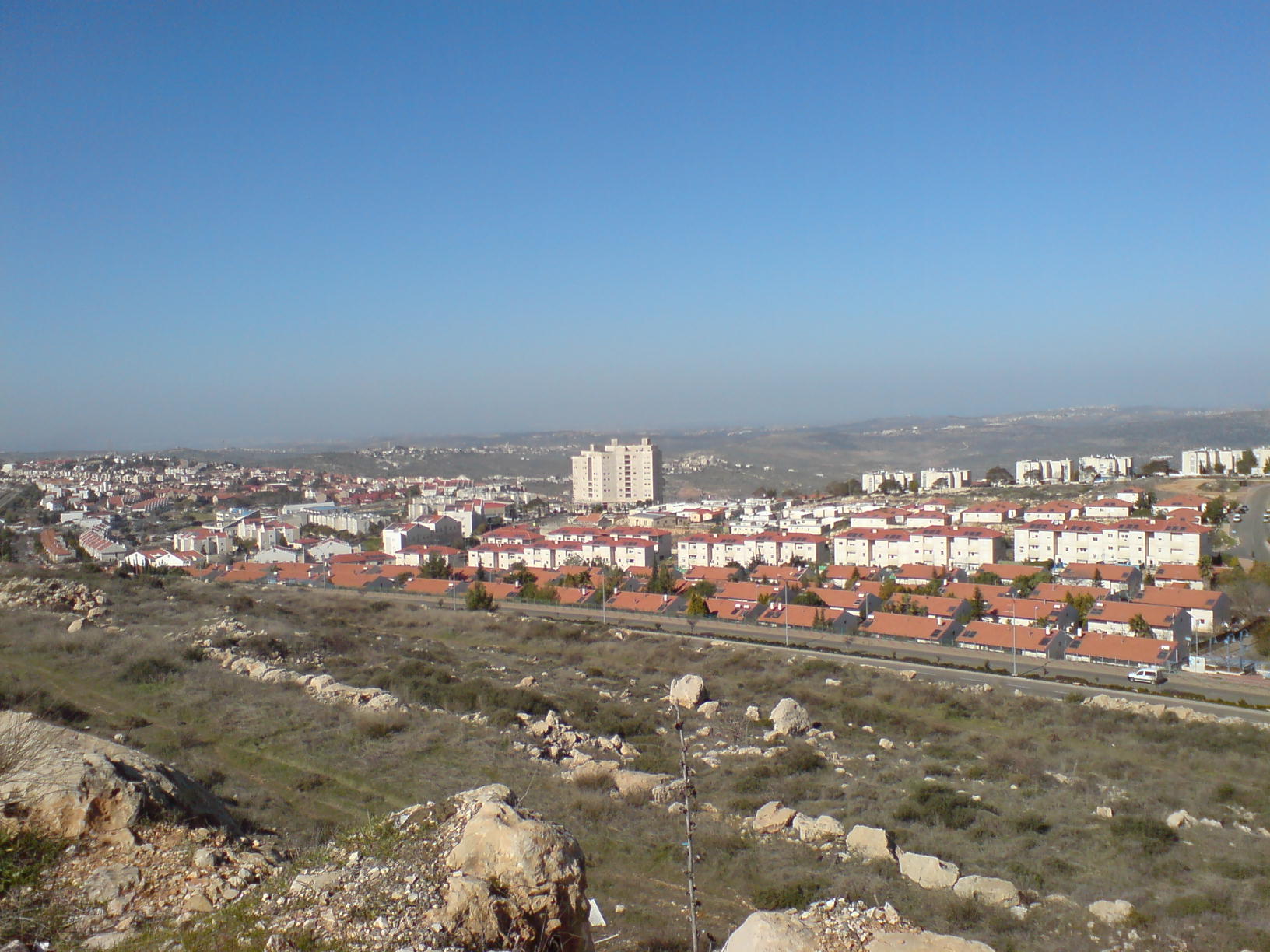
Ariel photo by Salonmor is licensed under the Creative Commons Attribution-Share Alike 3.0 Unported license.
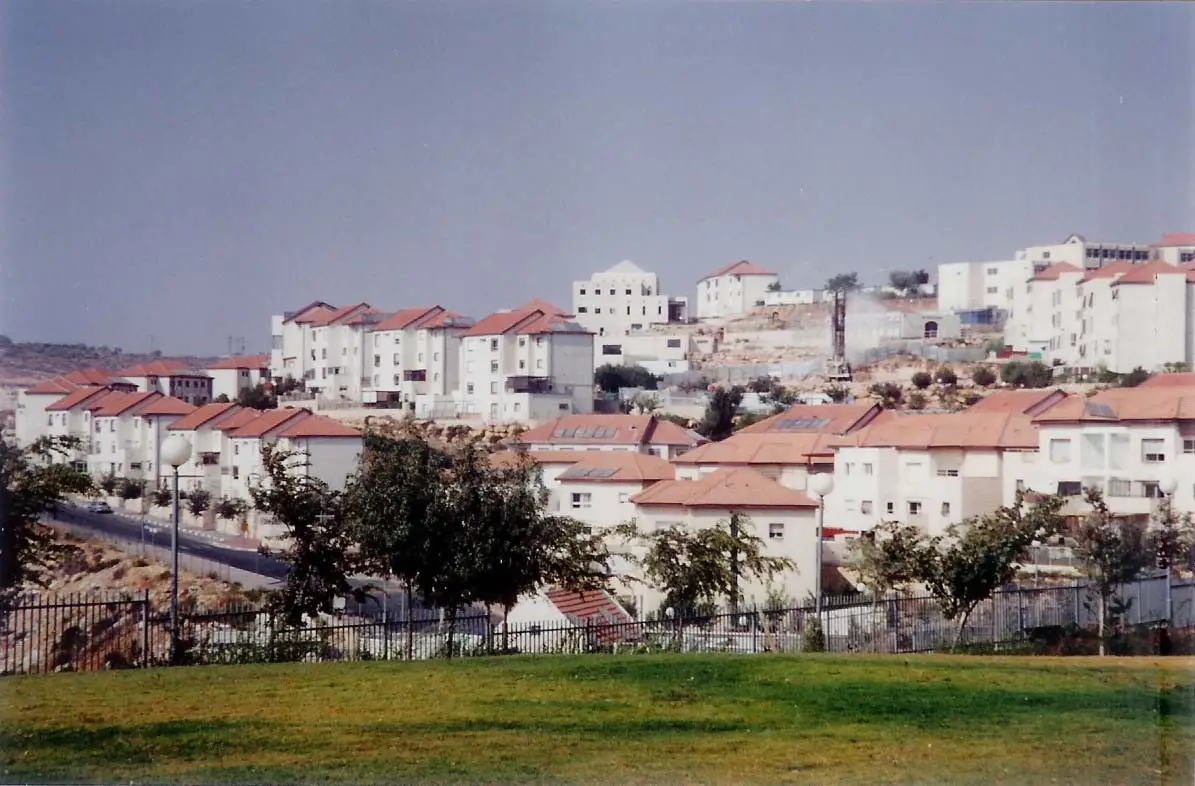
Betar Illit photo by Yoninah is licensed under the Creative Comacmons Attribution-Share Alike 3.0 Unported license.
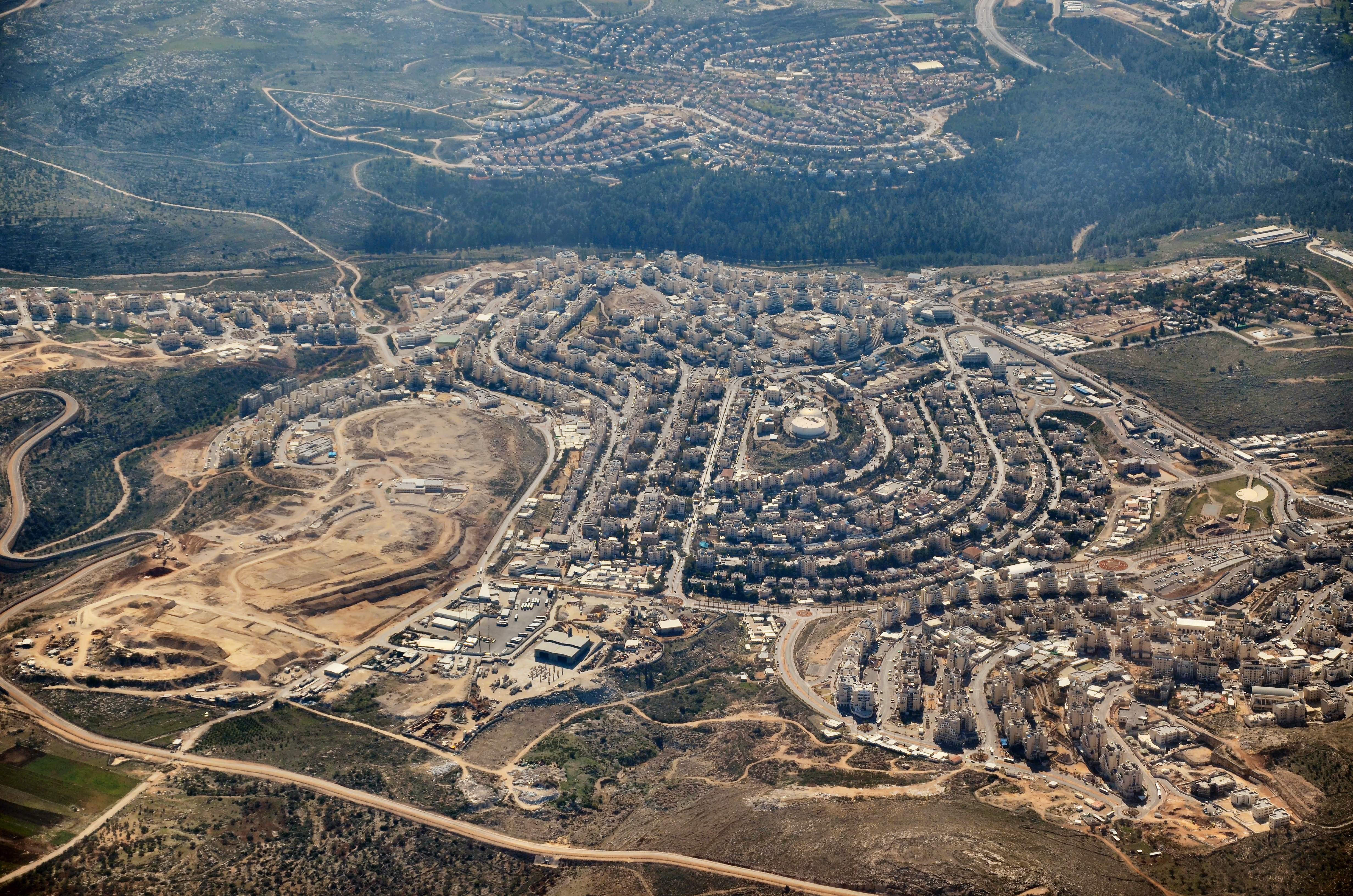
Modi’in Illit photo by Dvirraz, CC BY-SA 3.0 via Wikimedia Commons.
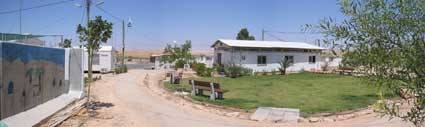
Mevo’ot Yericho is licensed under the Creative Commons Attribution-Share Alike 3.0 Unported license.